原田英語の時事英語ジュニア|英語ニュース ワークシート(中学生レベル)
Class ____ No. ____ Name ____________________
新型補給機HTV-X1が宇宙ステーションに到着 H3ロケットで打ち上げ
Japan's New Space Delivery Truck
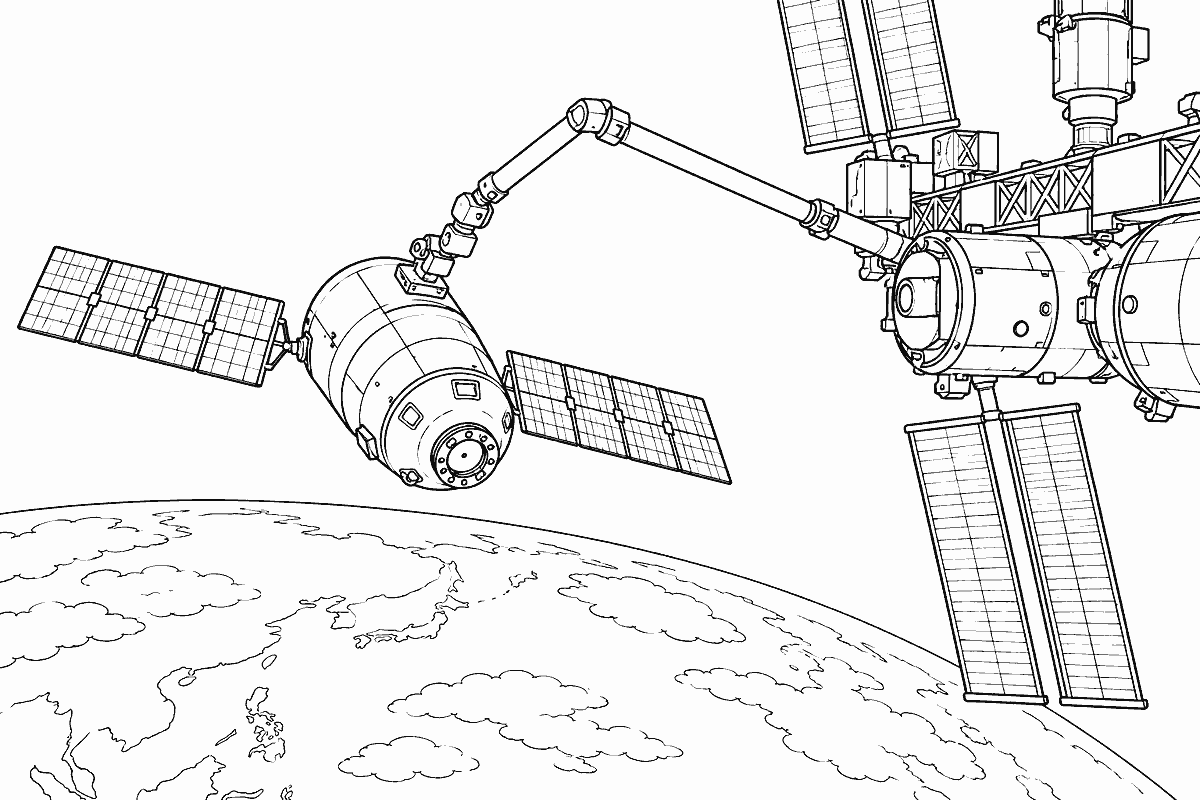
1A new Japanese cargo spacecraft arrived at the International Space Station on October 30, 2025. Its name is HTV-X1.
2Japan's H3 rocket launched it from Tanegashima in Kagoshima on October 26. Four days later, Japanese astronaut Kimiya Yui caught it with the station's robot arm. It was the first Japanese spacecraft to visit the station in five years.
3HTV-X1 carried fresh food, daily goods and things for experiments. The spacecraft can carry about 6,000 kilograms. That is as heavy as four cars.
4HTV-X is the new model after Kounotori, Japan's earlier cargo spacecraft. Kounotori flew to the station nine times. Its last trip was in 2020. Unlike Kounotori, HTV-X can do experiments in space after it leaves the station. It can keep flying on its own for up to 18 months.
Words 単語
| cargo外 | 名 | 貨物、積み荷things that a ship or plane carries to another place |
| arrivedA1 | 動 | 到着した(arrive の過去形)came to a place at the end of a trip |
| launchedB1 | 動 | 打ち上げた(launch の過去形)sent a rocket or spaceship up into the sky |
| astronautA2 | 名 | 宇宙飛行士a person who travels and works in space |
| experimentsB1 | 名 | 実験scientific tests to find out something new |
| heavyA1 | 形 | 重いweighing a lot and hard to lift |
| unlikeA2 | 前 | ~とちがってdifferent from someone or something |
| on its ownA1 | 熟 | 単独で、それだけでalone, without help from anyone or anything |
単語のレベル:CEFR-J(『CEFR-J Wordlist Version 1.6』 東京外国語大学投野由紀夫研究室. (URL: https://www.cefr-j.org/download.html より 2026年8月ダウンロード))
1. Reading Quiz 本文の内容に合うものを選ぼう
Which rocket launched HTV-X1?
A. The H3 rocketB. The H-IIA rocketC. A rocket from the U.S.D. Kounotori
Who caught HTV-X1 with the robot arm?
A. A robotB. A team in KagoshimaC. Kimiya YuiD. A pilot of the H3 rocket
About how much can HTV-X carry?
A. About 600 kilogramsB. About 6,000 kilogramsC. About 60 kilogramsD. About 60,000 kilograms
What can HTV-X do that Kounotori could not?
A. Carry foodB. Fly to the stationC. Use a robot armD. Do experiments after leaving the station
2. True or False 正しければ T、違っていれば F
( ) HTV-X1 was launched from Tanegashima.
( ) HTV-X1 arrived at the station on the same day it was launched.
( ) Kounotori flew to the station nine times.
( ) HTV-X1 carried no food.
3. Fill in the Blanks 下の語から選んで空らんをうめよう(形を変えずに)
launchedheavyUnlikeastronautcargoexperiments
A new Japanese _____ spacecraft arrived at the International Space Station on October 30, 2025.
HTV-X1 carried fresh food, daily goods and things for _____.
Four days later, Japanese _____ Kimiya Yui caught it with the station's robot arm.
Japan's H3 rocket _____ it from Tanegashima in Kagoshima on October 26.
_____ Kounotori, HTV-X can do experiments in space after it leaves the station.
That is as _____ as four cars.
4. Word Order 語を並べかえて正しい文にしよう
( name / Its / HTV-X1 / is ) .
( to / Kounotori / nine / station / flew / times / the ) .
( keep / It / up / to / own / flying / on / its / 18 / for / months / can ) .
5. Think and Write 英語で答えてみよう
If you could send one thing to astronauts on the space station, what would you send?(宇宙ステーションの宇宙飛行士に1つ物を送れるなら、何を送る?)
Would you like to work as an astronaut? Why or why not?(宇宙飛行士として働いてみたい?その理由は?)
Answers 解答
1. (1) A (2) C (3) B (4) D
2. (1) T (2) F (3) T (4) F
3. (1) cargo (2) experiments (3) astronaut (4) launched (5) Unlike (6) heavy
4.
- Its name is HTV-X1.
- Kounotori flew to the station nine times.
- It can keep flying on its own for up to 18 months.
全文訳
12025年10月30日、日本の新しい補給機が国際宇宙ステーションに到着しました。名前は「HTV-X1」です。
210月26日、日本のH3ロケットが鹿児島県の種子島から打ち上げました。4日後、日本人宇宙飛行士の油井亀美也さんが、ステーションのロボットアームでキャッチしました。日本の宇宙船がステーションを訪れたのは5年ぶりでした。
3HTV-X1は、新鮮な食べ物や日用品、実験に使う物を運びました。この補給機は、約6000キログラムの荷物を運べます。これは車4台分の重さです。
4HTV-Xは、日本の以前の補給機「こうのとり」の次のモデルです。こうのとりは9回ステーションへ飛びました。最後の飛行は2020年でした。こうのとりとちがって、HTV-Xはステーションを離れたあとも宇宙で実験ができます。単独で最長18か月、飛び続けることができます。
文法ポイント:the first ~ to …(…した最初の~)
「the first + 名詞 + to + 動詞の原形」で「…した最初の~」。本文の the first Japanese spacecraft to visit the station in five years は「5年間で初めてステーションを訪れた日本の宇宙船(=5年ぶりの日本の宇宙船)」。
出典:JAXA、JAXA、JAXA 有人宇宙技術部門、collectSPACE ほか(記事は原田英語の時事英語ジュニアのオリジナル)|https://www.haradaeigo.com/jijieigo-junior/news/2025-10-30-htv-x1-arrives-at-iss/