warikan
splitting the bill
割り勘(わりかん)
In one line
The shortest answer that works
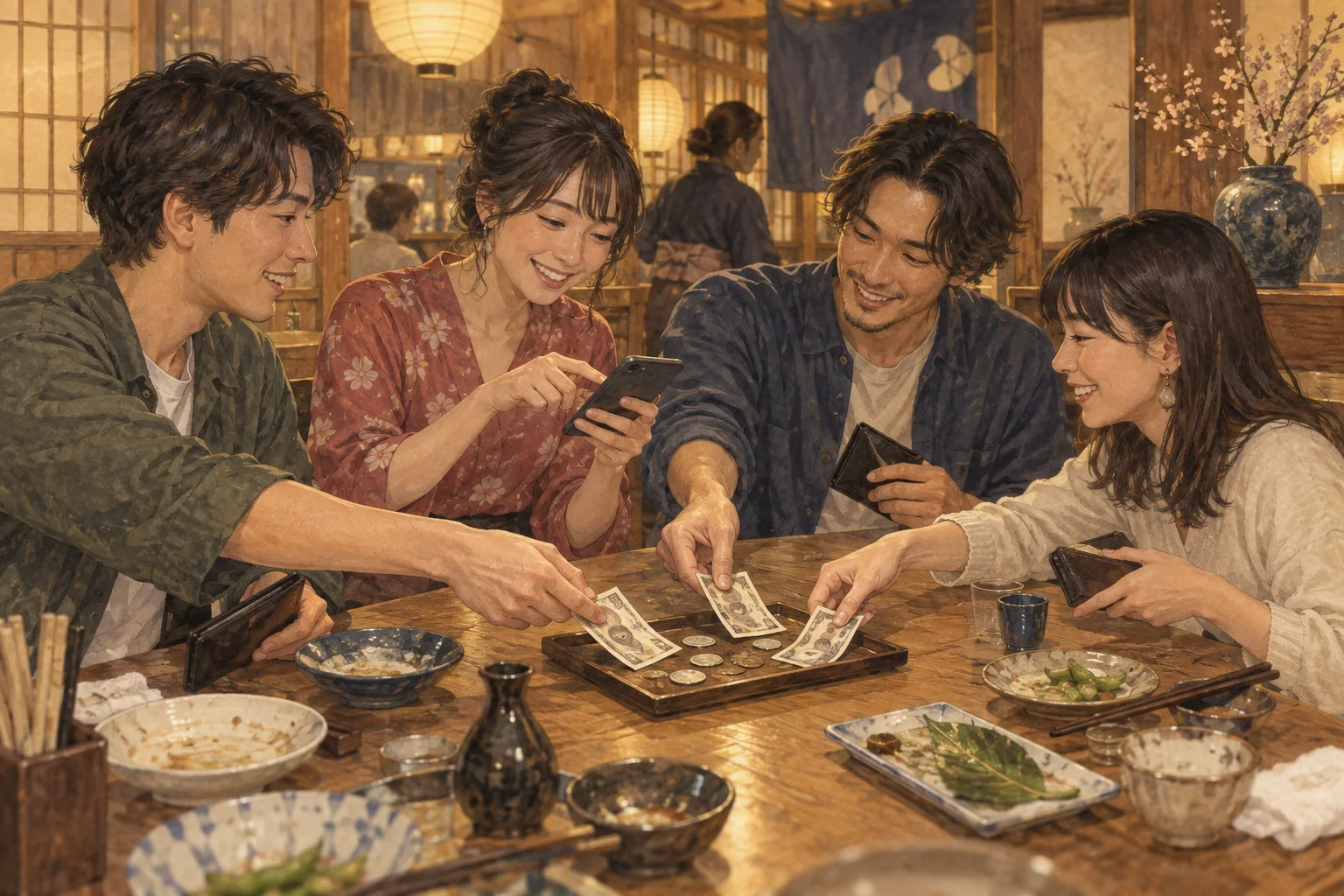
Warikan means splitting the bill evenly, which is the default when Japanese people eat out together.
割り勘とは、勘定を均等に分けることで、日本人が一緒に外食するときの基本です。
In 30 seconds
The standard explanation
The default in Japan is to divide the bill equally rather than to pay for what each person ordered. Restaurants usually give one bill for the table. Seniority modifies it: a boss or an older person often pays more, and sometimes everything. Among students and younger colleagues, splitting to the yen is normal, and payment apps have made it easier.
日本の基本は、各自が頼んだ分ではなく、勘定を均等に割ることです。店はたいていテーブルに一枚の伝票を出します。上下関係で調整されます。上司や年長者が多めに出すことが多く、全額出すこともあります。学生や若い同僚同士では1円単位で割るのが普通で、送金アプリがそれを簡単にしました。
As a short speech
A full paragraph you can read aloud
When Japanese people eat out together, the default is warikan, splitting the bill evenly. Restaurants usually issue a single bill for the table rather than separate ones, so someone pays and the others settle up afterwards. Note that this is splitting the total, not paying for what you personally ordered.
Working out who had what is considered fussy in a group setting, though a couple or two close friends might do it. Seniority changes the arithmetic. If a boss or a noticeably older person is present, they will usually pay more than an even share, and sometimes the whole bill, and the correct response is to thank them clearly rather than to insist.
In a large work party, the organizer often collects a fixed amount from everyone in advance. Payment apps have changed the mechanics: transferring a few hundred yen to a colleague on your phone is now completely routine.
日本人が一緒に外食するとき、基本は割り勘、つまり勘定を均等に分けることです。店は一人ずつではなくテーブルに一枚の伝票を出すので、誰かが払い、あとで精算します。これは合計を割ることであって、自分が頼んだ分を払うことではありません。
誰が何を食べたかを計算するのは、集団の場では細かいとされます。二人や親しい友人同士ならすることもありますが。上下関係が計算を変えます。上司や明らかに年長の人がいれば、たいてい均等より多く出しますし、全額出すこともあります。
正しい応じ方は、遠慮するより、はっきり礼を言うことです。大人数の会では、幹事が先に一律の額を集めることが多いです。送金アプリが手順を変えました。スマートフォンで同僚に数百円送るのは、今ではまったく日常的なことです。
Questions people actually ask
And how to answer them.
Should I pay for what I ordered?
Usually not. The total is divided by the number of people. Insisting on itemizing in a group can come across as ungenerous, though among two or three close friends it is fine.
ふつうはしません。合計を人数で割ります。集団のなかで細かく分けようとすると、けちに映ることがあります。二、三人の親しい仲なら構いません。
What if my boss offers to pay?
Thank them properly and accept. Refusing repeatedly is more awkward than accepting. Saying thank you again the next morning at work is the expected follow-up.
きちんと礼を言って受けてください。何度も断るほうが気まずくなります。翌朝、職場でもう一度お礼を言うのが、期待される流れです。
How do people handle the leftover yen?
Usually rounded to a convenient figure, with the organizer or the most senior person absorbing the difference. Payment apps have made exact splits easy, and younger groups often do split to the yen.
切りのよい額に丸め、差額は幹事か年長者が引き受けることが多いです。送金アプリで1円単位の精算も簡単になり、若い世代はきっちり割ることも増えています。
Phrases you can use
- Shall we split it evenly?割り勘にしましょうか。
- That's three thousand yen each.一人3千円です。
- I'll get this one.ここは私が出します。
- Thank you for last night.昨日はごちそうさまでした。
- I'll transfer it to you now.今すぐ送金します。
Words you need
- split the bill割り勘にする
- treat someoneおごる
- settle up精算する
- round up / round down切り上げる/切り捨てる
- organizer幹事
Watch
From YouTubeBackground (Japanese)
「割り勘」は「割前勘定(わりまえかんじょう)」の略。割前とは分担すべき分のこと。江戸時代の戯作者・山東京伝が始めたとする俗説が知られるが、確かな裏付けのある話ではない。宴会の「幹事」は会場の予約から集金までを担い、若手が務めることが多い。近年はキャッシュレス決済の普及で、幹事がまとめて支払い、その場でアプリ送金を受ける形が一般的になった。なお欧米で一般的な、店が客ごとに伝票を分ける「separate checks」にあたる仕組みは日本では少なく、会計は一括が基本である。奢った側に翌日改めて礼を言う習慣は、職場では今も根強い。