tori no ichi
the November rake market for good business
酉の市(とりのいち)
In one line
The shortest answer that works
Tori no ichi is a November market where businesses buy decorated rakes to rake in good fortune.
酉の市とは、商売繁盛の運をかき集めるための飾り熊手を買う十一月の市です。
In 30 seconds
The standard explanation
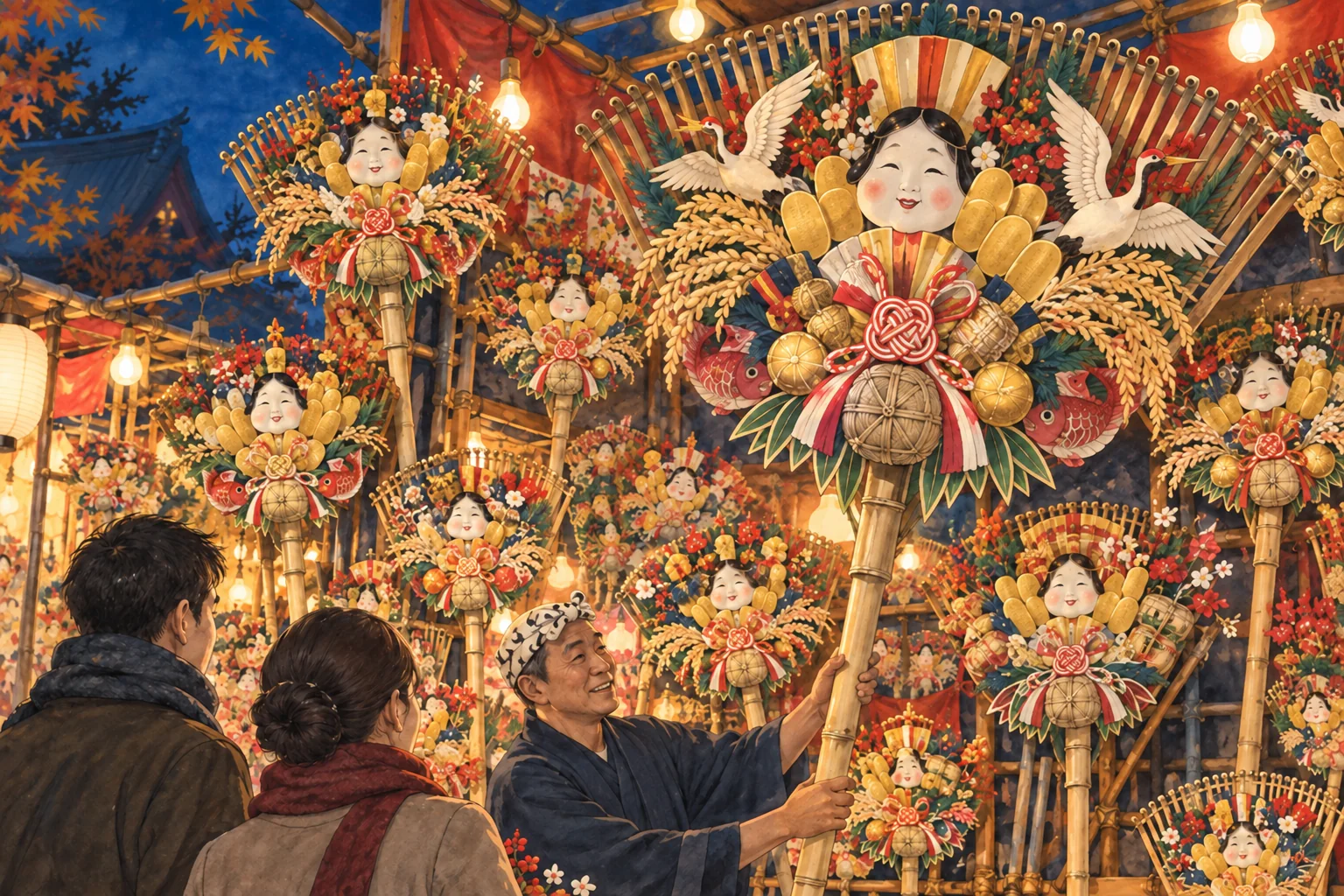
On the days of the rooster in November, shrines and temples in and around Tokyo hold night markets selling kumade, bamboo rakes loaded with lucky ornaments: gold coins, rice bales, masks, boats. Shop and restaurant owners buy one each year, usually a size larger than last year's, and the stallholder claps a rhythmic send-off when a sale is made. The old rake is returned to the shrine to be burned.
十一月の酉の日、東京とその周辺の神社や寺で夜の市が立ち、縁起物を盛った竹の熊手が売られます。小判、米俵、おかめ、宝船などが飾られています。店や飲食店の主人は毎年一つ買い、たいてい前の年より一回り大きなものにします。売買が決まると売り手が調子をそろえた手締めで送り出します。古い熊手は神社に納めて焼いてもらいます。
As a short speech
A full paragraph you can read aloud
If you are in Tokyo in November, look for a shrine lit up at night with rows of stalls selling bamboo rakes. This is tori no ichi, the rooster market, held on the days of the rooster in the old twelve-animal calendar, which means twice in some Novembers and three times in others.
The rakes, called kumade, are ordinary garden tools transformed: covered in gilded ornaments meant to bring money and luck, gold coins, rice bales, a smiling mask, a treasure ship, sometimes the current year's zodiac animal. The logic is a pun on the tool itself, since a rake gathers things in.
Restaurant and shop owners buy one every year and traditionally go up a size each time, which is why you see people carrying rakes taller than themselves through the crowd. The haggling is part of it: you negotiate the price down, then hand back the difference as a tip, and the stall claps you out with a rhythmic hand clap. The old rake goes back to the shrine to be burned.
十一月に東京にいるなら、夜に明かりのともった神社で、竹の熊手を売る露店が並んでいるのを探してみてください。これが酉の市で、十二支の酉の日に開かれます。つまり十一月に二回の年と三回の年があります。
熊手はふつうの庭道具が姿を変えたもので、金運と幸運を呼ぶ飾りで覆われています。小判、米俵、笑顔のおかめ、宝船、その年の干支の動物のこともあります。理屈は道具そのものの語呂合わせで、熊手はかき集めるものだからです。
飲食店や商店の主人は毎年一つ買い、伝統的には年ごとに一回り大きくしていくので、人ごみの中を自分の背より高い熊手を抱えて歩く人を見かけます。値段の駆け引きもその一部です。まけてもらった分を、そのままご祝儀として渡し、店が調子をそろえた手締めで送り出します。古い熊手は神社に納めて焼いてもらいます。
Questions people actually ask
And how to answer them.
Why the day of the rooster?
Days were traditionally numbered with the same twelve animals as years, so the day of the rooster comes around every twelve days. The market is tied to shrines associated with a deity of good fortune and, in the Tokyo area, with a temple and shrine in Asakusa that are its best-known sites.
日にも年と同じ十二支が当てられていたので、酉の日は十二日ごとに巡ってきます。この市は福をもたらす神を祀る社と結びついていて、東京では浅草の寺と神社が最もよく知られた場所です。
Do I have to haggle?
It is expected but friendly, not adversarial. Ask the price, get it brought down, then give the discount back as a celebratory tip, which is the point of the exchange. If that feels awkward, just pay the asking price; nobody will mind, and you still get the hand clap.
期待されてはいますが、対立ではなく和やかなやり取りです。値を聞き、まけてもらい、その差額をご祝儀として渡す。それがこのやり取りの眼目です。気後れするなら言い値で買っても構いません。誰も気にしませんし、手締めもしてもらえます。
What if there are three rooster days in one November?
There is an old saying that years with three markets have more fires. It is superstition rather than statistics, but it is repeated every time it happens, and it works as a reminder to be careful with fire in the dry winter air.
三の酉まである年は火事が多い、という古い言い伝えがあります。統計ではなく俗信ですが、そうなるたびに繰り返され、冬の乾燥した時季に火の用心を思い出させる役目を果たしています。
Phrases you can use
- The rake is for raking in good fortune.熊手は福をかき集めるためのものです。
- People buy a bigger one every year.毎年少しずつ大きなものを買います。
- Could you bring the price down a little?少しまけてもらえますか。
- Keep the difference as a tip.その分はご祝儀にしてください。
- Bring last year's rake back to the shrine.去年の熊手は神社に納めてください。
Words you need
- rake熊手
- night market夜の市・縁日
- good fortune in business商売繁盛
- haggle値切る
- hand clap手締め
- ornament / charm縁起物
Watch
From YouTubeBackground (Japanese)
酉の市は十一月の酉の日に立つ市で、酉の日は十二日ごとに巡るため、年によって二回の「二の酉」までの年と、三回の「三の酉」まである年があります。三の酉のある年は火事が多いという言い伝えが広く知られていますが、根拠のある統計ではなく俗信とされます。熊手は福や金運をかき集める縁起物で、小判、米俵、おかめ、宝船などの飾りをつけ、年ごとに大きくしていくのがよいとされます。売り手と買い手が値を交渉し、まけた分を買い手がご祝儀として渡し、手締めで締めるやり取りが習わしです。東京では浅草の鷲神社と長國寺が知られ、関東を中心に各地で行われます。熊手を売る店では、買われた熊手を高く掲げて送り出す光景が風物詩になっています。