ebisu ko
the merchants' festival for the god of business
えびす講(えびすこう)
In one line
The shortest answer that works
Ebisu ko is a gathering to honor Ebisu, the god of business, held when the other gods are said to be away.
えびす講とは、商売の神である恵比寿を祀る集まりで、ほかの神々が留守にする時期に行われます。
In 30 seconds
The standard explanation
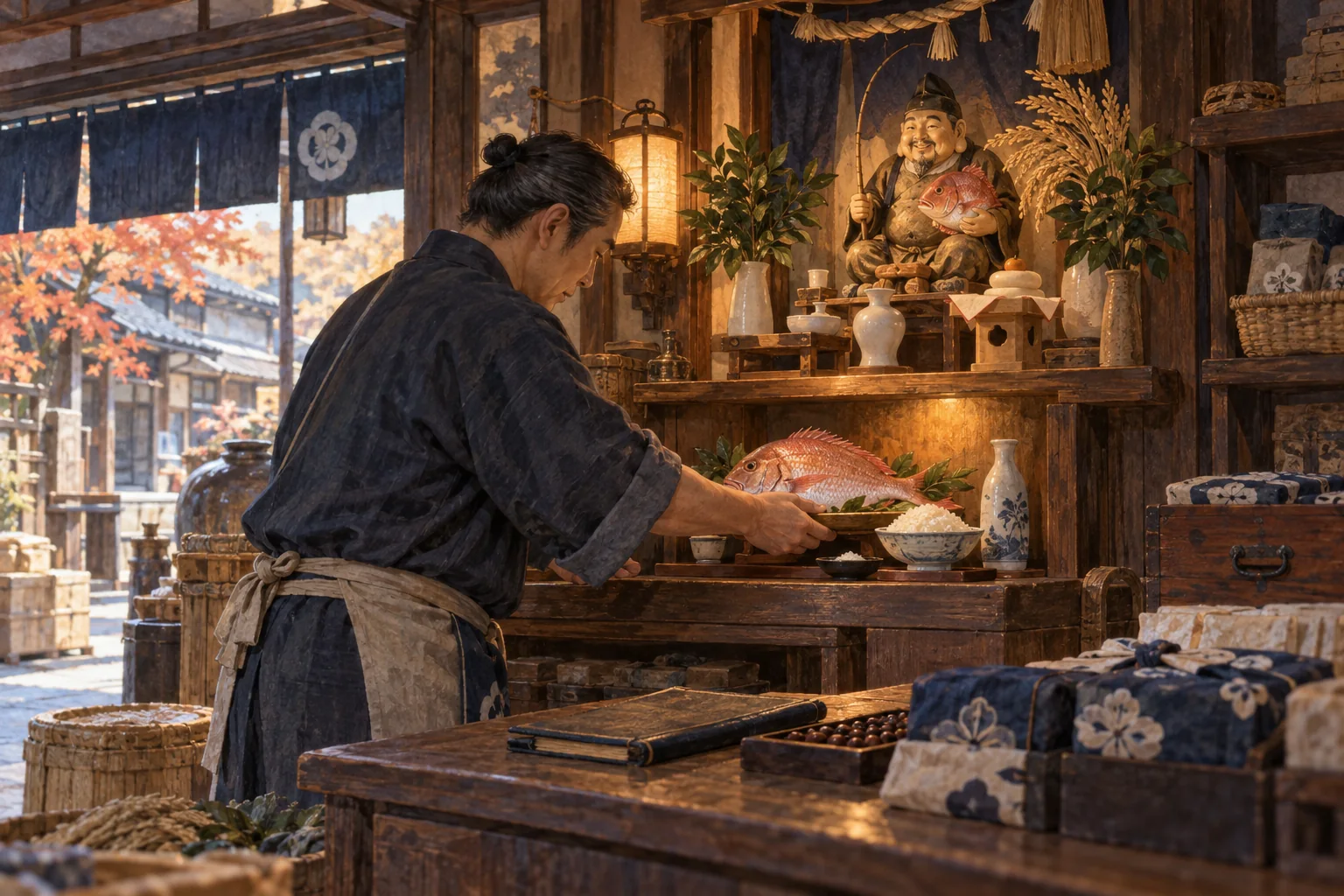
Ebisu is one of the seven lucky gods, shown holding a fishing rod and a sea bream, and is the patron of fishermen and merchants. According to a widespread belief, in the tenth lunar month the gods of Japan gather at Izumo, leaving Ebisu behind to mind the country. Merchants therefore honor him then, and in some regions in January, with offerings, markets and discount sales. Practice and dates vary a great deal by region.
恵比寿は七福神の一人で、釣り竿と鯛を持つ姿で描かれ、漁師と商人の守り神です。広く知られた言い伝えでは、旧暦の十月に日本の神々は出雲に集まり、恵比寿が留守を預かります。そのため商家はこの時期、地域によっては一月に、供え物や市や安売りで恵比寿を祀ります。やり方も日取りも地域差が非常に大きい行事です。
As a short speech
A full paragraph you can read aloud
Ebisu ko is a good example of how a piece of mythology turns into a shopping event. Ebisu is one of the seven lucky gods, usually shown as a smiling figure with a fishing rod in one hand and a large sea bream under the other arm, and he is the god fishermen and merchants pray to.
A widely held belief says that in the tenth month of the old lunar calendar the gods of Japan all travel to Izumo Taisha in Shimane for a conference, which is the popular explanation for why that month is called the month without gods in most of the country and the month with gods in Izumo. Ebisu is said to stay behind and mind the shop.
Merchants therefore hold a gathering in his honor, offering fish, sake and rice, and in many towns this became a market and then a sales event, with shops advertising bargains under the name. Dates differ: the tenth month in some places, the twentieth of the tenth in others, and January in others again. It is a minor festival nationally but a serious one in particular towns.
えびす講は、神話の一片が買い物の行事に変わっていく様子のよい例です。恵比寿は七福神の一人で、たいてい片手に釣り竿、片腕に大きな鯛を抱えた笑顔の姿で描かれ、漁師と商人が祈る神です。広く知られた言い伝えでは、旧暦の十月に日本の神々はみな島根の出雲大社に会議のため出かけます。
この月が全国では神無月、出雲では神在月と呼ばれるのはそのためだ、と一般に説明されます。恵比寿はそのあいだ残って留守を預かるとされます。そこで商家は恵比寿を祀る集まりを開き、魚、酒、米を供えます。
多くの町ではこれが市になり、さらに売り出しの行事になって、商店はその名で安売りを宣伝します。日取りはまちまちで、旧暦十月の地域、十月二十日の地域、一月の地域があります。全国的には小さな行事ですが、特定の町では真剣な行事です。
Questions people actually ask
And how to answer them.
Why is Ebisu left behind?
Explanations differ. A common one is that Ebisu is deaf or hard of hearing and so did not receive the summons, and another is that he is associated with the sea and the shore rather than the inland world of the other gods. Both are folk explanations rather than doctrine.
説明はいくつもあります。よく言われるのは、恵比寿は耳が遠いので招集を聞き逃した、というものと、ほかの神々の内陸の世界ではなく海と浜に属しているから、というものです。どちらも教義ではなく民間の説明です。
Is Ebisu the same as Daikoku?
No, though they are often paired. Ebisu carries a rod and a sea bream and came to represent fishing and trade; Daikokuten holds a mallet and stands on rice bales and is linked to the kitchen and harvest. Households often display the two together, which is why they get confused.
違いますが、よく対で扱われます。恵比寿は釣り竿と鯛を持ち、漁業と商いを表すようになりました。大黒天は打ち出の小槌を持ち米俵に乗り、台所と収穫に結びつきます。家庭では二体を並べて祀ることが多く、それが混同のもとです。
Phrases you can use
- Ebisu is the god merchants pray to.恵比寿は商人が祈る神です。
- The gods are said to gather at Izumo in October.十月に神々は出雲に集まると言われます。
- He stays behind to mind the country.恵比寿は留守を預かります。
- Shops hold sales under this name.商店はこの名で売り出しをします。
- The dates are completely different by region.日取りは地域でまったく違います。
Words you need
- god of business商売の神
- sea bream鯛
- offering供え物
- merchant商人
- bargain sale売り出し・安売り
Watch
From YouTubeBackground (Japanese)
えびす講は恵比寿を祀る講、つまり信仰の集まりに由来し、商家や漁業者のあいだで行われてきました。旧暦十月は全国的には神無月と呼ばれ、神々が出雲に集まるとされる一方、出雲では神在月と呼ばれます。恵比寿はその留守を預かるとされ、この時期に祀られるようになったと説明されます。恵比寿が留守番をする理由には、耳が遠く招集を聞き逃したという説など諸説あります。日取りは旧暦十月二十日、新暦の十月や十一月、正月の二十日など地域によって大きく異なります。長野のえびす講煙火大会のように、大きな行事として続いている例もあります。商店が売り出しを行う「えびす講セール」は、この行事が商業と結びついた形です。