Izumo Taisha
the shrine where the gods gather
出雲大社(いずもたいしゃ)
In one line
The shortest answer that works
Izumo Taisha is the shrine of Okuninushi, known for matchmaking and for four claps instead of two.
出雲大社は大国主大神を祀る神社で、縁結びと、二拍手ではなく四拍手の作法で知られます。
In 30 seconds
The standard explanation
Izumo Taisha in Shimane Prefecture enshrines Okuninushi, a deity associated with the forming of bonds, so it is visited for matchmaking and relationships generally. Worshippers clap four times rather than the usual two. In the tenth month of the old calendar, the deities of Japan are said to gather here.
島根県の出雲大社は大国主大神を祀ります。縁を結ぶ神とされ、恋愛に限らず人の縁を願って参拝されます。拍手は通常の二回ではなく四回です。旧暦の十月には、日本じゅうの神がここに集まるとされます。
As a short speech
A full paragraph you can read aloud
Izumo Taisha in Shimane Prefecture is one of the oldest and most important shrines in Japan, and several things about it are unlike anywhere else. It enshrines Okuninushi, a deity of the land who in myth handed over rule of the visible world and took charge of unseen matters, including the bonds between people.
That is why it is the shrine for en-musubi, the tying of connections, and why it is crowded with people praying for relationships, though the word covers friendships and business ties as well. Worshippers here clap four times rather than twice.
In the tenth month of the old lunar calendar the deities of the whole country are said to leave their own shrines and gather at Izumo, and the popular explanation is that this is why that month is called the month without gods everywhere else in Japan and the month with gods here. The current main hall is about twenty-four meters tall, and excavations in 2000 uncovered enormous pillar remains supporting old accounts that it once stood far higher.
島根県の出雲大社は日本で最も古く重んじられる神社のひとつで、ほかのどことも違う点がいくつもあります。祀られているのは大国主大神で、神話では国土の神として、目に見える世界の統治を譲り、目に見えない事柄を司ることになりました。
その中に人と人との縁が含まれます。だからここは縁結びの社であり、縁を願う人で混み合います。ただしこの語は恋愛に限らず、友人関係や商いの縁も含みます。参拝の拍手は二回ではなく四回です。
旧暦の十月には、全国の神が自分の社を離れて出雲に集まるとされ、日本のほかの土地ではその月を神無月と呼び、ここでは神在月と呼ぶのはそのためだ、とよく説明されます。現在の本殿の高さはおよそ24メートルで、2000年の発掘で巨大な柱の遺構が見つかり、かつてはるかに高かったとする古い記録を裏づける材料になりました。
Questions people actually ask
And how to answer them.
Why four claps instead of two?
The shrine follows its own long-standing practice rather than the common two-clap form. Explanations offered include the number standing for the four seasons or for the four directions, and the shrine itself simply presents it as its established rite.
共通の二拍手ではなく、この社に伝わる作法によるものです。四季を表す、四方を表すといった説明がされますが、神社としては昔から定まった作法であるとしています。
What is the month without gods?
The tenth month of the old lunar calendar, called kannazuki almost everywhere in Japan, popularly explained as meaning the deities are away at Izumo. In the Izumo region the same month is called kamiarizuki, the month with gods, and rites are held to welcome them.
旧暦の十月で、日本のほとんどの土地では神無月と呼ばれます。神が出雲へ出かけて留守になるから、と広く説明されています。出雲では同じ月を神在月と呼び、神を迎える神事が行われます。
A common misunderstanding
MYTHEn-musubi means praying for a romantic partner.
FACTThe word covers connections of all kinds, including friendships, work relationships and business ties. Romance is the most talked-about part, not the whole meaning.
Phrases you can use
- Here you clap four times, not twice.ここでは二回ではなく四回拍手します。
- The deity is associated with forming bonds.縁を結ぶ神とされています。
- The gods are said to gather here in the tenth lunar month.旧暦十月に神々が集まるとされます。
- It isn't only about romance.恋愛だけの話ではありません。
Words you need
- matchmaking / forming bonds縁結び
- to clap拍手を打つ
- main hall本殿
- myth神話
Watch
From YouTubeBackground (Japanese)
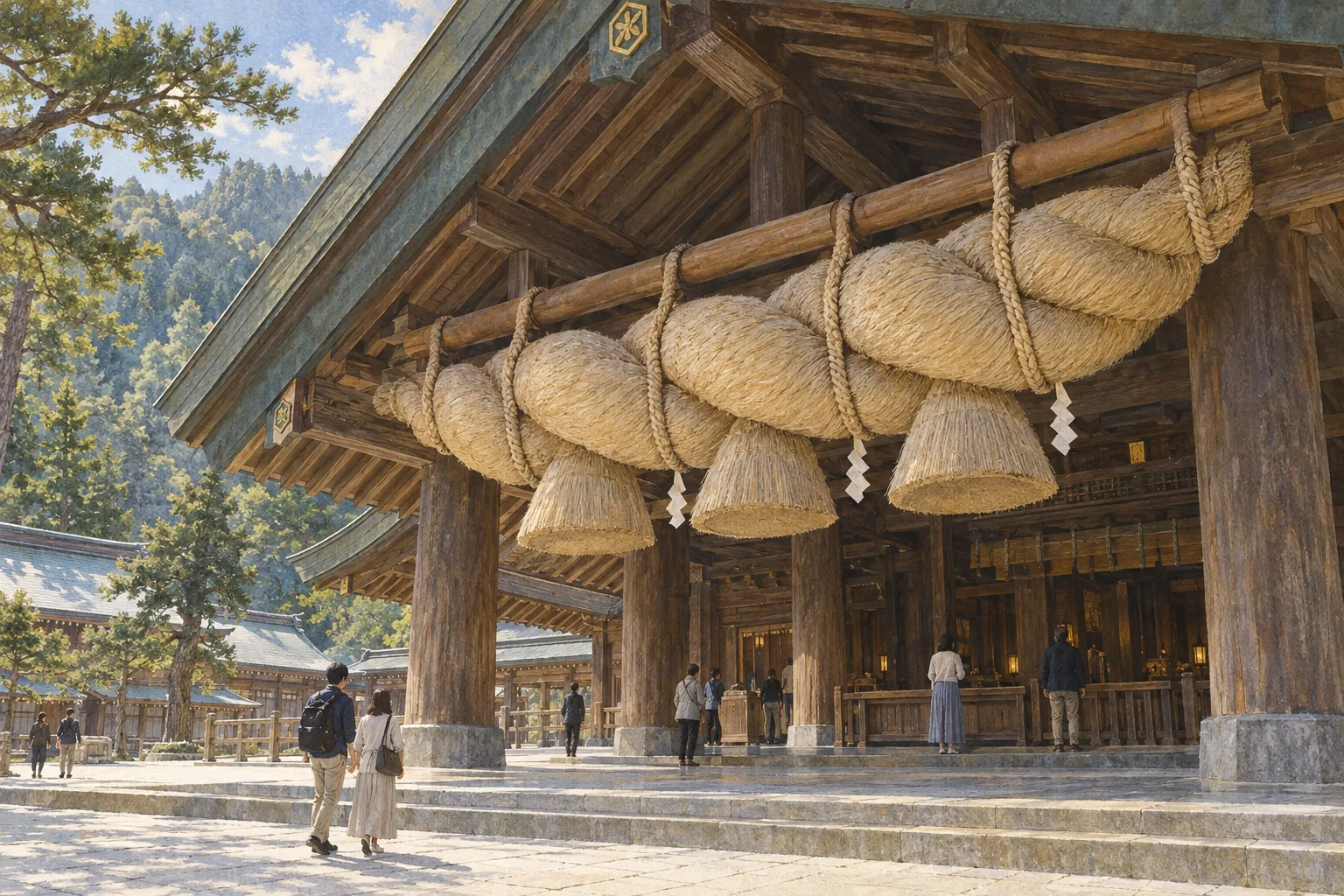
出雲大社の本殿は大社造と呼ばれる古い形式で、高さはおよそ24メートルあります。平安時代の記録には、当時の建物が東大寺の大仏殿より高かったと読める記述があり、長く疑われてきましたが、2000年に境内から三本の柱を束ねた巨大な遺構が見つかり、高層であった可能性が改めて議論されています。神楽殿の大注連縄は数年ごとに掛け替えられ、その大きさでも知られます。正式な読みは「いづもおおやしろ」です。