kumade
the lucky rake for raking in business
熊手(くまで)
In one line
The shortest answer that works
A kumade is a decorated rake bought in November to rake in good fortune and business.
熊手とは、福や商売を掻き集めるために11月に買う、飾りをつけた熊手です。
In 30 seconds
The standard explanation
A kumade is a bamboo rake covered with lucky ornaments, bought at the Tori-no-Ichi fairs held at certain shrines in November. Shops and restaurants buy one each year for business luck, and convention says the next one should be bigger than the last. Purchases are marked by the stall holders clapping in rhythm.
熊手とは、縁起物で飾った竹の熊手で、11月に一部の神社で開かれる酉の市で売られます。商店や飲食店は商売繁盛を願って毎年買い、翌年はそれより大きなものにするのが習わしとされます。買うと、店の人が手締めの拍手で送り出します。
As a short speech
A full paragraph you can read aloud
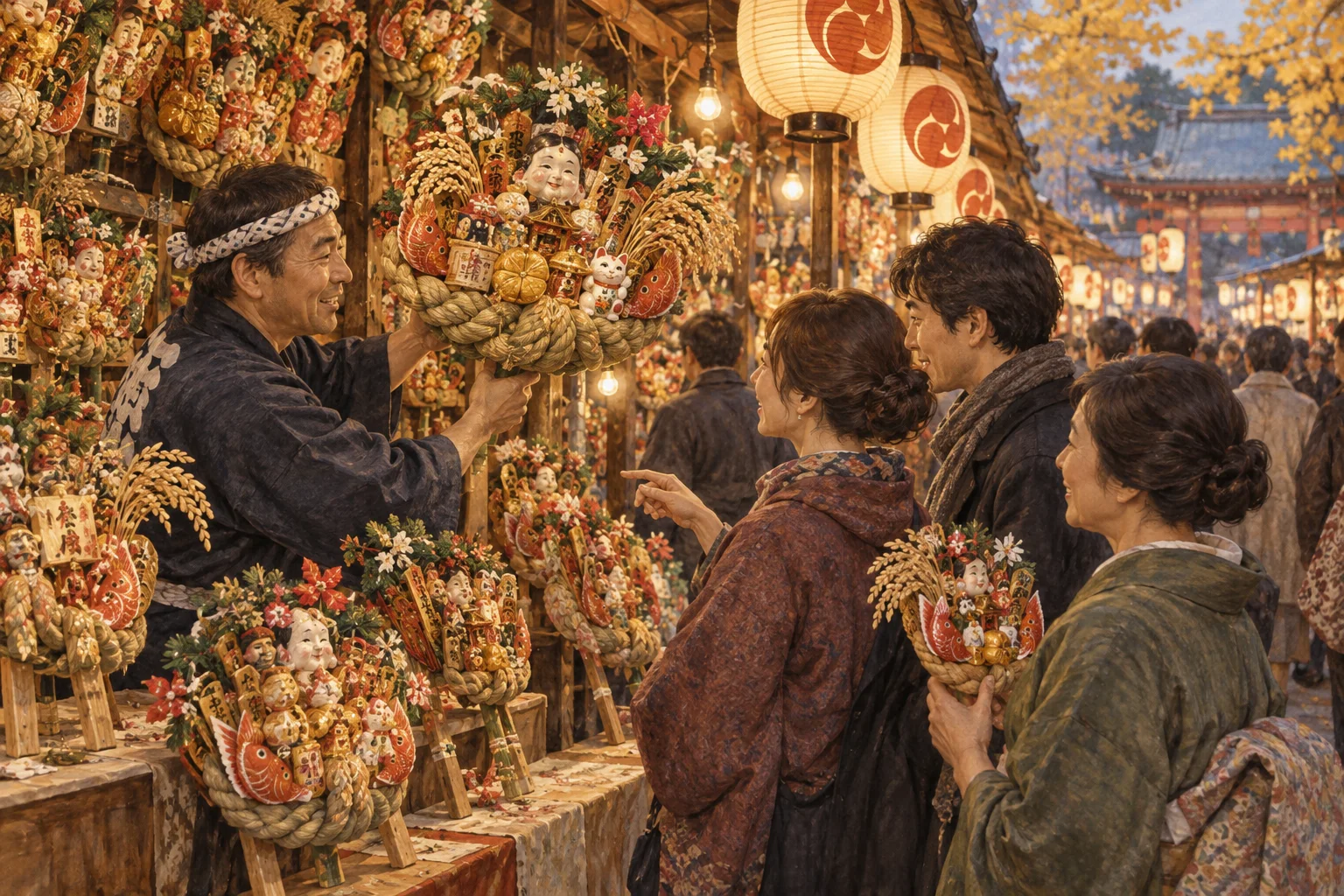
A kumade is a bamboo rake decorated with lucky objects: gold coins, rice bales, a mask of a smiling face, a treasure ship, a drum. The idea is straightforward, almost blunt: a rake gathers things in, so a rake covered in symbols of wealth gathers wealth.
They are sold at fairs called Tori-no-Ichi, held on the days of the rooster in November at certain shrines, and the customers are mostly businesses. There are two customs worth knowing. First, you are supposed to buy a slightly larger one each year, so a long-established shop displays an enormous rake and a new one starts small.
Second, the price is negotiated, and then the customer traditionally pays the original asking price and gives the difference as a tip, at which point the stall holders gather and clap in a set rhythm to send the buyer off. The clapping goes on all evening across the fairground, which is what makes the atmosphere.
熊手は、縁起物で飾った竹の熊手です。小判、米俵、笑った顔の面、宝船、太鼓。考え方は率直で、ほとんど身も蓋もありません。熊手は掻き集める道具なので、富の印で覆った熊手は富を掻き集める、というわけです。
11月の酉の日に一部の神社で開かれる酉の市で売られ、買うのはおもに商売をしている人たちです。知っておくとよい習わしが二つあります。第一に、毎年少しずつ大きなものにするとされるので、古くから続く店は巨大な熊手を飾り、新しい店は小さなものから始めます。
第二に、値は交渉で決め、そのうえで客が最初の言い値を払い、差額を祝儀として渡すのが習わしです。そのとき店の人が集まって決まった調子で手を打ち、買い手を送り出します。その手締めが一晩じゅう市のあちこちで続き、それがあの雰囲気をつくります。
Questions people actually ask
And how to answer them.
What is Tori-no-Ichi?
A fair held on the days of the rooster in November at shrines associated with it, most famously in Asakusa. Depending on the calendar there are two or three such days in a month, and a year with three is traditionally said to bring more fires.
11月の酉の日に、ゆかりのある神社で開かれる市で、浅草のものが最もよく知られています。暦により月に二度か三度あり、三の酉まである年は火事が多いと言い伝えられます。
Should a visitor buy one?
You can, and small ones are cheap and easy to carry. Just know what you are joining: the rake is meant to be replaced yearly and the old one returned to the shrine, so as a souvenir it is a snapshot of a custom rather than the custom itself.
買えますし、小さなものは安く持ち帰りやすいものです。ただ、何に加わっているかは知っておいてください。熊手は毎年新しくし、古いものは神社に納めるものなので、土産としては習わしそのものではなく、その一場面ということになります。
Phrases you can use
- A rake gathers things in.熊手は掻き集める道具です。
- You buy a bigger one each year.毎年大きくしていきます。
- The stall holders clap when you buy.買うと店の人が手締めをします。
- The fair is held in November.市は11月に立ちます。
Words you need
- rake熊手
- market / fair市
- business prosperity商売繁盛
- to haggle値を交渉する
Watch
From YouTubeBackground (Japanese)
酉の市は11月の酉の日に立ち、東京では浅草の鷲神社や新宿の花園神社が知られます。三の酉まである年は火事が多いという言い伝えがあり、その年は火の用心が呼びかけられます。熊手の売買では、値切ったうえで言い値を払い、差額を祝儀として渡す形が粋とされてきました。買った熊手は前年より大きくするのがよいとされ、古いものは神社に納めます。福を掻き込む道具として、神社の授与品にも小さな熊手があります。