uchiyu to sotoyu meguri
hopping between a hot spring town's public bathhouses in a yukata
内湯と外湯めぐり(うちゆとそとゆめぐり)
In one line
The shortest answer that works
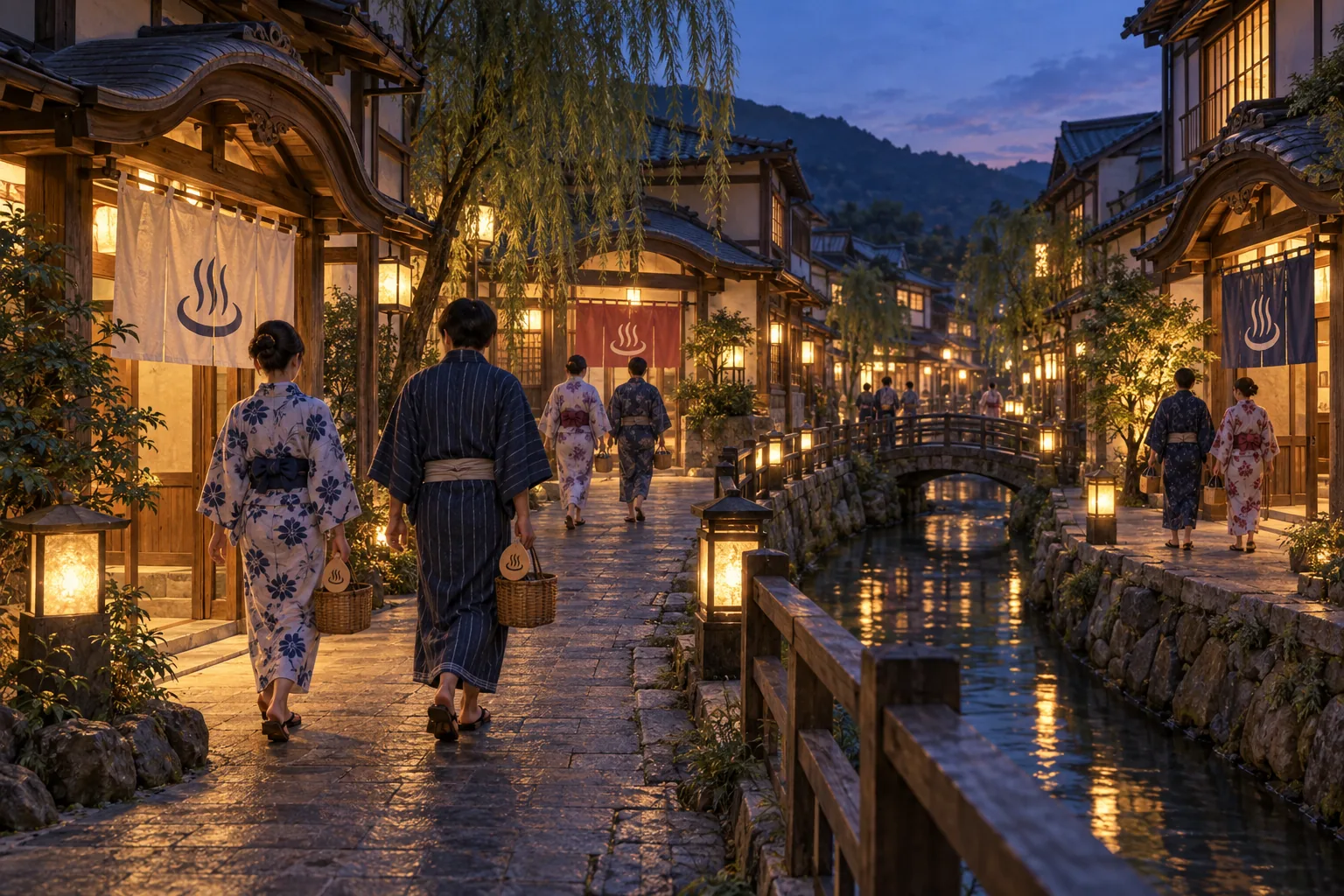
Uchiyu to sotoyu meguri, bathhouse hopping, is walking between public baths in some hot spring towns, wearing yukata and geta.
内湯と外湯めぐりとは、一部の温泉街で、浴衣と下駄に着替え、外湯と呼ばれる共同浴場を歩いてめぐることです。
In 30 seconds
The standard explanation
Most ryokan have their own bath, called uchi-yu, but a handful of hot spring towns built their public baths, soto-yu, separately from the inns, so guests change into a yukata and wooden geta and walk between several bathhouses in one evening. Each soto-yu often has a different mineral character or history, and many towns sell a pass covering entry to all of them. The clatter of geta on old streets at dusk, as guests move from one bath to the next, has become part of the appeal of towns built this way.
多くの旅館は内湯と呼ばれる自前の風呂を持っていますが、一部の温泉街は外湯という共同浴場を宿とは別に町に構え、宿泊客は浴衣と下駄に着替えて一晩のうちに何軒もの浴場を歩いて回ります。外湯はそれぞれ泉質や由来が違うとされることが多く、多くの町がすべての外湯に入れる利用券を売っています。夕暮れどき、次の湯へと歩く客たちの下駄の音が古い通りに響く光景そのものが、こうした造りの町の魅力の一部になっています。
As a short speech
A full paragraph you can read aloud
In an ordinary onsen ryokan, the bath is simply part of the building, an uchi-yu you never have to leave the inn to reach. A smaller number of historic hot spring towns did it differently: the public baths, soto-yu, sit apart from any single inn, scattered along the streets of the town itself, and guests are expected to walk out in a yukata and geta to use them. Towns like Kinosaki in Hyogo built their whole identity around this, with seven soto-yu, each said to have a different water quality or founding legend, and a pass issued by inns that lets a guest visit as many as they like in one stay.
Walking between them after dark, in borrowed sandals on stone streets lined with willow trees and small shops, is treated less as a chore than as the actual evening's entertainment, distinct from just bathing at the hotel. Some visitors find the walk between baths, in a yukata and still warm from the water, the most memorable part of the whole trip, more than any single bath itself.
ふつうの温泉旅館では、風呂は建物の一部にすぎず、宿を出ることなく入れる内湯です。一部の歴史ある温泉街だけは違うやり方をしてきました。外湯という共同浴場が、特定の一軒の宿には属さず、町の通りのあちこちに点在しており、客は浴衣と下駄を履いて外に出て使うことが前提になっています。
兵庫県の城崎温泉のような町は、この仕組みそのものを町の個性にしていて、七つの外湯にはそれぞれ違う泉質や開湯にまつわる言い伝えがあるとされ、宿が発行する利用券で滞在中いくつでも回ることができます。
柳並木と小さな店の並ぶ石畳の通りを、借りた下駄を鳴らしながら日が暮れてから歩き回ることは、単なる面倒事ではなく、宿での入浴とは別の、その晩の楽しみそのものとして扱われています。浴衣姿で湯上がりのほてりが残る体のまま湯から湯へと歩くその時間こそが、旅の中でいちばん記憶に残ると感じる人も少なくありません。
Questions people actually ask
And how to answer them.
Do I need to pay separately for each bathhouse?
Usually not if you're staying at a participating inn, since most issue a pass, sometimes a wristband or ticket, that covers entry to all the town's soto-yu for the length of your stay.
参加している宿に泊まっていれば、ふつうは必要ありません。多くの宿が、滞在中は町のすべての外湯に入れる利用券やリストバンドを発行しているからです。
Is it normal to walk around town in a yukata?
Yes, in towns built around soto-yu it's the expected look in the evening, and shops, restaurants and the baths themselves are set up assuming guests will be dressed that way.
はい、外湯めぐりを前提にした町では、夕方の浴衣姿はごく当たり前の光景です。店や飲食店、浴場自体も、客がその格好でいることを前提に作られています。
What's actually different between the baths if the town is small?
The water source, temperature and sometimes the architecture can differ noticeably between them, and locals often have a favorite for a specific reason, like one being better after a cold walk or another having a nicer outdoor section.
源泉や温度、時には建物の造りまで、湯ごとに明らかに違うことがあります。地元の人にはそれぞれお気に入りの理由があり、寒い中歩いたあとに向いている湯や、露天の部分が気持ちいい湯など、湯によって好みが分かれます。
Phrases you can use
- Let's visit a different bathhouse tonight.今夜は違う外湯に行きましょう。
- This pass covers all seven baths.このパスで七つの湯すべてに入れます。
- You can hear the geta on the street.通りに下駄の音が響いています。
- Which bath do the locals like best?地元の人はどの湯が好きですか。
- Don't forget a small towel for outside the inn.宿の外では小さいタオルを忘れずに。
Words you need
- outer bath, public bathhouse外湯
- the inn's own bath内湯
- wooden clogs下駄
- bathhouse pass湯めぐりパス
- hot spring town温泉街
Watch
From YouTubeBackground (Japanese)
兵庫県の城崎温泉は、宿ごとの内湯より町の外湯めぐりを楽しむ文化で知られ、七つの外湯それぞれに異なる由来や泉質が伝わるとされる。宿泊客は浴衣と下駄姿で外湯を回るのが定番で、多くの宿が滞在中は外湯に何度でも入れる利用券を発行している。同様に外湯めぐりの文化を持つ温泉地は渋温泉(長野県)や野沢温泉(長野県)などにもあり、共同浴場が地域の住民の管理で運営されている例が多い。