rotenburo
open-air bath
露天風呂(ろてんぶろ)
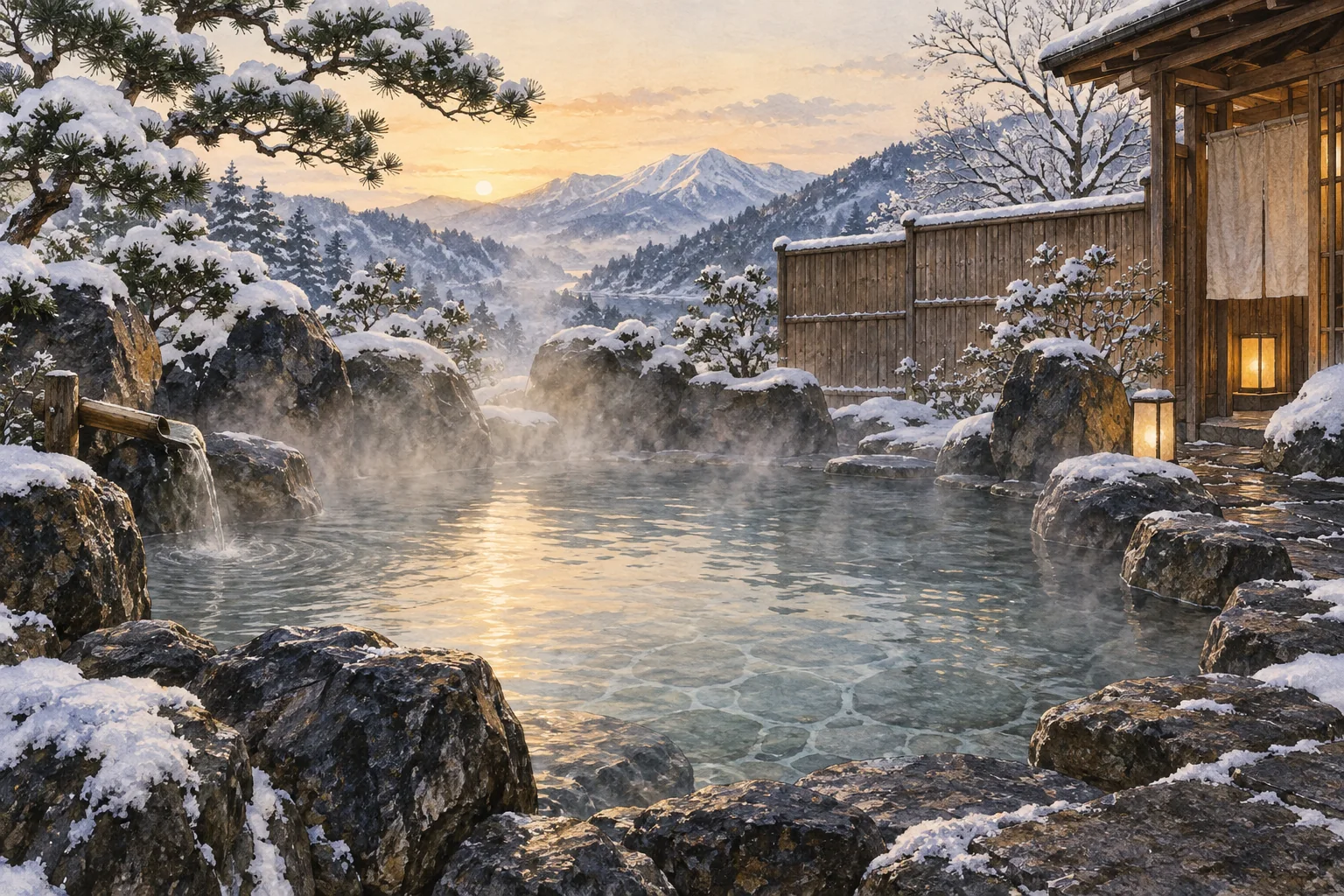
In one line
The shortest answer that works
A rotenburo is an outdoor hot spring bath, and winter is when people want it most.
露天風呂とは屋外の温泉の湯船のことで、冬こそ人が入りたがります。
In 30 seconds
The standard explanation
A rotenburo is an open-air bath, usually attached to an indoor bathing room at a hot spring inn or public bath. You wash inside, then step outside into the hot water. The appeal is the contrast: cold air on your face, hot water to the shoulders, and a view of snow, trees or the sea. Most are separated by gender.
露天風呂は屋外の湯船で、たいていは温泉宿や公衆浴場の内湯とつながっています。中で体を洗ってから、外の湯に出ます。魅力は対比です。顔に当たる冷たい空気、肩まで浸かる熱い湯、そして雪や木立や海の眺め。多くは男女に分かれています。
As a short speech
A full paragraph you can read aloud
A rotenburo is an outdoor hot spring bath, and it is the thing most Japanese people picture when they think about a hot spring holiday. The order matters: you undress inside, wash and rinse thoroughly at a seated shower, and only then go out to the open-air bath, because the water is shared and nothing soapy goes into it.
The pleasure is in the contrast between cold air and hot water, which is why the most prized time to go is in falling snow, and why rotenburo by the sea or in a river gorge sell rooms. Practical points: take the small towel with you but do not let it touch the water, put it on your head or on the rock beside you, and do not stay in so long that you get dizzy, because these baths are hotter than they feel at first and alcohol makes that worse.
露天風呂は屋外の温泉の湯船で、日本人が温泉旅行を思い浮かべるときに真っ先に浮かぶのがこれです。順番が大事です。中で服を脱ぎ、座った姿勢のシャワーでよく洗って流し、それから外の湯に出ます。
湯はみなで使うもので、石けんのついたものは何も入れないからです。楽しみは冷たい空気と熱い湯の対比にあり、だからこそ雪の降る日が最も喜ばれ、海沿いや渓谷の露天風呂は部屋が埋まります。
実際の注意としては、小さなタオルは持って入ってよいが湯につけないこと。頭に載せるか、そばの岩に置きます。そして長く入りすぎてのぼせないこと。この種の湯は最初に感じるより熱く、酒を飲んでいると危険が増します。
Questions people actually ask
And how to answer them.
Do I really have to be naked?
In almost all Japanese hot springs, yes. Swimwear is not allowed because it carries detergent and dirt into shared water. A small number of facilities are mixed bathing or allow bathing wear, and those are clearly signposted, but they are the exception.
日本のほぼすべての温泉ではそうです。水着は洗剤や汚れを共有の湯に持ち込むため認められていません。混浴や湯浴み着を認める施設も少数ありますが、そこには明確な表示があり、例外です。
How long should I stay in?
Ten to fifteen minutes at a time is a sensible guide, getting out to cool down in between. Drink water before and after, do not bathe straight after a meal or after drinking, and get out immediately if you feel light-headed.
一度に10分から15分を目安にし、間に上がって体を冷ましてください。前後に水を飲み、食事の直後や飲酒後は避け、ふらつきを感じたらすぐに上がってください。
Is it colder in winter?
The air is, and the water can lose a little heat, though many places adjust the flow in winter. The real shock comes when you get out, so have your towel ready, keep your head dry, and head back inside quickly.
空気は冷たく、湯も少しぬるくなることがありますが、冬は湯の量を調整している所も多いです。つらいのはむしろ上がったときなので、タオルを手元に置き、頭は濡らさず、手早く内湯に戻ってください。
Phrases you can use
- Wash yourself thoroughly before getting in.入る前によく体を洗ってください。
- Don't put the towel in the water.タオルは湯につけないでください。
- The open-air bath is through that door.露天風呂はあの扉の先です。
- Get out if you start to feel dizzy.ふらっとしたら上がってください。
- It's best when it's snowing.雪の日がいちばんいいです。
Words you need
- open-air bath露天風呂
- indoor bath内湯
- to soak浸かる
- to feel dizzy / light-headedのぼせる
- changing room脱衣所
Watch
From YouTubeBackground (Japanese)
露天風呂は、もとは湯が自然に湧いている場所をそのまま使ったものでした。宿が設備として設けるようになったのは近代以降とされ、今では露天風呂の有無が宿選びの決め手になります。男女の浴室を日ごとに入れ替える宿が多いのは、眺めのよい露天風呂を両方の客に使ってもらうためです。客室に専用の露天風呂を備えた宿もあり、これを「露天風呂付き客室」と呼びます。天候によっては閉鎖されることもあります。