yuatari
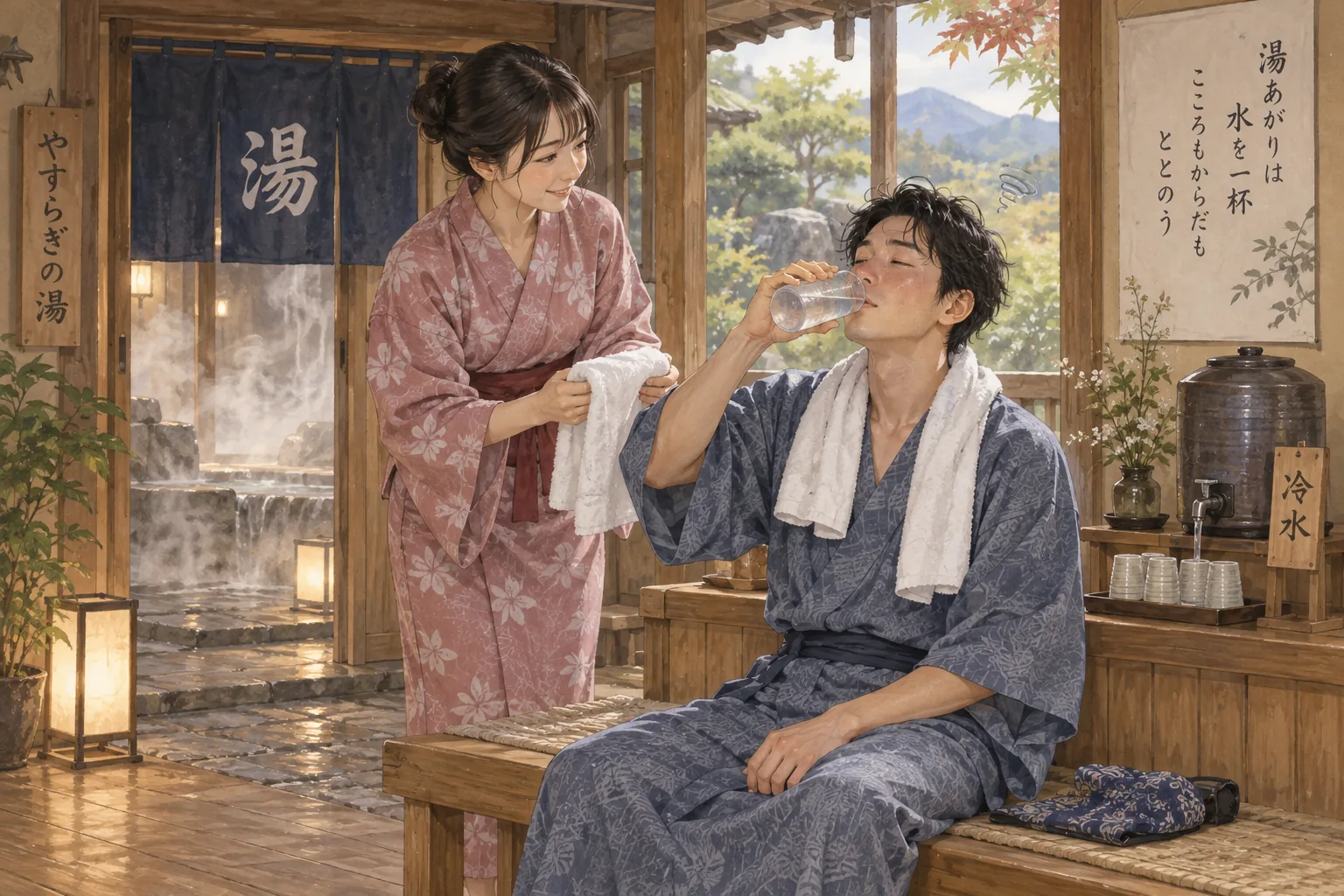
feeling dizzy or unwell from soaking in hot spring water too long
湯あたり(ゆあたり)
In one line
The shortest answer that works
Yuatari is the dizziness, nausea, or fatigue that can follow soaking in hot spring water too long.
湯あたりとは、温泉に長く浸かりすぎたときに起こる、めまいや吐き気、だるさのことです。
In 30 seconds
The standard explanation
Yuatari is what happens when your body overheats from staying in hot spring water too long: your head spins, your stomach turns, and you may feel exhausted. It's more likely on an empty stomach, after alcohol, or when you're already dehydrated from travel. Locals guard against it by soaking a few minutes at a time and stepping out to cool off between dips. Strictly speaking, the word also covers the tiredness that can set in after bathing many times a day over several days at a spa.
湯あたりとは、温泉に長く浸かりすぎて体がのぼせ、頭がくらくらしたり、吐き気がしたり、急にだるくなったりする状態です。空腹時やお酒を飲んだあと、旅で少し脱水気味のときに起きやすくなります。地元の人は数分ずつ浸かっては湯船から出て体を冷ますことで、これを防いでいます。厳密には、湯治などで何日も続けて一日に何度も入ったあとに出るだるさも、湯あたりと呼びます。
As a short speech
A full paragraph you can read aloud
Yuatari is what Japanese hot spring bathers call the dizziness, nausea, or sudden fatigue that comes from staying in hot water too long. Hot spring water can raise your heart rate and blood pressure fast, and staying in for twenty or thirty minutes at a stretch, the way you might in a Western bathtub, can genuinely make you feel sick.
The usual advice is to soak for a few minutes, get out, cool down, drink water, and go back in if you like, rather than one long sit. It's also worse on an empty stomach or after drinking, which is exactly the situation many travelers are in after a day of sightseeing and a beer at dinner.
湯あたりとは、温泉に長く浸かりすぎたときに起こる、めまいや吐き気、急なだるさのことを指す言葉です。温泉のお湯は心拍数や血圧を急に上げるため、欧米式のバスタブのように20分、30分と続けて浸かっていると、本当に気分が悪くなることがあります。
一般的なアドバイスは、数分浸かったら一度湯船から出て体を冷まし、水分を取ってから、また入りたければ入るという入り方で、長時間ぶっ通しで浸からないことです。空腹時やお酒を飲んだあとは特に起こりやすく、実は一日観光をして夕食でビールを飲んだあとの旅行者は、まさにその状況にあることが多いのです。
Questions people actually ask
And how to answer them.
How long is too long in the bath?
There's no fixed number, since it depends on the water temperature and your own condition, but a few minutes at a time with breaks in between is a common rule of thumb, rather than one continuous soak.
決まった時間があるわけではなく、お湯の温度やその人の体調によりますが、一度に数分ずつ、間に休憩を挟んで入るというのが、続けて長時間入り続けるよりも一般的な目安とされています。
What should I do if I start feeling dizzy?
Get out of the water right away, sit down somewhere cool, and drink water. Don't try to push through it — sitting or lying down until it passes is the standard advice.
すぐに湯船から出て、涼しい場所に座り、水分を取ってください。無理をせず、治まるまで座るか横になっているのが一般的なアドバイスです。
Is this the same as heatstroke?
It's related but not identical — yuatari is specifically about hot water and blood pressure, while heatstroke is about overall body temperature in hot air. Both involve overheating, so the first aid is similar: cool down and rehydrate.
関連はありますが、同じではありません。湯あたりはお湯と血圧に関わるもので、熱中症は暑い空気の中での体温上昇に関わるものです。どちらも体が熱を持ちすぎている点では共通するため、応急処置は「体を冷やして水分を取る」というよく似たものになります。
Phrases you can use
- I'm feeling a little dizzy — I think it's yuatari.ちょっとめまいがします。湯あたりかもしれません。
- Let's get out and cool down for a bit.一度出て、少し体を冷ましましょう。
- Don't stay in too long on an empty stomach.空腹のまま長く浸からないでくださいね。
- Drink some water before you go back in.もう一度入る前に水を飲んでください。
- Sit down here until it passes.治まるまでここに座っていてください。
Words you need
- dizzinessめまい
- dehydration脱水
- blood pressure血圧
- to cool down体を冷ます
- to rehydrate水分補給する
Watch
From YouTubeBackground (Japanese)
のぼせと湯あたりは混同されがちである。のぼせは入浴中に頭に血が上ってくらっとする一時的な状態で、湯船から出ればすぐ治まることが多いのに対し、湯あたりは入浴後しばらくしてから体調不良として出ることもある。泉質の強い温泉ほど湯あたりしやすいとされ、初めて入る温泉地では一日に何度も入りすぎないのが昔からの注意事項である。心臓への負担を減らすため、胸から下だけを湯に浸ける半身浴も対策の一つとして知られている。