yusenseki
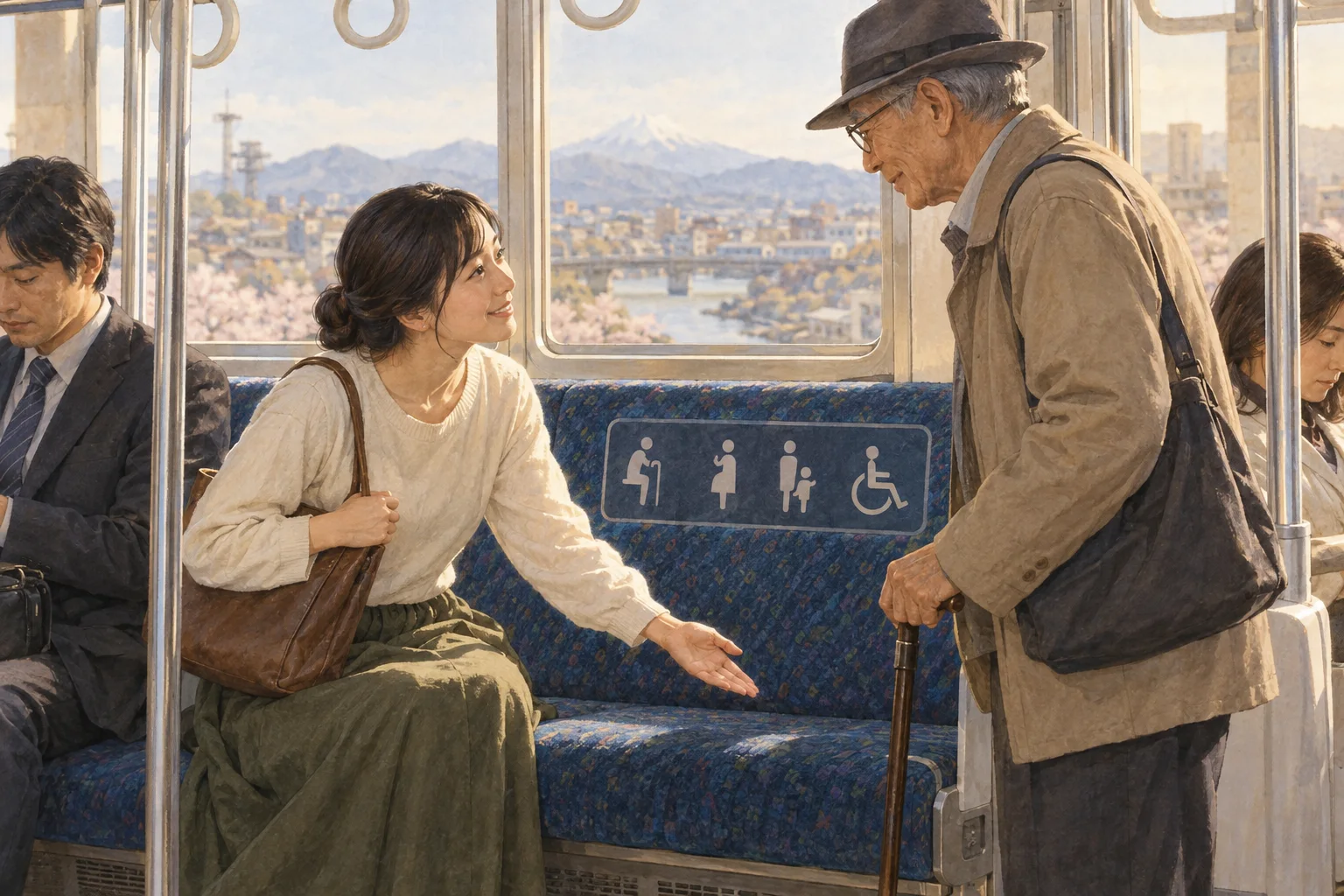
seats set aside for those who need them
優先席(ゆうせんせき)
In one line
The shortest answer that works
Priority seats are set aside for elderly, disabled, injured and pregnant passengers and those with small children.
優先席は、高齢者・障害のある方・けがをしている人・妊娠中の人・小さな子ども連れのために空けてある席です。
In 30 seconds
The standard explanation
Most trains and buses have priority seats, marked in a different color, usually at the end of the car. They are not reserved, so anyone may sit there when the train is empty, but you are expected to give the seat up. In practice offering a seat is socially awkward here, and a badge system exists so that pregnant passengers do not have to explain themselves.
ほとんどの電車やバスに優先席があり、たいてい車両の端に別の色で示されています。指定席ではないので空いていれば誰でも座れますが、必要な人が来たら譲ることが前提です。実際には声をかけること自体が気まずく、妊娠中の人が説明しなくて済むよう、マークを配る仕組みがあります。
As a short speech
A full paragraph you can read aloud
Priority seats are usually at the ends of the car, upholstered in a different color, and they are for elderly passengers, people with disabilities or injuries, pregnant women and people with small children. They are not reserved seats, so sitting there when the train is empty is fine, but you are expected to stand when someone needs it.
Here is the honest part. Offering a seat is socially difficult in Japan, and this is discussed openly. People hesitate because being offered a seat can feel like being called old, and refusing is awkward for everyone.
Because of that, transport authorities issue a small badge for pregnant passengers to hang on their bag, so that they do not have to announce their condition to a car full of strangers. My own advice is to just stand up and step away without making a speech. Leaving the seat free lets the other person take it without any exchange at all.
優先席は車両の端にあり、たいてい色の違う座席で示されています。高齢の方、障害やけがのある方、妊娠中の方、小さな子ども連れのための席です。指定席ではないので、空いているときに座るのは問題ありません。
ただ、必要な人が来たら立つことが前提です。ここからが正直な部分です。日本では席を譲ることが社会的に難しく、これは公然と議論されています。ためらうのは、譲られることが「年寄り扱い」に感じられることがあり、断るほうも気まずいからです。
そのため、妊娠中の方がカバンに付けるマークが配られています。見知らぬ人だらけの車両で自分の状態を告げなくて済むようにするためです。私自身の助言は、何も言わずに立って、その場を離れることです。席を空ければ、やりとりなしに座ってもらえます。
Questions people actually ask
And how to answer them.
Can I sit in a priority seat?
Yes, when nobody needs it. They are not reserved. The expectation is simply that you stand up when someone who needs the seat appears.
必要な人がいなければ座って構いません。指定席ではありません。求められているのは、必要な人が来たら立つことだけです。
What is the pink badge with a baby on it?
The maternity mark, issued free by local authorities and transport operators. It signals that the wearer is pregnant, including in early pregnancy when it is not visible.
マタニティマークです。自治体や交通事業者が無料で配っています。見た目では分からない初期を含め、妊娠中であることを示すものです。
How do I offer a seat without embarrassing anyone?
Stand up and move away rather than making a direct offer. If you do speak, dozo, meaning please, with a small gesture toward the seat, is enough and is easy to decline.
直接すすめるより、立って離れるのがよいです。声をかけるなら「どうぞ」と席を示すだけで十分で、相手も断りやすくなります。
Phrases you can use
- Please, take my seat.どうぞ、お座りください。
- These seats are for those who need them.こちらは優先席です。
- That badge means she's pregnant.あのマークは妊娠中であることを示しています。
- Just stand up and move away.黙って立って、離れるのがいいです。
- They're not reserved — you can sit if it's empty.指定席ではないので、空いていれば座れます。
Words you need
- priority seat優先席
- give up a seat席を譲る
- pregnant妊娠している
- badge / tagマーク、バッジ
- awkward気まずい
Watch
From YouTubeBackground (Japanese)
日本の優先席は1973年9月15日の敬老の日に、国鉄の中央線快速電車などで「シルバーシート」として始まった。名称は座席に使われた生地の色に由来し、新幹線0系用に用意されていたシルバーグレーの生地を転用したためとされる。高齢者だけでなく障害のある人や妊娠中の人も対象とするため、1990年代以降、各社が「優先席」へと名称を変えていった。マタニティマークは2006年に厚生労働省が統一デザインを定めたもので、自治体や鉄道各社で配布されている。なお「シルバー」が日本語で高齢者を指す語として定着したのは、このシルバーシートがきっかけだとされる。