Fujisan
Japan's highest mountain, an active volcano and a World Cultural Heritage site
富士山(ふじさん)
In one line
The shortest answer that works
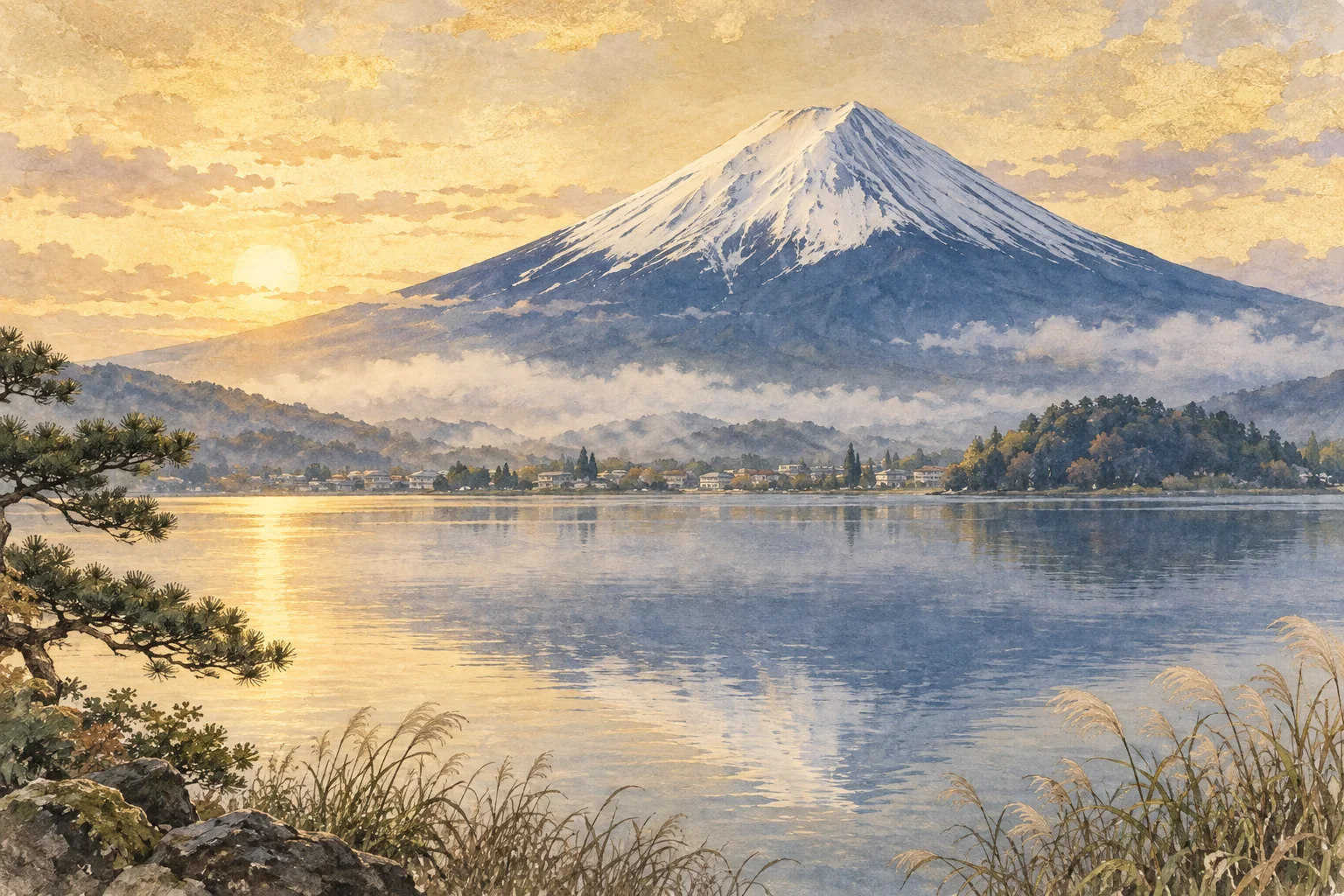
Fujisan, or Mount Fuji, is Japan's highest mountain at 3,776 meters, an active volcano and a World Cultural Heritage site.
富士山とは、標高3,776メートルの日本最高峰で、活火山であり、世界文化遺産でもある山です。
In 30 seconds
The standard explanation
Mount Fuji stands 3,776 meters high on the border of Shizuoka and Yamanashi. It is a single cone-shaped volcano, which is why the silhouette is so recognizable. It is listed by UNESCO as a cultural site, not a natural one, because what was recognized was centuries of worship and art. It is also an active volcano; its last eruption was in 1707.
富士山は静岡県と山梨県の境にある標高3,776メートルの山です。単独の円錐形の火山なので、あの輪郭がすぐそれと分かります。ユネスコの登録は自然遺産ではなく文化遺産です。評価されたのは、長く続いた信仰と芸術だからです。活火山でもあり、最後の噴火は1707年でした。
As a short speech
A full paragraph you can read aloud
Mount Fuji is 3,776 meters high and stands alone, which is why its shape is instantly recognizable and why it appears in so much Japanese art. Three points are worth getting right when you explain it. First, UNESCO listed it in 2013 as a cultural site, not a natural one. The title is Fujisan, sacred place and source of artistic inspiration.
What was recognized was that people climbed it as a religious act for centuries and painted it endlessly, not that the mountain itself is geologically unique. Second, it is an active volcano. It last erupted in 1707, an eruption that dropped ash on Edo, and it has simply been quiet since. Japanese authorities plan for the possibility of another one.
Third, most Japanese people have never climbed it, and many will tell you the mountain is better looked at than climbed. The climbing season is only about two months, you now pay 4,000 yen, and the view from the top is of clouds. The famous view is from Hakone, from the shinkansen, or from a Tokyo window on a clear winter morning.
富士山は標高3,776メートル、単独で立っているので輪郭がすぐ分かり、日本の絵にこれだけ描かれてきました。説明するときに外したくない点が三つあります。まず、ユネスコの登録は2013年で、自然遺産ではなく文化遺産です。名称は「富士山―信仰の対象と芸術の源泉」。
評価されたのは、人々が何百年も信仰として登り、繰り返し描いてきたことであって、山そのものが地質的に珍しいからではありません。次に、活火山です。最後の噴火は1707年で、江戸にも灰が降りました。それ以来静かなだけで、行政は次の噴火に備えた計画を持っています。
三つめに、日本人の多くは登ったことがありませんし、富士山は登る山より眺める山だと言う人も多いです。登れるのは二か月ほど、いまは4000円かかり、頂上から見えるのは雲です。有名な眺めは、箱根から、新幹線から、あるいは冬の晴れた朝の東京の窓からのものです。
Questions people actually ask
And how to answer them.
Why is it a cultural site and not a natural one?
Because the listing is about how people have related to the mountain: pilgrimage routes, shrines, and the art it produced, including Hokusai's prints. A natural listing would have had to argue the geology is globally outstanding, and Japan pursued the cultural case instead.
人が山とどう関わってきたかが登録の対象だからです。登拝の道、神社、そして北斎の絵をはじめとする芸術。自然遺産なら地質が世界的に傑出していると論じる必要があり、日本は文化遺産として申請しました。
Could it erupt again?
It is classed as an active volcano, so yes, in principle. Nobody can say when. Local governments publish hazard maps showing where ash and lava would go, which is a normal part of planning in Japan.
活火山に分類されているので、理屈の上ではありえます。時期は誰にも分かりません。自治体は灰や溶岩がどこへ及ぶかを示すハザードマップを公表しています。日本では普通の備えです。
Where is the best place to see it?
From the Hakone and Fuji Five Lakes area, or from the right-hand side of the shinkansen between Tokyo and Nagoya. Winter mornings are far clearer than summer. In summer the mountain is often invisible all day.
箱根や富士五湖のあたり、または東京から名古屋へ向かう新幹線の右側です。冬の朝は夏よりずっとよく見えます。夏は一日中見えないことも多いです。
A common misunderstanding
MYTHMount Fuji is a UNESCO natural heritage site and a dormant volcano.
FACTIt is listed as a cultural site, for worship and art. It is classed as an active volcano whose last eruption was in 1707, not a dormant one.
Phrases you can use
- It's a World Heritage site, but as a cultural one, not a natural one.世界遺産ですが、自然遺産ではなく文化遺産です。
- It's an active volcano. It last erupted in 1707.活火山です。最後の噴火は1707年でした。
- Most Japanese people have never climbed it.日本人の多くは登ったことがありません。
- You can only climb it for about two months in summer.登れるのは夏の二か月ほどだけです。
- Look out the right side of the shinkansen, about forty minutes from Tokyo.東京から40分ほど、新幹線の右側を見ていてください。
Words you need
- active volcano活火山
- summit山頂
- eruption噴火
- pilgrimage登拝、巡礼
- hazard mapハザードマップ
Watch
From YouTubeBackground (Japanese)
世界文化遺産への登録は2013年6月で、名称は「富士山―信仰の対象と芸術の源泉」。構成資産には山体のほか、浅間神社、登拝の道、忍野八海、三保松原などが含まれる。最後の噴火は宝永四年(1707年)12月で、南東斜面に宝永火口を残し、江戸にも大量の灰が降った。この噴火は宝永地震の49日後に起きている。なお、かつて学校で使われた「休火山」「死火山」という分類は現在は使われておらず、富士山は活火山とされる。標高3,776メートルは日本最高で、二番目の北岳(3,193メートル)とは600メートル近い差がある。