Yakushima
the southern island of ancient cedars and constant rain
屋久島(やくしま)
In one line
The shortest answer that works
Yakushima is a rainy southern island covered in mountains and thousand-year-old cedar forest.
屋久島は雨の多い南の島で、山と千年を超える杉の森に覆われています。
In 30 seconds
The standard explanation
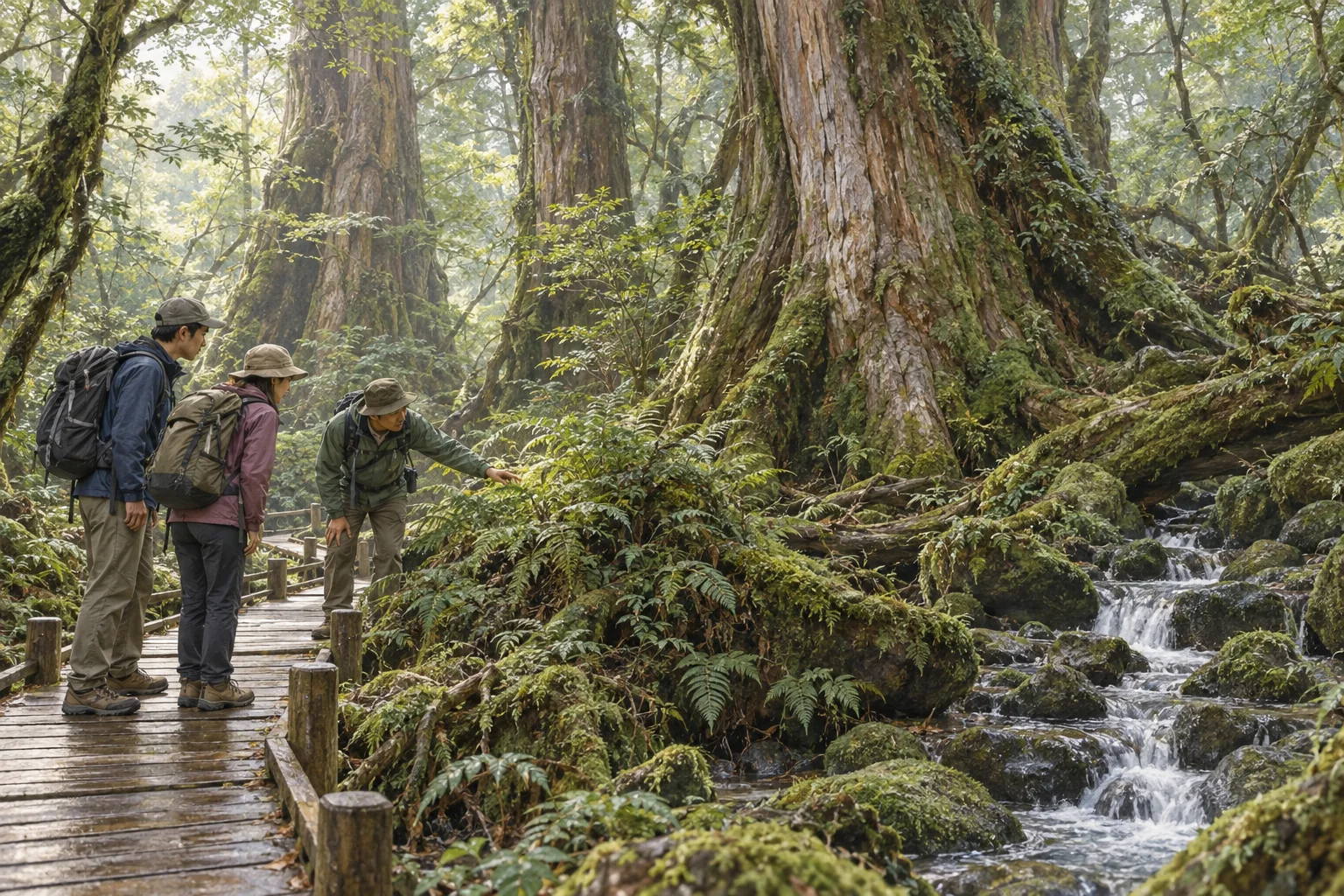
Yakushima is a round, mountainous island south of Kyushu. It rains constantly, and that rain has produced a cedar forest unlike anywhere else in Japan, with trees that have stood for well over a thousand years. It was one of Japan's first two natural World Heritage sites, listed in 1993. Most of the island is steep, forested and uninhabited.
屋久島は九州の南にある、丸い形の山の島です。雨が絶えず降り、その雨が日本のどことも違う杉の森を育てました。千年をはるかに超えて立っている木があります。1993年、日本で最初の二つの世界自然遺産の一つになりました。島の大半は急な斜面と森で、人は住んでいません。
As a short speech
A full paragraph you can read aloud
Yakushima is a small round island south of Kyushu that is almost entirely mountain. Peaks rise to nearly two thousand meters within a few kilometers of the sea, which forces the wet ocean air upward and makes it rain, constantly. There is a local saying that it rains thirty-five days a month.
The lowland gets about four thousand millimeters a year and parts of the interior far more than that. What that rain has made is a forest of cedar growing on granite, where the trees grow slowly, and slow growth makes dense, resinous wood that resists rot.
Some of these trees are over a thousand years old. The largest known one is estimated at anywhere from two thousand to over seven thousand years, and honestly nobody can date it precisely. It was listed as a natural World Heritage site in 1993. Bring real rain gear, not an umbrella.
屋久島は九州の南にある小さな丸い島で、ほとんど全部が山です。海から数キロのところで2000メートル近い峰が立ち上がるため、湿った海の空気が持ち上げられ、雨になります。絶え間なく降ります。「ひと月に35日雨が降る」という言い方が地元にあります。
低地で年間4000ミリほど、島の奥はそれをはるかに超えます。その雨が作ったのが、花崗岩の上に育つ杉の森です。木はゆっくりとしか育たず、ゆっくり育つと年輪が詰まり、樹脂を多く含んで腐りにくい材になります。
千年を超えるものがあります。いちばん大きな木は推定2000年とも7200年とも言われ、正直なところ誰にも正確には測れません。1993年に世界自然遺産になりました。傘ではなく、本物の雨具を持って行ってください。
Questions people actually ask
And how to answer them.
How old is the biggest cedar really?
Estimates range from about two thousand to over seven thousand years, and the rings cannot be counted precisely, so the question stays open. The honest answer is that it is very old and nobody knows the number.
推定は2000年から7200年まで幅があり、年輪を正確に数えることができないので、決着がついていません。正直な答えは、非常に古いが正確な数字は誰も知らない、です。
Is it a hard hike?
To reach the biggest tree is roughly ten hours there and back on a former logging railway and mountain trail, and people start before dawn. There are much shorter forest walks that give you the same feeling.
いちばん大きな木まではトロッコ道と山道で往復10時間ほどあり、夜明け前に出発します。もっと短く歩ける森もあって、同じ空気を味わえます。
Was the forest ever logged?
Yes, heavily, from the Edo period when the trees were cut for roof shingles and paid as tax, through the twentieth century. Many of the huge stumps you pass are from that, and some have new trees growing out of them.
されました。江戸時代に屋根の板にするため伐られ、年貢として納められた時代から、20世紀まで盛んでした。道中に見る大きな切り株はその跡で、その上に新しい木が育っているものもあります。
Phrases you can use
- They say it rains thirty-five days a month here.ここでは「ひと月に35日雨が降る」と言います。
- Some of these cedars are over a thousand years old.ここの杉には千年を超えるものがあります。
- It became a World Heritage site in 1993.1993年に世界遺産になりました。
- Bring rain gear, not an umbrella.傘ではなく雨具を持ってきてください。
- The mountains rise to almost 2,000 meters.山は2000メートル近くまで立ち上がります。
Words you need
- cedar (Japanese cedar)杉
- moss苔
- granite花崗岩
- rainfall降水量
- stump切り株
Watch
From YouTubeBackground (Japanese)
屋久島は1993年12月、白神山地とともに日本初の世界自然遺産に登録された。島では樹齢千年を超える杉を「屋久杉」と呼び、それより若いものは「小杉」と呼び分ける。江戸時代には杉を薄く割った平木が年貢として納められ、伐採は盛んに行われた。低地の年間降水量はおよそ4000ミリ、山間部では8000ミリを超える場所もあるとされる。海岸は亜熱帯、山頂付近は北海道に近い植生で、島の中で気候が縦に積み重なっている。