bukatsu no asaren
training before school starts
部活の朝練(ぶかつのあされん)
In one line
The shortest answer that works
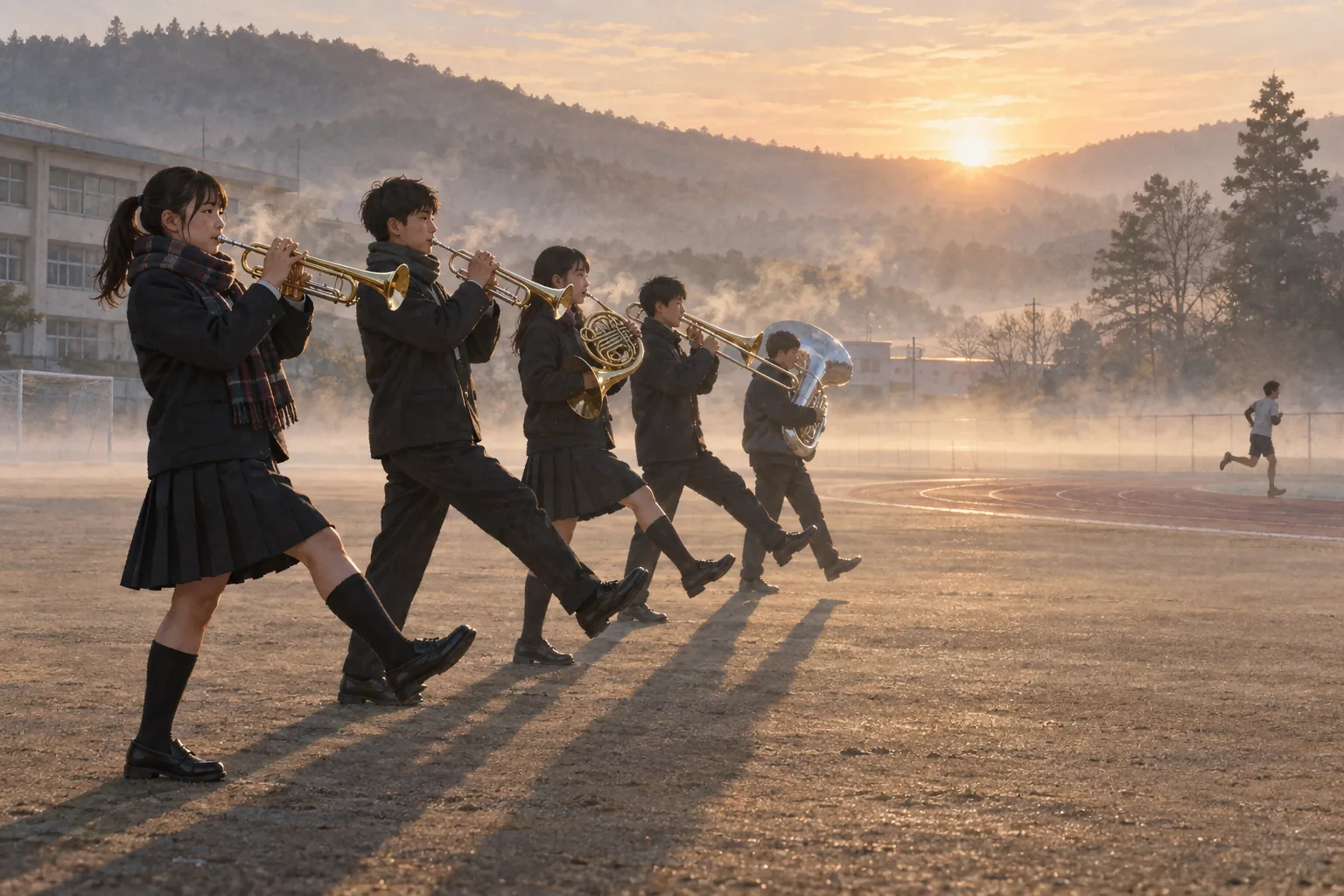
Morning practice is club training held before the school day begins, often starting around seven.
朝練とは、授業が始まる前に行う部活の練習で、7時前後から始まることも多いものです。
In 30 seconds
The standard explanation
Many Japanese sports clubs train before school as well as after it. Students arrive at seven or earlier, practice for an hour, change, and go to their first lesson. Combined with evening practice and juku, it produces very long days, and it is one of the specific practices reform guidelines have targeted.
日本の運動部の多くは、放課後だけでなく始業前にも練習します。生徒は7時かそれより前に登校し、1時間ほど練習し、着替えて一時間目に向かいます。放課後の練習や塾と合わさると、非常に長い一日になり、部活動の指針が名指しで見直しを求めた実践のひとつです。
As a short speech
A full paragraph you can read aloud
Morning practice is club training held before lessons begin. A student in a sports club might leave home before six thirty, be at school by seven, train for an hour, wash and change, and then start a normal school day.
After lessons there is practice again until the evening, and for some students juku after that. It is worth saying plainly what this adds up to: a school day that starts before dawn in winter and ends at nine or ten at night. Sleep is the thing that gets cut. This has been recognized as a problem.
National guidelines on club activities recommend at least two rest days a week and limits on daily training time, and morning practice specifically has been reduced or abolished at many schools. Some prefectures have instructed schools to stop it altogether. Change has been uneven, because in some sports the tradition is strong and the schedule is defended by coaches and by students themselves.
朝練は、授業が始まる前に行う部活の練習です。運動部の生徒なら、6時半前に家を出て、7時に学校に着き、1時間練習し、体を拭いて着替え、それから普通の授業が始まります。授業のあとにはまた練習があり、夕方まで。
その後に塾へ行く生徒もいます。これが何を意味するかは、はっきり言っておく価値があります。冬なら夜明け前に始まり、夜9時か10時に終わる一日です。削られるのは睡眠です。これは問題として認識されています。
部活動の国の指針は、週に2日以上の休養日と、一日の活動時間の上限を示しており、朝練はとくに縮小・廃止された学校が多くあります。県として取りやめを指示したところもあります。変化は一様ではありません。競技によっては伝統が強く、その日程を指導者自身や生徒自身が守ろうとするからです。
Questions people actually ask
And how to answer them.
Is it compulsory?
Officially club activity is voluntary, but within a club that holds morning practice, skipping it is socially difficult. That gap between formal and actual is the core of the problem.
建前として部活は任意ですが、朝練のある部に入っていれば、休むことは社会的に難しくなります。この建前と実態の差が、問題の核心です。
What do the guidelines say?
The national guidance recommends at least two rest days per week and caps on daily activity time, roughly two hours on weekdays and three on weekends. Morning practice has been cut at many schools as a result.
国の指針は、週2日以上の休養日と、平日2時間・休日3時間程度という活動時間の目安を示しています。これを受けて朝練を削減した学校が多くあります。
Who supervises it?
A teacher, usually unpaid or on a token allowance. Morning practice means the teacher also arrives before seven, which is part of why teacher working hours became a national issue.
教員です。多くは無償か名目的な手当だけです。朝練があれば教員も7時前に出勤することになり、教員の労働時間が国の課題になった理由の一部です。
Phrases you can use
- Practice starts at seven in the morning.朝練は7時からです。
- He leaves home before six thirty.彼は6時半前に家を出ます。
- Sleep is what gets cut.削られるのは睡眠です。
- Many schools have stopped morning practice.朝練をやめた学校も多いです。
- The teacher has to be there too.顧問の先生も来なければなりません。
Words you need
- morning practice朝練
- supervise指導する、顧問を務める
- rest day休養日
- sleep deprivation睡眠不足
- guidelines指針、ガイドライン
Watch
From YouTubeBackground (Japanese)
スポーツ庁は2018年に「運動部活動の在り方に関する総合的なガイドライン」を示し、週当たり2日以上の休養日(平日1日以上、土日1日以上)と、1日の活動時間を平日2時間程度・休日3時間程度とする目安を定めた。これを受けて朝練習を取りやめる学校や自治体が相次いだ。日本の中高生の睡眠時間は国際比較で短いことが各種調査で指摘されており、部活動と通塾の両方が要因として挙げられる。2023年度からは休日の部活動を地域のクラブへ移す「地域移行」が段階的に進められている。教員の側では、朝練の顧問が時間外勤務として扱われにくいことが長く問題視されてきた。