koko yakyu to Koshien
the national high school baseball tournament
高校野球と甲子園(こうこうやきゅうとこうしえん)
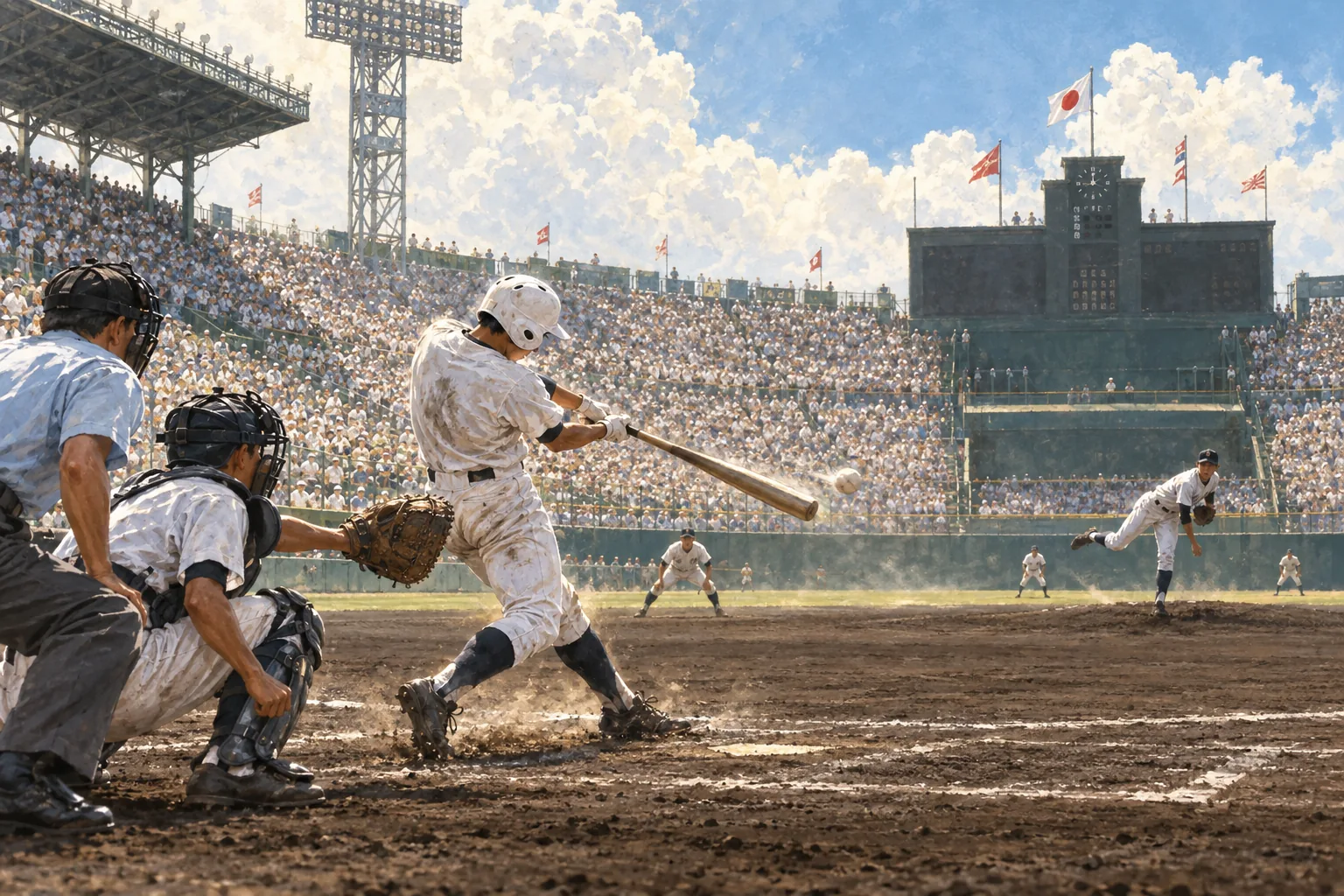
In one line
The shortest answer that works
Koko yakyu to Koshien, or high school baseball and Koshien, is Japan's national high school tournament, followed like professional sports.
高校野球と甲子園とは、プロの大会のように国じゅうが見守る、全国の高校野球の大会です。
In 30 seconds
The standard explanation
Koshien is the stadium near Osaka that hosts Japan's national high school baseball tournaments, held in spring and summer. Thousands of schools enter regional qualifiers, and the summer tournament is broadcast live from morning to evening for two weeks. It is single elimination, so one loss ends a team's season, and often a third-year student's career.
甲子園は大阪の近くにある球場で、春と夏に行われる全国高校野球大会の会場です。地方大会には数千校が参加し、夏の大会は2週間にわたり朝から夕方まで生中継されます。負けたらそこで終わる一発勝負で、3年生にとってはそれが競技生活の終わりになることも多くあります。
As a short speech
A full paragraph you can read aloud
Koshien is a baseball stadium near Osaka, opened in 1924, and its name has come to mean the national high school baseball tournaments played there. The summer one began in 1915 and now draws entries from over three thousand schools, all playing regional qualifiers for about fifty places.
The national stage is broadcast live all day on national television for two weeks in August, and the audience is not just baseball fans. What gives it weight is the format. It is single elimination, so every game is somebody's last, and for third-year students a loss ends not just the tournament but their playing career.
The image everyone knows is players kneeling to scoop the infield dirt into a bag after losing, to take home. There is also serious criticism: pitchers have thrown enormous numbers of pitches in a few days, and pitch limits have been introduced in response to concerns about young players' arms.
甲子園は大阪の近くにある1924年開場の野球場で、その名はそこで行われる全国高校野球大会そのものを指すようになりました。夏の大会は1915年に始まり、今では三千を超える学校が参加し、50ほどの出場枠をかけて地方大会を戦います。
8月の全国大会の2週間は、全国のテレビが朝から夕方まで生中継し、見ているのは野球好きだけではありません。重みを与えているのは方式です。一度負けたら終わりなので、どの試合も誰かにとって最後の試合であり、3年生にとっては大会だけでなく選手としての時間が終わります。
誰もが知る光景は、負けた選手がひざをついて内野の土を袋に入れ、持ち帰る場面です。厳しい批判もあります。投手が数日で非常に多くの球を投げてきたことが問題になり、若い選手の肩と肘を守るために球数の制限が導入されました。
Questions people actually ask
And how to answer them.
Why do the players take the dirt home?
It is a keepsake from a field most of them will never play on again. The custom is decades old, and players often scoop it into their shoe bags. Winning teams do not usually do it, because they expect to come back.
二度と立つことのないかもしれない球場の記念だからです。この習慣は何十年も前からあり、シューズ袋などに入れて持ち帰ることが多いようです。勝ったチームはふつう持ち帰りません。また来るつもりだからです。
Isn't it dangerous to pitch that much in August heat?
That concern is widely shared in Japan. Pitch count limits per week were introduced, some games have been moved to cooler hours, and the debate about the schedule and the heat continues every summer.
その懸念は日本でも広く共有されています。1週間あたりの球数の上限が導入され、一部の試合は涼しい時間帯に移されました。日程と暑さをめぐる議論は毎年夏に続いています。
A common misunderstanding
MYTHIt's just a school sports day, so the standard must be low.
FACTMany professional players come straight from these tournaments, games are analyzed by professional scouts, and the television audience rivals professional baseball.
Phrases you can use
- One loss and your season is over.一度負けたらそこで終わりです。
- Over three thousand schools enter.三千校以上が参加します。
- The losing players take the dirt home.負けた選手は土を持ち帰ります。
- It's broadcast live all day in August.8月は一日中生中継されます。
Words you need
- single elimination一発勝負の勝ち抜き
- qualifier予選
- pitcher投手
- brass band吹奏楽部
Watch
From YouTubeBackground (Japanese)
夏の全国中等学校優勝野球大会が始まったのは1915年で、甲子園球場の完成は1924年です。春の選抜も1924年に始まりました。応援は学校の吹奏楽部とチアリーダー、そして生徒と保護者のアルプススタンドが担い、応援曲そのものが名物になっています。2020年は新型コロナウイルスの影響で夏の大会が中止となり、夏の大会の中止は、米騒動の1918年と戦争の時期以来のことでした。投手の球数を1週間500球以内とする制限が2020年から導入されています。