mamachari
the everyday shopping bicycle
ママチャリ(ままちゃり)
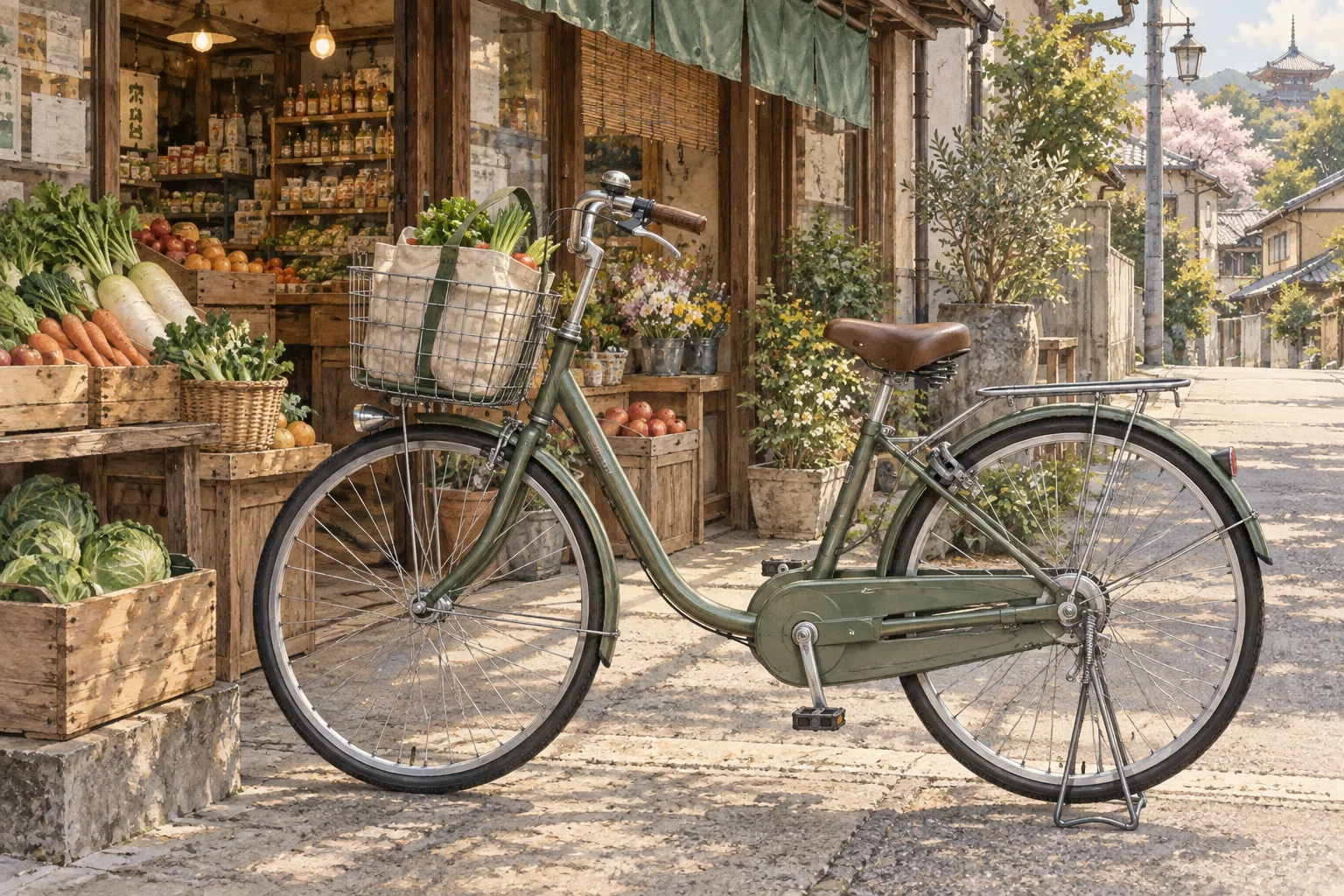
In one line
The shortest answer that works
A mamachari is the sturdy, upright city bicycle with a basket that Japanese families use for daily errands.
ママチャリとは、かごのついた頑丈で背筋を伸ばして乗る街乗りの自転車で、日本の家庭が日々の用事に使います。
In 30 seconds
The standard explanation
A mamachari is a heavy, upright bicycle with a front basket, a kickstand, a built-in lock and often a child seat or two. The name means mom's bike, but everyone rides them: students, office workers, grandfathers. They are cheap, comfortable in ordinary clothes, and used for short trips to the station, the supermarket and the nursery. Riding one on the sidewalk, slowly, is a normal part of Japanese street life.
ママチャリとは、前かご、スタンド、備え付けの鍵、そしてしばしば一つか二つの子ども用の座席がついた、重くて背筋を伸ばして乗る自転車です。名前は「お母さんの自転車」ですが、学生、会社員、おじいさんまで誰もが乗ります。安く、ふだんの服で快適に乗れ、駅、スーパー、保育園への短い移動に使われます。歩道をゆっくり走るのは日本の街の日常の風景です。
As a short speech
A full paragraph you can read aloud
The typical Japanese bicycle is not built for sport. It is the mamachari, a heavy steel city bike with swept-back handlebars so you sit upright, a wire basket on the front for groceries, a stand, a rack, a lock built into the rear wheel and a dynamo light.
The name is slang for mom's bike, from the image of a mother pedaling with a toddler in a seat behind her, and there are versions with a child seat on the front and the back, so a parent can legally carry two small children if the bike is designed for it. But the mamachari belongs to everyone.
High school students ride them to school, commuters ride them to the station and leave them in vast paid lots, and elderly people use them to reach the clinic. They are ridden slowly, in normal clothes, often on the sidewalk, which is tolerated for practical reasons even though the road is the rule. I think the mamachari says more about Japanese daily life than the shinkansen does.
日本の典型的な自転車はスポーツ用に作られていません。ママチャリと呼ばれる重い鉄の街乗り自転車で、背筋を伸ばして座れるように手前に曲がったハンドル、買い物用の前かご、スタンド、荷台、後輪に組み込まれた鍵、発電式のライトがついています。
名前は「お母さんの自転車」という俗称で、幼児を後ろの座席に乗せて漕ぐ母親の姿から来ていて、前後に子ども用座席をつけた型なら、その設計の自転車に限り親が小さな子ども二人を合法的に乗せられます。しかしママチャリはみんなのものです。
高校生は通学に、通勤者は駅まで乗って広大な有料駐輪場に停め、お年寄りは診療所へ行くのに使います。ふだんの服でゆっくりと、しばしば歩道を走り、原則は車道なのに実用上の理由で黙認されています。ママチャリは新幹線よりも日本の日常について多くを語ると私は思います。
Questions people actually ask
And how to answer them.
Why are so many bikes parked outside train stations?
Because the bicycle is the first leg of the commute. People ride from home to the station, park in a lot that charges a small daily or monthly fee, and take the train. Parking outside the designated lots gets bikes tagged and removed by the city.
自転車が通勤の最初の区間だからです。家から駅まで乗り、一日か一か月ごとに少額の料金を払う駐輪場に停めて電車に乗ります。決められた駐輪場の外に停めると、市に札を貼られて撤去されます。
Is it legal to ride on the sidewalk?
The rule is that bicycles belong on the road, with exceptions for children, the elderly, sidewalks marked as shared, and situations where the road is unsafe. In practice many people ride slowly on the sidewalk and police rarely intervene, but you must give way to pedestrians. Since 2023, all riders have been expected to make an effort to wear a helmet, though there is no penalty.
原則は車道で、子どもや高齢者、自転車通行可の標識のある歩道、車道が危険な場合などが例外です。実際には多くの人が歩道をゆっくり走り、警察が止めることはまれですが、歩行者を優先しなければなりません。ヘルメットは2023年から全員の努力義務になっています(罰則はありません)。
Do I need to register a bicycle?
Yes. Every bicycle is supposed to carry an anti-theft registration sticker linked to the owner, which the shop does when you buy it for a small fee. If you buy a used bike, transfer the registration, because police do stop riders to check it.
はい。すべての自転車には所有者に結びついた防犯登録のシールを貼ることになっていて、購入時に店が少額の料金で手続きします。中古で買ったら登録を移してください。警察が乗っている人を止めて確認することが実際にあります。
A common misunderstanding
MYTHMamachari are only for mothers.
FACTThe name is a joke; the same bike is ridden by students, commuters and retirees, and it is by far the most common type of bicycle in Japan.
Phrases you can use
- I ride my bike to the station every morning.毎朝、自転車で駅まで行きます。
- It's got a basket, so it's perfect for shopping.かごがついているので買い物にぴったりです。
- The lock is built into the back wheel.鍵は後輪に組み込まれています。
- Park it in the paid lot or it'll get towed.有料駐輪場に停めないと撤去されますよ。
- Slow down on the sidewalk and give way to walkers.歩道では減速して歩行者に道を譲ってください。
Words you need
- city bike街乗り自転車・ママチャリ
- basketかご
- child seat子ども用座席
- bicycle parking lot駐輪場
- kickstandスタンド
- registration sticker防犯登録のシール
Watch
From YouTubeBackground (Japanese)
「ママチャリ」は「ママ」と自転車の俗称「チャリンコ」を合わせた言葉で、買い物かごと子ども乗せがついた婦人用自転車のイメージから広まりました。日本の自転車の主流は長くこの形で、駅前の巨大な駐輪場や放置自転車の撤去は都市の日常の風景です。子ども二人を前後に乗せる三人乗りは、強度などの基準を満たした専用の自転車に限って認められています。電動アシスト付きのママチャリは坂の多い地域や子育て世帯で急速に普及し、価格は高いものの主力になりつつあります。2023年からは全年齢でヘルメット着用が努力義務となりましたが、着用率は地域差が大きいのが実情です。自転車には防犯登録が義務づけられていて、盗難車の照会や持ち主の特定に使われます。