kyureki
the old lunisolar calendar Japan used until 1872
旧暦(きゅうれき)
In one line
The shortest answer that works
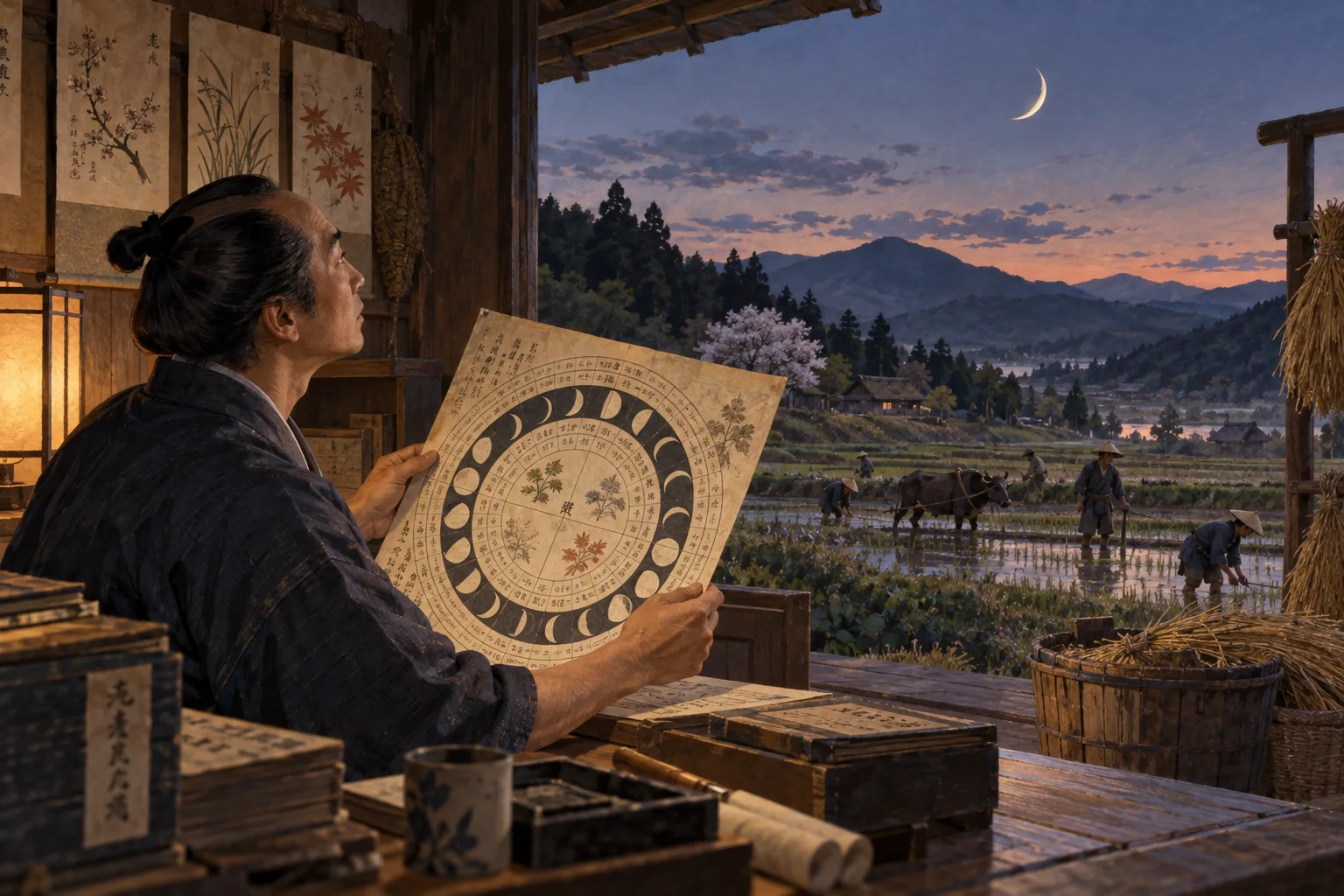
Kyureki, or the old calendar, is the moon-based calendar Japan used until 1872, leaving many festivals oddly timed.
旧暦とは、日本が1872年まで使っていた月を基準にした暦で、今も多くの行事の日付が季節とずれる元になったものです。
In 30 seconds
The standard explanation
Until the end of 1872 Japan used a lunisolar calendar: months began at the new moon, and an extra month was inserted every few years to keep pace with the seasons. The government switched to the Western calendar overnight, and festival dates were simply carried across. That is why Tanabata, a star festival, now falls in the middle of the rainy season.
1872年の末まで、日本は太陰太陽暦を使っていました。月は新月から始まり、季節とずれないように数年ごとに閏月を入れます。政府は一夜のうちに西洋の暦に切り替え、行事の日付はそのまま移されました。星を見る七夕が、今は梅雨の最中に来るのはそのためです。
As a short speech
A full paragraph you can read aloud
A lot of things that seem odd about the Japanese festival year come from one administrative decision. Until 1872 Japan ran on a lunisolar calendar. Each month began with a new moon, so the fifteenth was always a full moon, and because twelve lunar months fall short of a solar year, a thirteenth month was inserted every few years.
Then the new government adopted the Western calendar, and it did it abruptly: the second day of the twelfth month of 1872 was followed by January 1st, 1873. A government leader of the time later wrote that avoiding an extra month of official salaries in the coming leap-month year was part of the reasoning.
Festivals were then mostly kept on the same numbers, which pushed them about a month early against the seasons. Tanabata on the seventh of July now falls in the rain, so Sendai holds it in August instead. Obon moved to August in most of the country for the same reason, and the harvest moon still wanders from September to October each year.
日本の年中行事について不思議に思えることの多くは、一つの行政の判断から来ています。1872年まで、日本は太陰太陽暦で動いていました。月は新月から始まるので、十五日は必ず満月です。月の十二回では太陽の一年に足りないため、数年に一度、十三番目の月を入れます。
そこへ新政府が西洋の暦を採用しました。しかも唐突に、明治五年十二月二日の翌日を明治六年一月一日としたのです。閏月のある翌年に一か月分の官吏の給与を払わずにすむことも理由の一つだった、と当時の政府の中心人物がのちに書き残しています。
行事の多くは日付の数字だけがそのまま移され、季節に対して一か月ほど早くなりました。七月七日の七夕は雨の季節に入ってしまい、仙台は八月に行います。お盆が全国の多くで八月になったのも同じ理由で、中秋の名月は今も、年によって九月から十月へと動きます。
Questions people actually ask
And how to answer them.
Why does the harvest moon move every year?
Because it is still fixed to the old calendar: the fifteenth night of the eighth lunar month. Converted into the modern calendar, that lands anywhere from early September to early October.
今も旧暦に合わせているからです。旧暦八月十五日の夜と決まっており、それを今の暦に直すと、九月の初めから十月の初めまでのどこかに来ます。
Does anyone still use it?
Not for daily life, but yes for particular purposes: fishing and tide tables, some shrine and temple rites, Okinawan festivals, and the dates of Chinese New Year celebrations in Japan's Chinatowns.
日常には使いませんが、用途を限れば使われています。漁と潮の見方、一部の神社や寺の行事、沖縄の行事、そして中華街の春節の日取りです。
What is a month-late festival?
A compromise. Rather than convert a festival to the shifting old-calendar date each year, a region simply adds one month to the modern date, so the seventh of July becomes the seventh of August. Obon and Tanabata are the common cases.
折衷のやり方です。毎年動く旧暦の日付に合わせる代わりに、今の暦の日付にひと月足します。七月七日を八月七日にするわけです。お盆と七夕がその代表です。
A common misunderstanding
MYTHJapan celebrates lunar new year like China and Korea.
FACTJapan moved New Year to January 1st in 1873 and the old date almost vanished. Okinawa and the Chinatowns of Yokohama, Kobe and Nagasaki are the visible exceptions.
Phrases you can use
- The old calendar followed the moon.旧暦は月の満ち欠けによるものでした。
- The date moves every year.日付は毎年動きます。
- We hold it a month later here.ここでは月遅れで行います。
- Japan switched calendars in 1873.日本は1873年に暦を変えました。
- The fifteenth was always a full moon.十五日は必ず満月でした。
Words you need
- the old calendar旧暦
- lunisolar calendar太陰太陽暦
- intercalary month閏月
- a month later月遅れ
- new moon新月
Watch
From YouTubeBackground (Japanese)
旧暦は太陰太陽暦で、月の満ち欠けを月とし、季節とのずれを閏月で補いました。一日が新月、十五日が満月にあたるため、十五夜という言い方が生まれます。明治政府は改暦を布告し、明治五年十二月二日の翌日を明治六年一月一日としました。閏月のある年の官吏の給与を一か月分抑えられたことも背景にあったとされます。行事は日付の数字だけを移したため季節が合わなくなり、七夕やお盆を一か月遅らせる月遅れの方式が各地で定着しました。中秋の名月は今も旧暦八月十五日に合わせています。