depachika
the department store food hall
デパ地下(でぱちか)
In one line
The shortest answer that works
Depachika is the basement food hall of a department store, packed with counters selling ready-made dishes, sweets and gifts.
デパ地下とは百貨店の地下の食品売り場のことで、惣菜、菓子、贈答品の売り場がひしめいています。
In 30 seconds
The standard explanation
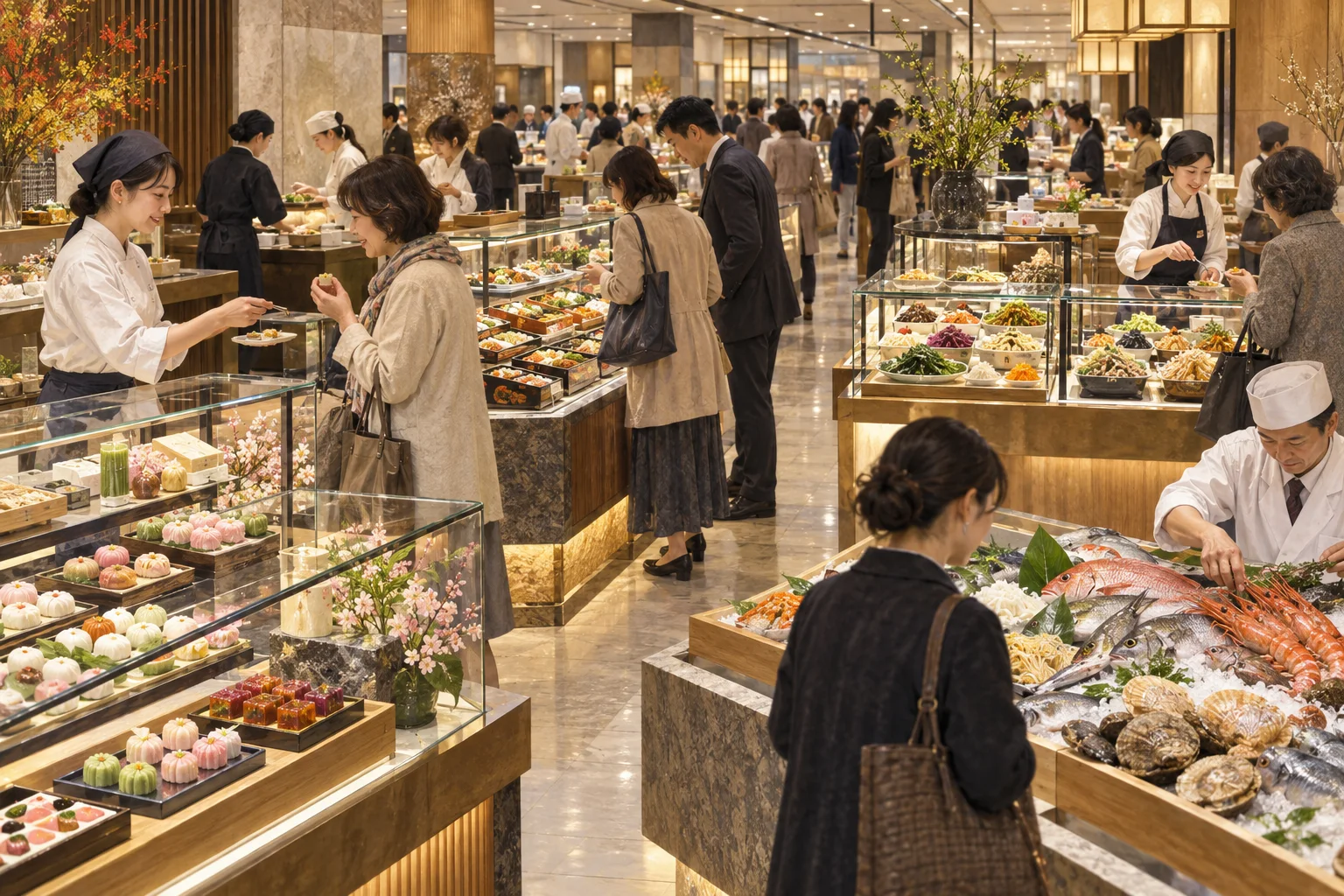
Depachika is short for department store basement, which in Japan means a vast food floor: rows of counters selling salads, fried food, sushi, bento, cakes, chocolates and famous regional sweets, all beautifully displayed and boxed. People come to buy dinner on the way home, to pick up a gift that carries a well-known name, and to sample. Near closing time, ready-made food is marked down, and regulars know exactly when.
デパ地下は「デパートの地下」の略で、日本では広大な食品フロアを意味します。サラダ、揚げ物、寿司、弁当、ケーキ、チョコレート、有名な地方の菓子を売る売り場が並び、どれも美しく陳列され箱に入っています。人々は帰り道に夕飯を買いに、名の知れた手土産を求めて、そして試食のために来ます。閉店間際には惣菜が値引きされ、常連はその時刻を正確に知っています。
As a short speech
A full paragraph you can read aloud
The most exciting floor of a Japanese department store is underground. Depachika, a blend of department store and basement, is a food hall on a scale that surprises visitors: dozens or even hundreds of counters, each run by a different maker, selling prepared dishes, sushi, croquettes, salads by weight, French pastries, Japanese sweets, tea, sake and gift boxes of everything.
The displays are as careful as a jewelry counter, staff call out to passing shoppers, and small samples are handed out on toothpicks. The floor serves two Japanese needs at once. One is the omiyage habit: a gift for a host or a colleague should come from a shop with a reputation, and a depachika gathers those shops in one place with the right wrapping.
The other is dinner: office workers buy a few dishes on the way home, and in the last hour before closing, staff walk around with stickers cutting prices. I think it is the best free entertainment in any Japanese city.
日本の百貨店でいちばんわくわくするフロアは地下にあります。デパ地下とは「デパート」と「地下」を合わせた言葉で、外国人を驚かせる規模の食品売り場です。何十、ときには何百もの売り場がそれぞれ別の作り手によって運営され、惣菜、寿司、コロッケ、量り売りのサラダ、フランス菓子、和菓子、茶、日本酒、そしてあらゆるものの贈答用の箱を売っています。
陳列は宝飾品売り場のように丁寧で、店員は通り過ぎる客に声をかけ、つまようじに刺した小さな試食が配られます。この階は日本の二つの必要を同時に満たします。一つはお土産の習慣です。
招いてくれた人や同僚への贈り物は評判のある店のものであるべきで、デパ地下はそうした店を一か所に集め、ふさわしい包装で渡します。もう一つは夕飯です。会社員は帰り道に数品を買い、閉店前の最後の一時間には店員が値引きのシールを貼って回ります。どの日本の都市でも最高の無料の娯楽だと私は思います。
Questions people actually ask
And how to answer them.
Why is the food in the basement?
Partly tradition and partly logistics. The basement often connects directly to a train station, so commuters pass through, and food deliveries and refrigeration are easier below ground. Once the pattern was set, customers expected it, and most major stores followed.
伝統と物流の両方の理由があります。地下はしばしば駅と直結していて通勤客が通り抜け、食品の搬入や冷蔵設備も地下のほうが扱いやすいのです。いったん型ができると客がそれを期待し、主要な店の多くが倣いました。
Can I eat there?
Mostly it is take-out, and eating while walking is frowned on. Some stores have a small seating corner or a food court, and the upper restaurant floors are for sitting down. Buy a bento and eat it in a park or your hotel, which is what locals do.
ほとんどが持ち帰りで、歩きながら食べるのは好まれません。小さなイートインコーナーやフードコートのある店もあり、上階のレストラン街は座って食べる場所です。弁当を買って公園やホテルで食べるのが地元の人のやり方です。
When do the discounts start?
In the last hour or so before closing, usually from around seven or eight in the evening, staff put discount stickers on prepared food, often twenty to fifty percent off. Regulars hover nearby. The selection thins quickly, so it is a trade-off between choice and price.
閉店前のおよそ一時間、ふつう夜七時か八時ごろから、店員が惣菜に値引きシールを貼り、二割から五割引きになることが多いです。常連はそばで待ち構えています。品はすぐ減るので、選べる幅と値段のどちらを取るかです。
Phrases you can use
- Let's pick up dinner at the food hall.デパ地下で夕飯を買っていこう。
- Could I try a sample?試食してもいいですか。
- I'd like this as a gift, so please wrap it.贈り物なので包んでください。
- The discounts start around eight.値引きは八時ごろから始まります。
- This shop is famous, so it makes a good gift.この店は有名なので、いい手土産になります。
Words you need
- food hall食品売り場・デパ地下
- prepared food / deli惣菜
- sample試食
- gift box贈答用の箱・詰め合わせ
- marked down値引きされた
- by weight量り売りの
Watch
From YouTubeBackground (Japanese)
百貨店の地下に食品売り場を置く形は戦前からありましたが、「デパ地下」という略語が広まり、惣菜や菓子の有名店を集めた売り場が話題になったのは2000年ごろからとされます。駅と直結した立地が多く、帰宅途中の会社員が夕飯や翌日の弁当を買う場所として定着しました。有名店の菓子は手土産やお中元・お歳暮の定番で、包装紙や紙袋そのものが店の格を伝える役割を持ちます。閉店前の値引きを目当てに訪れる客も多く、食品ロス削減の観点からも注目されています。地方の名産や海外のブランドが期間限定で出店する催事も多く、百貨店の売り上げを支える柱の一つです。近年は駅の構内に同じような食品売り場が広がり、「エキナカ」と競合しています。