kenpo kyujo
the war-renouncing article of the constitution
憲法9条(けんぽうきゅうじょう)
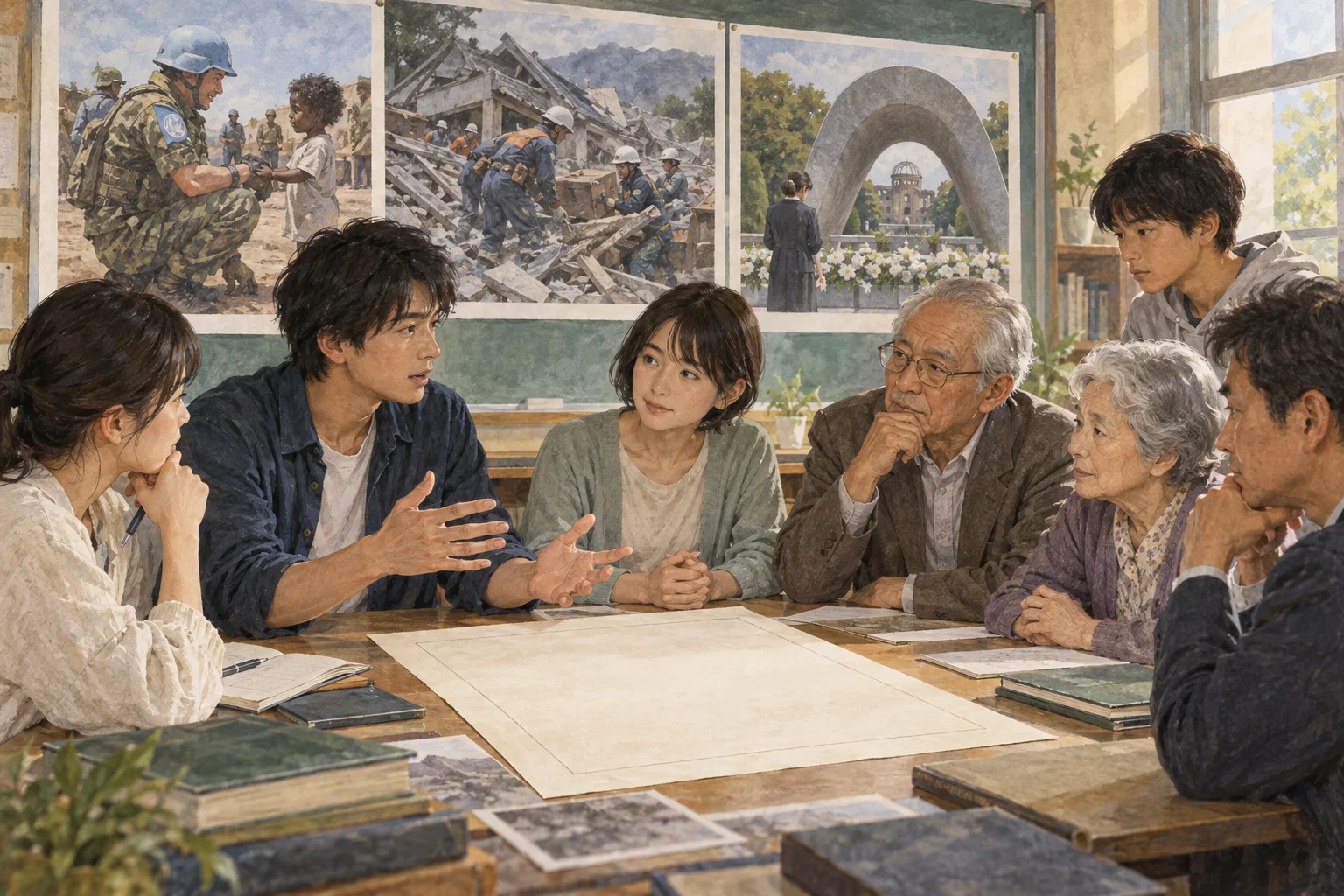
In one line
The shortest answer that works
Kenpo kyujo, or Article 9, is the constitution's clause renouncing war, long debated in relation to the Self-Defense Forces.
憲法9条とは、戦争の放棄を定めた条文で、自衛隊との関係が長く議論されてきました。
In 30 seconds
The standard explanation
Article 9 of the Constitution of Japan, in force since 1947, renounces war as a sovereign right, and states that land, sea and air forces will not be maintained and the right of belligerency will not be recognized. Japan nevertheless established the Self-Defense Forces in 1954, on the reading that the article does not forbid the minimum force needed for self-defense. Some want the text changed, while others want it kept, and the debate has run for decades.
1947年に施行された日本国憲法の第9条は、主権の発動としての戦争を放棄し、陸海空軍その他の戦力は保持せず、国の交戦権は認めないと定めています。それでも日本は1954年に自衛隊を設けました。自衛のために必要な最小限度の実力は禁じられていない、という読み方によるものです。条文を変えたいという意見と残したいという意見があり、議論は何十年も続いています。
As a short speech
A full paragraph you can read aloud
Article 9 is the part of Japan's postwar constitution that people outside the country have most often heard of. It renounces war as a sovereign right of the nation and the threat or use of force to settle international disputes, and it goes on to say that land, sea and air forces and other war potential will not be maintained, and that the right of belligerency will not be recognized.
The constitution came into force in May 1947. In 1954 Japan established the Self-Defense Forces, on the government's interpretation that the article does not prohibit the minimum force necessary for self-defense. The government has broadened that interpretation over time.
In July 2014 the cabinet decided to allow limited exercise of collective self-defense, meaning defense of a closely related country under set conditions, and legislation giving effect to this passed in September 2015 and came into force in March 2016. Supporters of amendment say the text should match the reality of the forces and today's security situation, while opponents say the article has helped keep Japan out of war, and no amendment has been made.
憲法9条は、日本の戦後憲法の中で国外の人が最もよく耳にしてきた部分です。国権の発動たる戦争と、国際紛争を解決する手段としての武力による威嚇または武力の行使を放棄し、続けて、陸海空軍その他の戦力は保持せず、国の交戦権は認めない、と定めています。憲法は1947年5月に施行されました。
1954年、日本は自衛隊を設けました。自衛のために必要な最小限度の実力は9条が禁じていない、という政府の解釈によるものです。政府はその後、この解釈を段階的に広げてきました。2014年7月、政府は閣議で集団的自衛権の限定的な行使を認めることを決めました。
密接な関係にある国を、定められた条件のもとで守るという意味です。それを具体化する法律は2015年9月に成立し、2016年3月に施行されました。改正を求める側は、条文を自衛隊の実態や今の安全保障の状況に合わせるべきだと言い、反対する側は、9条が日本を戦争から遠ざけてきたと言います。これまで改正は行われていません。
Questions people actually ask
And how to answer them.
If forces cannot be maintained, how can the Self-Defense Forces exist?
The government's position is that the article bans war potential but not the minimum capability needed to defend the country, and that the Self-Defense Forces fall within that limit. Critics argue the forces exceed it. Courts have generally avoided ruling on the question directly, treating it as highly political.
政府の立場は、9条が禁じているのは戦力であって、国を守るために必要な最小限度の実力は禁じられておらず、自衛隊はその範囲内にあるというものです。批判する側は、自衛隊はその限度を超えていると主張します。裁判所はきわめて政治的な問題として、直接の判断を避ける傾向にあります。
Has Article 9 ever been amended?
No. The Constitution of Japan has never been amended since it came into force in 1947. Amendment requires a two-thirds majority in both houses of parliament and then a majority in a national referendum, and no proposal has completed that process.
ありません。日本国憲法は1947年の施行以来、一度も改正されていません。改正には衆参両院の三分の二以上の賛成と、その後の国民投票での過半数が必要で、この手続きを通った提案はこれまでありません。
What do Japanese people actually think about it?
Opinion is split and shifts with events. Polls generally show broad acceptance of the Self-Defense Forces, while results on amending Article 9 vary with the poll and with how the question is worded.
意見は分かれていて、出来事によって動きます。世論調査では自衛隊を受け入れる人が多い一方、9条の改正への賛否は、調査や質問の仕方によって結果が変わります。
A common misunderstanding
MYTHJapan has no military at all because of Article 9.
FACTJapan maintains the Self-Defense Forces, with substantial equipment and personnel, under the government's reading that the article permits the minimum capability needed for self-defense.
Phrases you can use
- Article 9 renounces war as a sovereign right.9条は国権の発動としての戦争を放棄しています。
- The constitution came into force in 1947.憲法は1947年に施行されました。
- The Self-Defense Forces were established in 1954.自衛隊は1954年に発足しました。
- It has never been amended.一度も改正されていません。
- Opinion in Japan is divided on this.日本国内でも意見が分かれています。
Words you need
- renounce war戦争を放棄する
- constitution憲法
- Self-Defense Forces自衛隊
- interpretation解釈
- amend改正する
- referendum国民投票
Watch
From YouTubeBackground (Japanese)
日本国憲法は1946年11月3日に公布、1947年5月3日に施行され、第9条は第1項で戦争の放棄、第2項で戦力の不保持と交戦権の否認を定めています。1950年の警察予備隊、1952年の保安隊を経て、1954年に自衛隊が発足しました。政府は、自衛のための必要最小限度の実力は第9条が禁じる戦力にはあたらないという解釈を取ってきました。2014年7月1日の閣議決定で集団的自衛権の限定的な行使が認められ、いわゆる新三要件が示されました。これを具体化する平和安全法制関連二法は2015年9月19日に成立し、同月30日に公布、2016年3月29日に施行されています。憲法の改正には衆参各議院の総議員の三分の二以上の賛成による発議と国民投票での過半数が必要で、施行以来一度も改正されていません。