Hiroshima and Nagasaki
the atomic bombings and how they are remembered
広島と長崎(ひろしまとながさき)
In one line
The shortest answer that works
Hiroshima and Nagasaki are the two cities struck by atomic bombs, on August 6th and 9th, 1945.
広島と長崎とは、1945年8月6日と8月9日に原子爆弾が投下された二つの都市です。
In 30 seconds
The standard explanation
An atomic bomb was dropped on Hiroshima on the morning of August 6, 1945, and another on Nagasaki on August 9. Casualty figures are estimates and vary, because records were destroyed and people continued to die of radiation effects for years. Both cities hold ceremonies each year, and both have museums that visitors can enter.
1945年8月6日の朝に広島へ、8月9日に長崎へ原子爆弾が投下されました。死者の数は推計であり幅があります。記録が焼失し、放射線の影響によって何年にもわたって人が亡くなり続けたからです。両市は毎年式典を行い、どちらにも見学できる資料館があります。
As a short speech
A full paragraph you can read aloud
On the morning of August 6th, 1945, an atomic bomb was dropped on Hiroshima, and three days later another on Nagasaki. Casualty figures are given as estimates and differ between sources, because city records burned, many bodies were never identified, and people went on dying from radiation effects for years and in some cases decades.
Survivors are called hibakusha, and their testimony, along with treatment and recognition of their injuries, became a long postwar issue in its own right. Both cities hold a ceremony every year at the exact time of the bombing, with a minute of silence that many people elsewhere in Japan observe too.
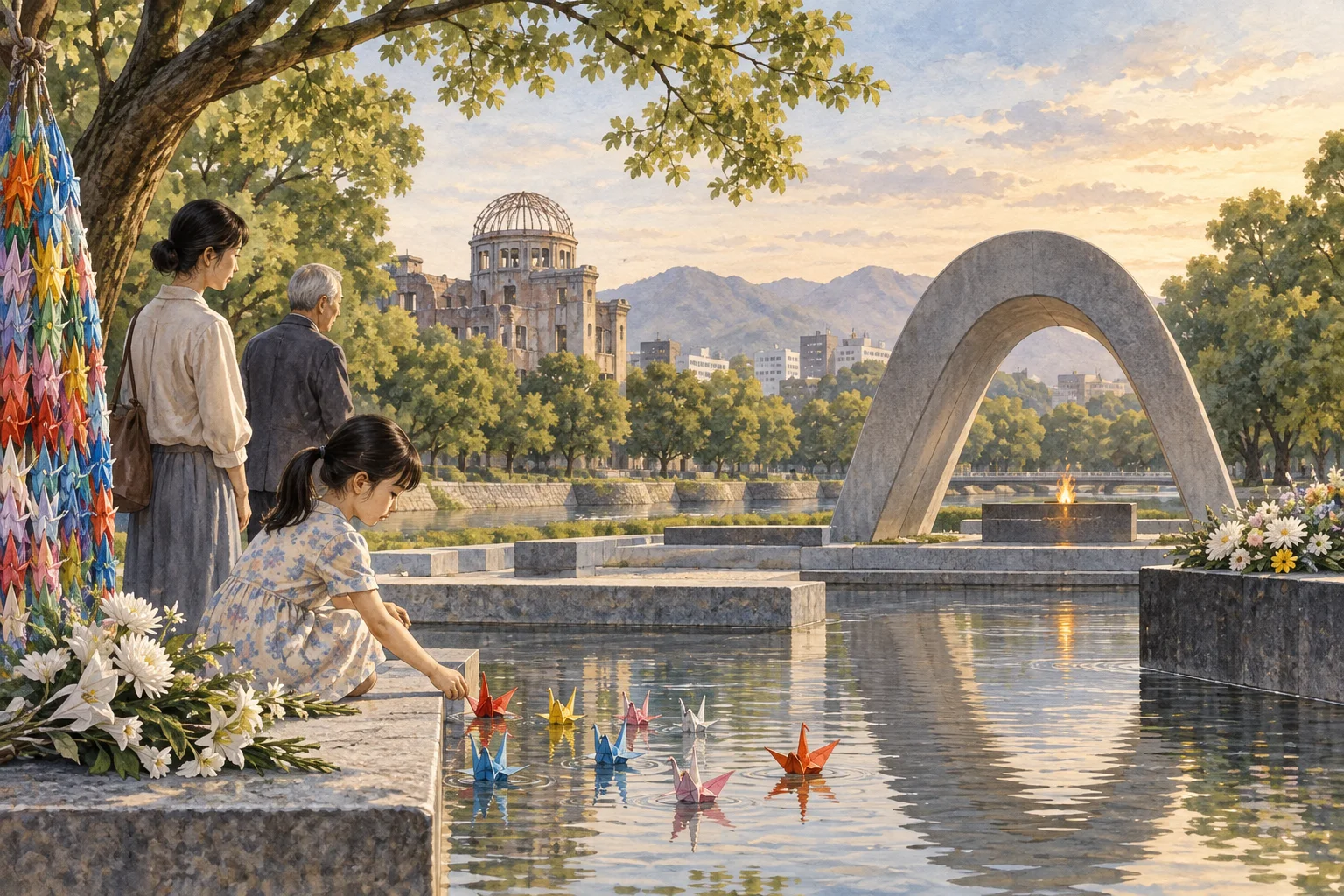
Both have peace museums that are difficult to walk through and that receive very large numbers of foreign visitors, and the ruined dome left standing in Hiroshima is preserved as a World Heritage site. If you visit, go early, allow time, and expect the museums to be quiet.
1945年8月6日の朝、広島に原子爆弾が投下され、その三日後に長崎にもう一発が投下されました。死者の数は推計として示され、資料によって異なります。市の記録が焼け、身元の分からない遺体が数多くあり、放射線の影響によって何年も、場合によっては何十年ものあいだ人が亡くなり続けたからです。
生き延びた人は被爆者と呼ばれ、その証言と、傷病の治療や認定は、それ自体が戦後の長い課題となりました。両市は毎年、投下された時刻ちょうどに式典を行い、その一分間の黙祷には、各地の多くの人も加わります。
どちらにも、歩き通すのが容易ではない平和の資料館があり、非常に多くの外国からの来訪者を受け入れています。広島に残された崩れた円蓋は世界遺産として保存されています。訪れるなら朝早く、時間に余裕を持って。館内は静かです。
Questions people actually ask
And how to answer them.
Can visitors go to the museums?
Yes, and both cities actively want foreign visitors. Entry is inexpensive, English information is provided, and audio guides are available. The exhibits include human remains and photographs of injuries, so consider carefully before taking young children.
入れますし、両市は外国からの来訪を積極的に受け入れています。入館料は安く、英語の案内があり、音声のガイドも用意されています。展示には遺品や傷の写真が含まれるので、小さな子どもを連れて行くかどうかは慎重に考えてください。
What is the minute of silence?
At 8:15 a.m. on August 6 and 11:02 a.m. on August 9, the times of the two bombings, sirens sound in the cities and people stop and stand in silence for a minute. Television broadcasts it live, and many people elsewhere in Japan pause as well.
8月6日の8時15分と、8月9日の11時2分、それぞれ投下の時刻に市内でサイレンが鳴り、人々は立ち止まって一分間黙祷します。テレビは生中継し、ほかの地域でも手を止めて黙祷する人が多くいます。
How should I talk about it with Japanese people?
Listen more than you argue. The event is not an abstract policy question here; people have relatives who were there. Asking what someone's family experienced is fine if the conversation has gone that way, and stating a verdict on the decision is best avoided with strangers.
議論するより聞くことです。ここではこれは抽象的な政策の問題ではなく、その場にいた親族を持つ人がいます。話の流れの中で家族が何を経験したかを尋ねるのはかまいませんが、初対面の相手に投下の是非の結論を述べるのは避けたほうがよいでしょう。
Phrases you can use
- August 6th in Hiroshima, August 9th in Nagasaki.広島は8月6日、長崎は8月9日です。
- There's a minute of silence at the exact time.その時刻に一分間の黙祷があります。
- Survivors are called hibakusha.生き延びた人を被爆者と呼びます。
- The museums are open to visitors.資料館は誰でも入れます。
Words you need
- atomic bomb原子爆弾
- survivor of the bombing被爆者
- minute of silence黙祷
- memorial park平和記念公園
Watch
From YouTubeBackground (Japanese)
広島の爆心地近くに残る建物は原爆ドームと呼ばれ、1996年に世界遺産に登録されました。両市の平和記念式典は毎年、投下の時刻に合わせて行われます。被爆者健康手帳を持つ人は医療の支援を受けられ、病気が原爆によるものと国が認める原爆症認定の範囲をめぐっては、訴訟が長く続いてきました。修学旅行で広島や長崎を訪れる学校は多くあります。折り鶴が平和の願いとして供えられる習慣は、広島の佐々木禎子の話から広まったとされます。