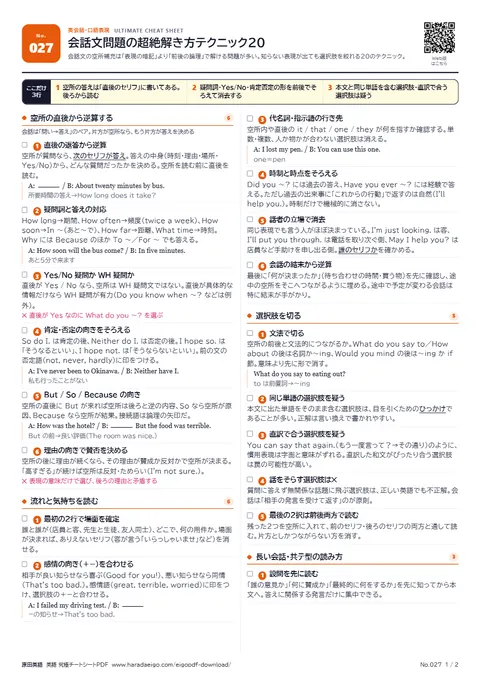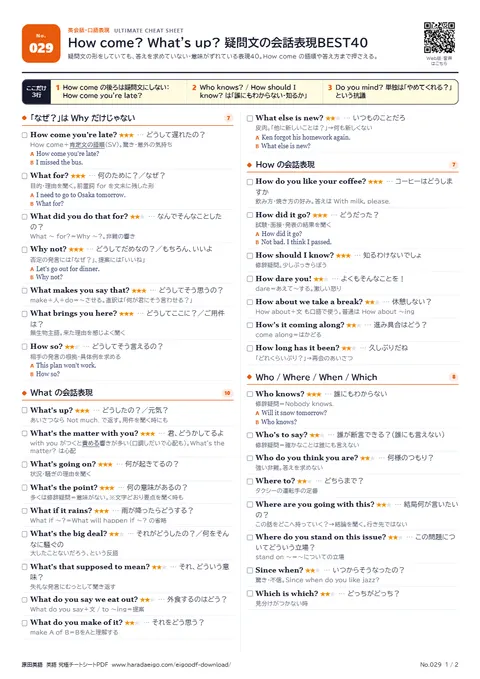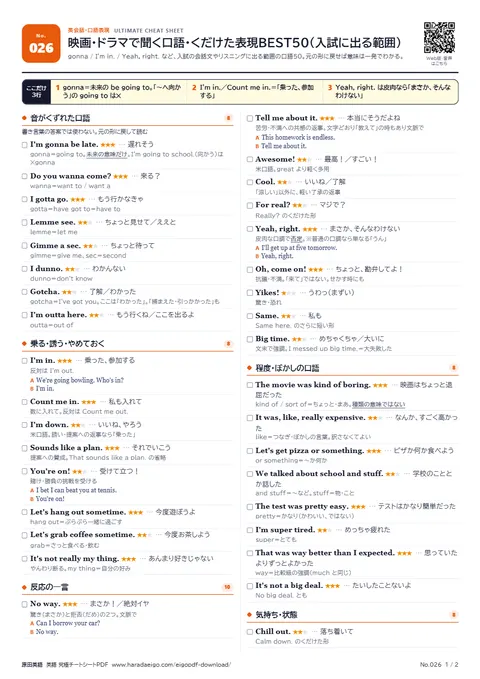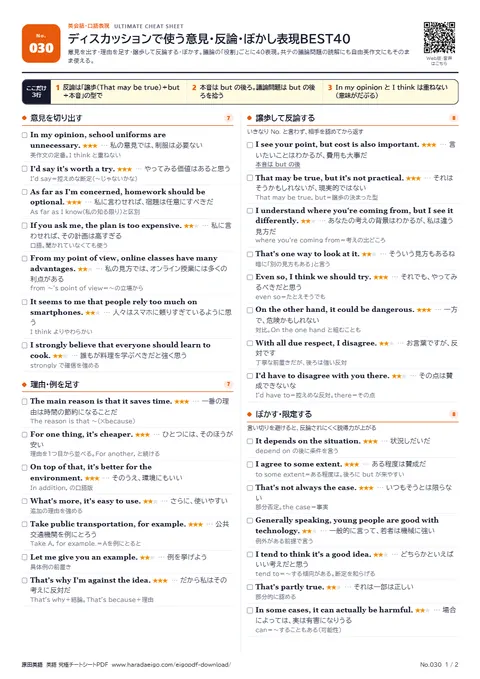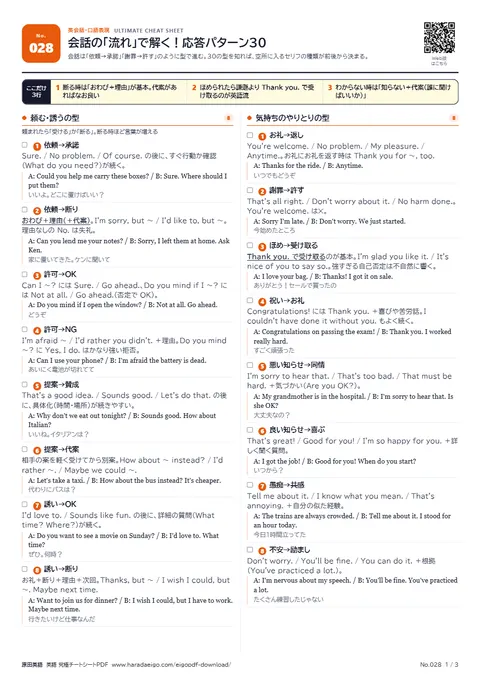
まずはこの3つ
- 断る時は「おわび+理由」が基本。代案があればなお良い
- ほめられたら謙遜より Thank you. で受け取るのが英語流
- わからない時は「知らない+代案(誰に聞けばいいか)」
頼む・誘うの型8
頼まれたら「受ける」か「断る」。断る時ほど言葉が増える
- 1依頼→承諾Sure. / No problem. / Of course. の後に、すぐ行動か確認(What do you need?)が続く。A: Could you help me carry these boxes? / B: Sure. Where should I put them?いいよ。どこに置けばいい?
- 2依頼→断りおわび+理由(+代案)。I'm sorry, but 〜 / I'd like to, but 〜。理由なしの No. は失礼。A: Can you lend me your notes? / B: Sorry, I left them at home. Ask Ken.家に置いてきた。ケンに聞いて
- 3許可→OKCan I 〜? には Sure. / Go ahead.、Do you mind if I 〜? には Not at all. / Go ahead.(否定で OK)。A: Do you mind if I open the window? / B: Not at all. Go ahead.どうぞ
- 4許可→NGI'm afraid 〜 / I'd rather you didn't. +理由。Do you mind 〜? に Yes, I do. はかなり強い拒否。A: Can I use your phone? / B: I'm afraid the battery is dead.あいにく電池が切れてて
- 5提案→賛成That's a good idea. / Sounds good. / Let's do that. の後に、具体化(時間・場所)が続きやすい。A: Why don't we eat out tonight? / B: Sounds good. How about Italian?いいね。イタリアンは?
- 6提案→代案相手の案を軽く受けてから別案。How about 〜 instead? / I'd rather 〜. / Maybe we could 〜.A: Let's take a taxi. / B: How about the bus instead? It's cheaper.代わりにバスは?
- 7誘い→OKI'd love to. / Sounds like fun. の後に、詳細の質問(What time? Where?)が続く。A: Do you want to see a movie on Sunday? / B: I'd love to. What time?ぜひ。何時?
- 8誘い→断りお礼+断り+理由+次回。Thanks, but 〜 / I wish I could, but 〜. Maybe next time.A: Want to join us for dinner? / B: I wish I could, but I have to work. Maybe next time.行きたいけど仕事なんだ
気持ちのやりとりの型8
- 1お礼→返しYou're welcome. / No problem. / My pleasure. / Anytime.。お礼にお礼を返す時は Thank you for 〜, too.A: Thanks for the ride. / B: Anytime.いつでもどうぞ
- 2謝罪→許すThat's all right. / Don't worry about it. / No harm done.。You're welcome. は✕。A: Sorry I'm late. / B: Don't worry. We just started.今始めたところ
- 3ほめ→受け取るThank you. で受け取るのが基本。I'm glad you like it. / It's nice of you to say so.。強すぎる自己否定は不自然に響く。A: I love your bag. / B: Thanks! I got it on sale.ありがとう!セールで買ったの
- 4祝い→お礼Congratulations! には Thank you. +喜びや苦労話。I couldn't have done it without you. もよく続く。A: Congratulations on passing the exam! / B: Thank you. I worked really hard.すごく頑張った
- 5悪い知らせ→同情I'm sorry to hear that. / That's too bad. / That must be hard. +気づかい(Are you OK?)。A: My grandmother is in the hospital. / B: I'm sorry to hear that. Is she OK?大丈夫なの?
- 6良い知らせ→喜ぶThat's great! / Good for you! / I'm so happy for you. +詳しく聞く質問。A: I got the job! / B: Good for you! When do you start?いつから?
- 7愚痴→共感Tell me about it. / I know what you mean. / That's annoying. +自分の似た経験。A: The trains are always crowded. / B: Tell me about it. I stood for an hour today.今日1時間立ってた
- 8不安→励ましDon't worry. / You'll be fine. / You can do it. +根拠(You've practiced a lot.)。A: I'm nervous about my speech. / B: You'll be fine. You've practiced a lot.たくさん練習したじゃない
情報のやりとりの型8
- 1質問→わからない知らない+代案。I'm not sure. / I have no idea. + Why don't you ask 〜? / You could check online.A: Where's the library? / B: Sorry, I'm a stranger here myself. Ask at the station.私もこのあたりは初めてで
- 2聞き返し→言い直しPardon? / Sorry? / Could you say that again? には、同じ内容をゆっくり・別の言葉で言い直す。A: Could you say that again? / B: Sure. I said the meeting is at two.会議は2時と言ったの
- 3確認→訂正相手の思い込みを Actually, 〜 / No, it's 〜. で正す。直前の情報と違う内容が続く。A: The test is on Friday, right? / B: Actually, it's on Thursday.実は木曜だよ
- 4意見を聞く→意見+理由What do you think? には I think 〜 because 〜. 理由が答えの中心になる。A: What do you think of the new café? / B: I like it. The coffee is great.コーヒーがおいしい
- 5選択を聞く→答えWhich 〜? / A or B? には選んだ物。Yes / No では答えない。どちらでもよければ Either is fine.A: Tea or coffee? / B: Coffee, please.コーヒーで
- 6予定を聞く→都合Are you free 〜? には I'm free. / I have plans. +時間の提案。When is good for you? にも時間で答える。A: Are you free tomorrow afternoon? / B: After three, I am.3時以降なら空いてる
- 7申し出→受ける・断るShall I 〜? / Do you want me to 〜? には Yes, please. / That would be great. か No, thanks. I can manage.A: Shall I carry that for you? / B: Thanks, but I can manage.大丈夫、自分で持てる
- 8忠告→受け入れ・反論You should 〜. には You're right. / I will. か But 〜.(事情の説明)。直後の But に注目。A: You should see a doctor. / B: You're right. I'll go tomorrow.そうだね、明日行く
会話を運ぶ型6
- 1あいさつ→近況How's it going? には Not bad. / Pretty good.、What's up? には Not much. と答え、How about you? で返す。A: How's it going? / B: Pretty good. How about you?まあまあ。君は?
- 2呼びかけ→応じるExcuse me. / Do you have a minute? には Yes? / Sure. What's up? と用件を促す。A: Do you have a minute? / B: Sure. What's up?いいよ、どうしたの?
- 3驚きの話→聞き返すReally? / You're kidding! / Are you sure? で驚き、相手が事実を重ねる(Yes, I saw it myself.)。A: Ken won the speech contest. / B: Really? That's amazing!本当?すごい!
- 4提案の決定→確認話がまとまると See you then. / So, six at the station? と最終確認が入る。結末の情報が設問になりやすい。A: Let's meet at six. / B: OK. Six at the station, then.じゃあ6時に駅で
- 5話の終わり→別れI have to get going. / I'll let you go. と切り出し、Nice talking to you. / See you. で締める。A: Well, I have to get going. / B: OK. Nice talking to you.話せてよかった
- 6電話・取り次ぎMay I speak to 〜? には Speaking.(本人)/ Hold on. / She's out. Can I take a message?A: May I speak to Ms. Hill? / B: I'm sorry, she's out. Can I take a message?伝言を承りましょうか
前のセリフ→次に来るもの
| 前のセリフ | 次に来やすいもの | 来ないもの |
|---|---|---|
| 依頼・誘い | 承諾/おわび+理由 | You're welcome. |
| お礼 | No problem. / Anytime. | That's too bad. |
| 謝罪 | Don't worry. / That's all right. | You're welcome. |
| 悪い知らせ | I'm sorry to hear that. | Good for you! |
| ほめ言葉 | Thank you. / I'm glad you like it. | No, it's terrible. |
| Do you mind 〜? | Not at all.(OK) | Yes, of course.(OKのつもり) |
型が見えれば空所の「種類」が決まる
会話文の空所は、まず「何の型か」を決める。前が依頼なら空所は承諾か断り、前が謝罪なら許すの発言が典型。次に直後のセリフで絞る:空所の後に不都合な理由(I have a test tomorrow.)が来れば断り、参加前提の質問(What time?)が来れば承諾。型→向き→表現の順に決めると迷わない。
流れを壊す誤答の型5
- ✕A: Thank you so much. / B: That's all right. I'm sorry.○B: You're welcome. / No problem.お礼への返しにおわびは入らない
- ✕A: Do you mind if I sit here? / B: Yes, sure. Go ahead.○B: No, not at all. Go ahead.mind=気にする。OK なら否定で答える
- ✕A: Tea or coffee? / B: Yes, please.○B: Coffee, please.A or B の質問に Yes / No は✕
- ✕A: I lost my wallet. / B: Good for you!○B: Oh no. That's terrible.悪い知らせに喜ぶ反応は✕
- ✕A: Can you come tomorrow? / B: Sure. I have a dentist appointment.○B: Sorry, I can't. I have a dentist appointment.後ろが不都合な理由なら、前は断り
確認テスト
- 1A: Would you like to go hiking this Sunday? / B: I have to visit my grandparents.正解は I wish I could, but。誘い→断り+理由
- 2A: Your English is really good. / B:正解は Thank you. I've been practicing a lot.。ほめ→受け取る
- 3A: I'm so sorry I broke your umbrella. / B: It was an old one anyway.正解は Don't worry about it.。謝罪→許す
- 4A: Do you know when the store opens? / B: Why don't you check their website?正解は I'm not sure.。知らない+代案
- 5A: Let's take the train. / B: It'll be faster.正解は How about a taxi instead?。提案→代案
- 6A: Shall I help you with your bags? / B: They're really heavy.正解は Yes, please.。重い→申し出を受ける
- 7A: I finally passed my driving test! / B: When can you drive me somewhere?正解は Good for you!。良い知らせ→喜ぶ
- 8A: Excuse me, do you have a minute? / B:正解は Sure. What's up?。呼びかけ→用件を促す
- 9A: The meeting is at ten, right? / B: It was changed to eleven.正解は Actually, no.。確認→訂正
- 10A: Well, I have to get going. / B: OK.正解は Nice talking to you.。別れのあいさつ
会話の応答パターンを一覧にまとめ、A4 3枚で印刷できる無料PDFにしました。Web版は赤シート・覚えたチェック・カード・4択テストつき。