



 この展示室のワークシート
平安時代、中国風の絵(唐絵)に対して、日本の風景や季節、暮らしを描いた絵が「やまと絵」とよばれるようになりました。やわらかな線と美しい色で描かれ、和歌や物語と深く結びついていました。その代表が、絵と文章をかわるがわる並べて物語を伝える、横に長い「絵巻」です。
In the Heian period, paintings of Japanese scenery, seasons and daily life came to be called yamato-e, or 'Japanese painting', to set them apart from Chinese-style art. Painted with soft lines and beautiful colors, they were closely tied to poetry and tales. The most famous form is the emaki, a long scroll where pictures and text take turns telling a story.
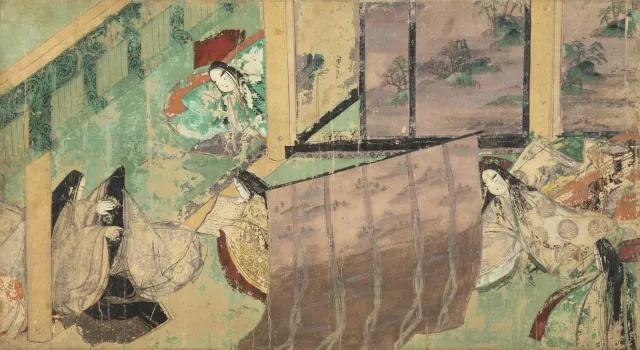
12世紀の『源氏物語絵巻』では、屋根や天井をとりはらって、斜め上から部屋の中をのぞくように描く「吹抜屋台」という工夫が使われています。顔は細い線の目と「く」の字の鼻で描く「引目鉤鼻」。表情をはっきり描かないことで、見る人が登場人物の気持ちを想像できるのです。
In the 12th-century Tale of Genji scrolls, artists removed roofs and ceilings so we can look down into the rooms. This is called fukinuki yatai, the 'blown-off roof'. Faces are drawn with thin lines for eyes and a small hook for the nose. Because the expressions are not clearly shown, viewers can imagine the characters' feelings themselves.
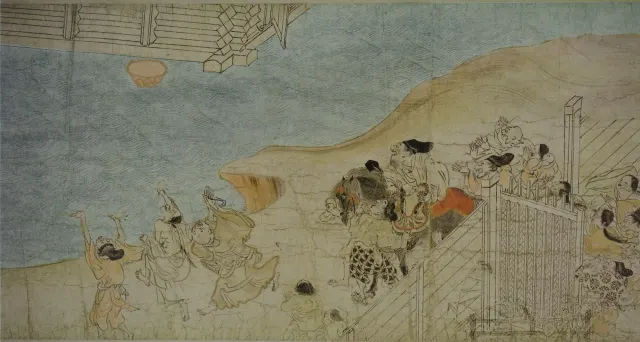
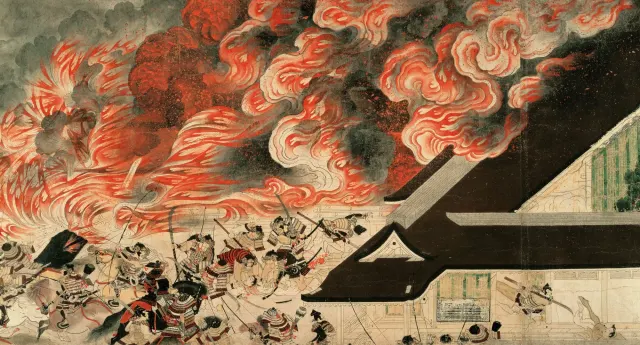
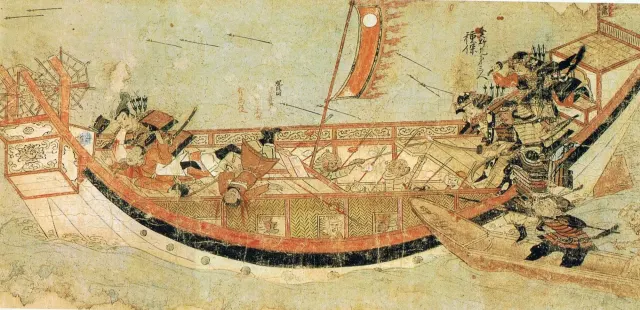
一方、『信貴山縁起絵巻』や『伴大納言絵巻』では、たくさんの人々が走り、さわぎ、表情ゆたかに動き回ります。『鳥獣戯画』では、ウサギやカエルが人間のように遊びます。鎌倉時代には、『平治物語絵巻』の合戦や、元との戦いを記録した『蒙古襲来絵詞』のように、武士の時代を映す絵巻も描かれました。
In contrast, scrolls like the Legends of Mount Shigi and the Tale of Ban Dainagon are full of people running, shouting and showing lively expressions. In the Scrolls of Frolicking Animals, rabbits and frogs play like humans. In the Kamakura period, scrolls reflected the age of the samurai, such as the Illustrated Scrolls of the Heiji Civil War and the Mōko Shūrai Ekotoba, a record of the Mongol invasions.
