

 PDF をダウンロード
Yamato-e and Picture Scrolls
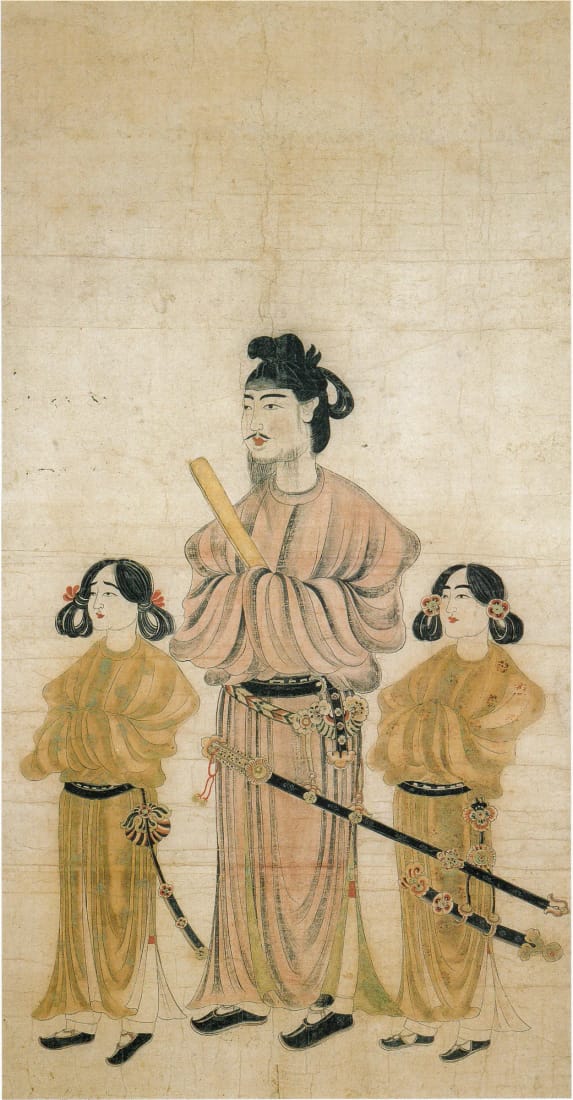
Unknown (traditionally attributed to Prince Asa of Baekje), Late 7th–8th century
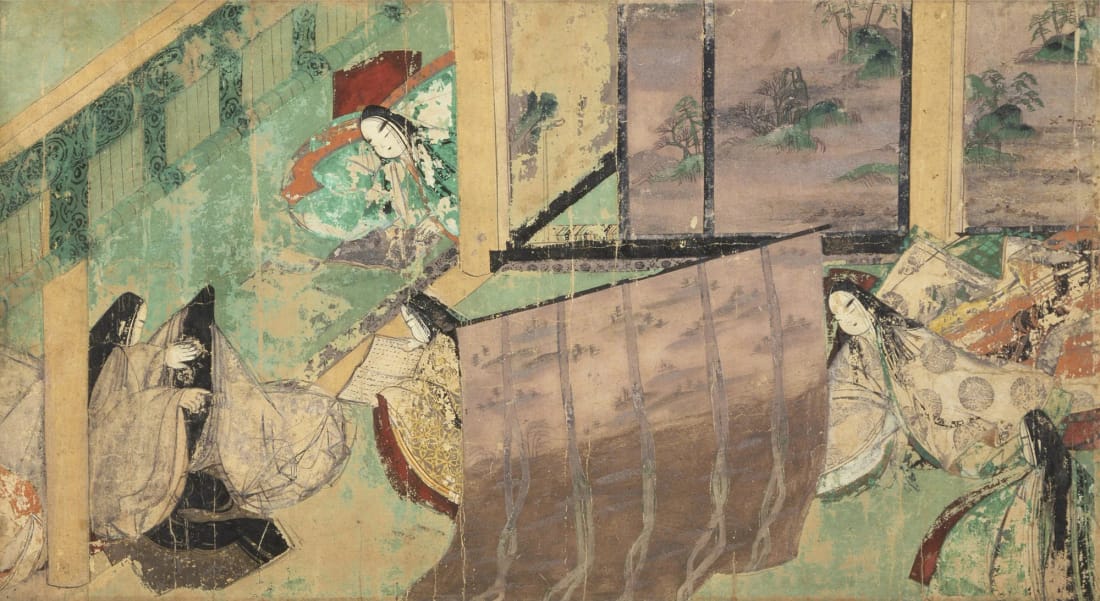
Unknown, 12th century
1 How to spot it 2つの絵で見つけたら ✓ をつけよう。
| A | B | |
|---|---|---|
| No roof, so you look down into the rooms from above. | ☐ | ☐ |
| Faces have just thin lines for eyes and a little hook for a nose. | ☐ | ☐ |
| The same person appears several times in one scene to show time passing. | ☐ | ☐ |
| Crowds of running, surprised people, as lively as in a comic. | ☐ | ☐ |
| Sections of text and pictures take turns along the scroll. | ☐ | ☐ |
2 Read 英文を読もう。
In the Heian period, paintings of Japanese scenery, seasons and daily life came to be called yamato-e, or 'Japanese painting', to set them apart from Chinese-style art. Painted with soft lines and beautiful colors, they were closely tied to poetry and tales. The most famous form is the emaki, a long scroll where pictures and text take turns telling a story.
Write one thing you learned:
Yamato-e and Picture Scrolls
3 Art words — Match them. 英語と日本語を線で結ぼう。
- picture scroll ●
- yamato-e ●
- continuous narrative ●
- blown-off roof ●
- ● やまと絵
- ● 絵巻
- ● 吹抜屋台
- ● 異時同図法
4 Quiz
What is the technique of removing roofs to show rooms from above called?
- Hikime kagihana
- Perspective
- Continuous narrative
- Fukinuki yatai
5 Quiz
Which two animals wrestle in the Frolicking Animals scrolls?
- A monkey and a deer
- A rabbit and a frog
- A cat and a mouse
- A fox and a raccoon dog
6 Which do you like better, A or B? Why? AとB、どちらが好き?理由も英語で。
I like ____ better because ________________________________.
Answers & Notes
1 How to spot it(訳)
- No roof, so you look down into the rooms from above.
屋根がなく、斜め上から部屋の中をのぞきこむ構図。 - Faces have just thin lines for eyes and a little hook for a nose.
顔は細い線の目と、「く」の字のような鼻だけ。 - The same person appears several times in one scene to show time passing.
同じ人物が、ひとつの画面に何度も出てきて時間の流れを表す。 - Crowds of running, surprised people, as lively as in a comic.
走る人、驚く人など、群衆の表情や身ぶりがマンガのように生き生き。 - Sections of text and pictures take turns along the scroll.
文章(詞書)と絵が、交互に並んでいる。
A:聖徳太子二王子像(唐本御影) B:源氏物語絵巻「東屋(一)」
2 Read(訳)
平安時代、中国風の絵(唐絵)に対して、日本の風景や季節、暮らしを描いた絵が「やまと絵」とよばれるようになりました。やわらかな線と美しい色で描かれ、和歌や物語と深く結びついていました。その代表が、絵と文章をかわるがわる並べて物語を伝える、横に長い「絵巻」です。
3 Art words
1–b(picture scroll=絵巻:横に長い紙や絹に、物語を絵と文章で描いたもの。右から左へ見る。)
2–a(yamato-e=やまと絵:日本の風景や季節、物語を描いた絵。中国風の「唐絵」に対することば。)
3–d(continuous narrative=異時同図法:ちがう時間の場面を一つの画面に描き、同じ人物を何度も登場させる方法。)
4–c(blown-off roof=吹抜屋台:屋根や天井を描かず、斜め上から室内をのぞくように描く工夫。)
4 Quiz
D 問:屋根をとりはらって、上から部屋の中を描く工夫を何という?
選択肢:A 引目鉤鼻/B 遠近法/C 異時同図法/D 吹抜屋台
解説:「吹き抜けた屋台(建物)」という意味で、『源氏物語絵巻』でよく使われています。
5 Quiz
B 問:『鳥獣戯画』で相撲をとっている動物の組み合わせは?
選択肢:A サルとシカ/B ウサギとカエル/C ネコとネズミ/D キツネとタヌキ
解説:カエルがウサギを投げ飛ばす場面が有名です。
Fun Fact(訳)
『鳥獣戯画』の作者は、じつはわからない 「鳥羽僧正が描いた」と長く伝えられてきましたが、確かな証拠はありません。4巻は描かれた時代も画風もちがうことから、何人もの人が描いたと考えられています。ウサギとカエルが相撲をとる有名な場面は甲巻にあります。
