

 ワークシート
 ぬりえ
 迷路
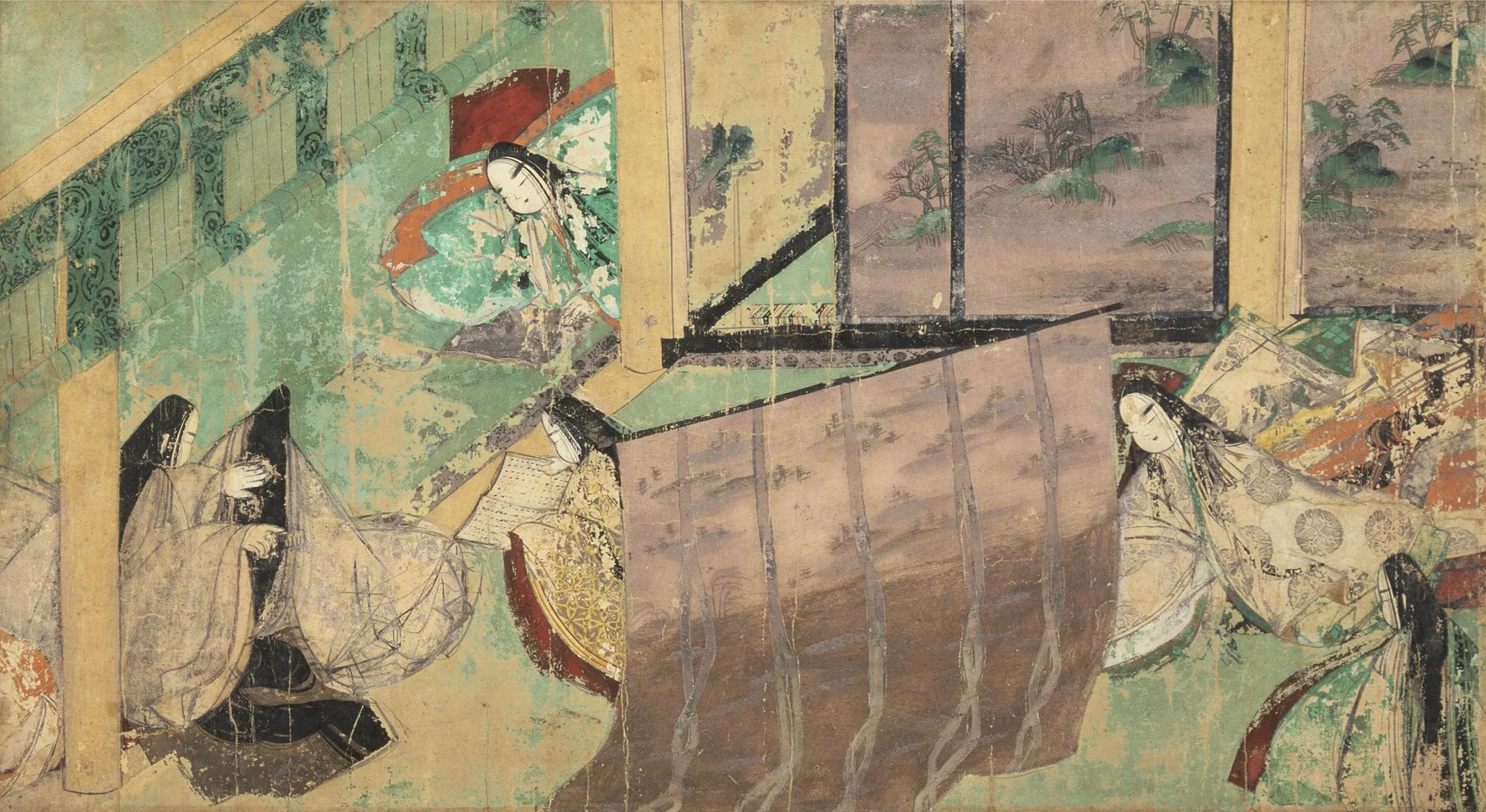
屋根をはずしてのぞき見!900年前のお姫さまの「読み聞かせタイム」。Peek in with the roof removed! A princess's story time 900 years ago.
 美術館アンテナ:この作品の仲間(同じ絵巻・シリーズ)に会える展覧会
この作品のお話
Story『源氏物語絵巻』は、1000年ごろに紫式部が書いた『源氏物語』を絵にした、現存する最古の源氏絵で、国宝です。この場面は第50帖「東屋(あずまや)」。中の君が、ふさぎこんでいる異母妹の浮舟をなぐさめようと、絵物語を見せています。浮舟は絵をながめ、女房の右近が物語の文を読み上げています。
The Tale of Genji Illustrated Handscroll is the oldest surviving set of Genji pictures. It is a National Treasure. It shows scenes from The Tale of Genji, written by Murasaki Shikibu around the year 1000. This scene is from Chapter 50, 'Azumaya.' Naka-no-kimi tries to cheer up her sad half-sister, Ukifune, with a picture story. Ukifune looks at the pictures while a lady-in-waiting, Ukon, reads the text aloud.
12世紀、平安時代の宮廷で作られました。屋根と天井をとりはらって上から部屋をのぞく「吹抜屋台(ふきぬきやたい)」、目は細い線・鼻はかぎ形で描く「引目鉤鼻(ひきめかぎばな)」が特徴です。下描きの上に厚く色をぬり、最後にもう一度輪郭をかく「つくり絵」という技法で描かれました。
It was made at the Heian court in the 12th century. The artists left out the roof and ceiling to show the rooms from above. This is called fukinuki yatai, or 'blown-off roof.' Faces have thin lines for eyes and hooks for noses, a style called hikime kagibana. The painters drew the outlines, filled in thick colors, and then drew the outlines again.
もとは物語全体をえがいた大きなセットだったと考えられますが、いま残る絵は20場面ほど。徳川美術館と五島美術館が分けて持っています。巻いたり広げたりすると絵の具がはがれるため、昭和のはじめに場面ごとに切りはなされ、額に入れて保存されるようになりました。とても傷みやすいので、公開される期間は短いのです。
It was probably once a large set covering the whole story. Today only about 20 pictures survive. They are shared by the Tokugawa Art Museum and the Gotoh Museum. Rolling and unrolling made the paint flake off. So in the early Shōwa era, the scrolls were cut into scenes and mounted as framed panels. They are very fragile, so they are shown only for short periods.
この絵は約900年前のものです。『源氏物語』という長いお話の絵です。若い女性が絵を見ています。別の女性が、物語を読み上げています。画家は屋根と天井をかかなかったので、部屋の中が見えるのです!
This picture is about 900 years old. It comes from a long story, The Tale of Genji. A young woman looks at pictures. Another woman reads the story aloud. The artist left out the roof and ceiling, so we can see inside!
英語のレベルは上の「やさしい/ふつう」で切りかえられます。
えっ!?な裏ネタ
Secrets2000年に発行された2000円札のうらには、同じ源氏物語絵巻の「鈴虫」の場面と、紫式部の姿がえがかれています。財布の中で、国宝の絵巻に出会えるかもしれません。
The back of the 2,000-yen note, first issued in 2000, shows the 'Suzumushi' scene from these same Genji scrolls, along with Murasaki Shikibu. You might find a National Treasure in your wallet!
この場面では、浮舟が絵を見て、右近が文を読んでいます。研究者の玉上琢弥は、ここから「平安時代の物語は、女房が読み聞かせて楽しむものだった」という説を立てました。
In this scene, Ukifune looks at pictures while Ukon reads the words. The scholar Tamagami Takuya used this scene to argue that Heian stories were enjoyed by listening to someone read aloud.
引目鉤鼻の顔は、どの人もそっくり。でも、うつむく姿勢や着物、部屋のようすで気持ちが伝わります。見る人が自分の想像で表情を思いうかべられる、とも言われます。顔をかき分けないのも、ひとつの表現なのです。
With hikime kagibana, every face looks almost the same. But poses, robes and rooms show their feelings. Some say this lets viewers imagine the faces for themselves. Not drawing different faces is also a way of expressing feelings.
いまは色があせて茶色っぽく見えますが、科学調査をもとにした平成の復元模写では、緑や赤、金がかがやく、はなやかな画面が再現されました。作られた当時は、今よりずっと色あざやかだったと考えられています。
Today the colors look faded and brownish. But modern copies based on scientific research bring back shining greens, reds and gold. Scholars believe the scroll was much more colorful when it was made.
ここを見て!
Look Closer1絵を見る浮舟Ukifune looking at pictures
上のほうで身をのりだしているのが浮舟。絵物語に見入っています。
Leaning forward near the top is Ukifune. She is lost in the picture story.
2読み上げる右近Ukon reading aloud
冊子を広げて文を読む女房。物語の「声」の担当です。
A lady-in-waiting opens a booklet and reads. She is the 'voice' of the story.
3中の君Naka-no-kimi
右で長い髪をたらしているのが中の君。女房に髪をすかせています。
On the right, with long flowing hair, is Naka-no-kimi. A lady is combing her hair.
4斜めの線Slanting lines
柱やすだれが斜めに走ります。屋根をとった部屋を上から見下ろす「吹抜屋台」の視点です。
Posts and blinds run on a slant. We look down into a room with no roof. This is fukinuki yatai.
英語で名画を語ろう
Talk about Art in EnglishThe painting gives us a bird's-eye view of the room.
この絵は、部屋を上から見下ろす眺めを見せてくれます。
💡 上空から見下ろした景色や図のこと。地図や町の絵の説明にもよく使います。
英語で説明すると… Describe it
これは宮殿の中の場面です。長い着物を着た女性が何人かいます。真ん中では、ひとりの女性が本を声に出して読んでいます。上のほうでは別の女性が絵を見ていて、右にはとても長い髪の女性がいます。
This is a scene inside a palace. There are several women in long robes. In the middle, a woman is reading a book aloud. At the top, another woman is looking at pictures, and on the right, a woman has very long hair.
考えてみよう Think & Talk
- 物語は、自分で読むのと読んでもらうのと、どちらが好きですか?それはなぜ?Do you like reading a story or listening to it? Why?
- 顔がみんな同じなのに、どうやって人の気持ちがわかるでしょう?How can you tell how people feel when their faces look the same?
この作品の英単語
WordsA handscroll is opened from right to left.
絵巻は右から左へ広げる。
Ukon reads the story aloud.
右近は物語を声に出して読む。
Naka-no-kimi wants to comfort her sister.
中の君は妹をなぐさめたい。
The old paint is very fragile.
古い絵の具はとてもこわれやすい。
ミニクイズ
QuizQ. 屋根をとって上から部屋をのぞく描き方を何という?What is the 'roof removed' way of showing rooms called?
屋根や天井を描かずに、斜め上から部屋を見せる「吹抜屋台」です。
It is fukinuki yatai: rooms seen from above with no roof or ceiling.
ウソ?ホント? 源氏物語絵巻は、いまは場面ごとに額に入れて保存されている。The Genji scrolls are now kept as separate framed scenes.
巻き広げによる傷みを防ぐため、昭和のはじめに額装にされました。
They were cut and framed in the early Shōwa era to prevent damage.
ウソ?ホント? 源氏物語絵巻の人物は、一人ひとり顔がまったくちがう。Every person in the Genji scrolls has a very different face.
「引目鉤鼻」で、ほとんど同じような顔にえがかれています。
With hikime kagibana, the faces look almost the same.
 画像の出典とライセンス / Image credit
- PDGenji emaki azumaya.jpg(Wikimedia Commons)
ライセンス:Public domain(パブリックドメイン)/作者・撮影者の表記:Imperial court in Kyoto/提供元:Genji Monogatari Emaki published by the Tokugawa Museum in Nagoya, Japan, 1937.
この作品は、作者の死後長い年月がたち著作権の保護期間が終わった「パブリックドメイン」の作品です。画像は平面の作品を忠実に写したもので、新しい著作権は生じません(Wikimedia Commons の PD-Art の考え方)。 所蔵:徳川美術館(The Tokugawa Art Museum)。画像は表示のために縮小・WebP 形式に変換しています。
