

 ワークシート
 ぬりえ
 迷路
お札に7回登場した顔。でも本当に聖徳太子なの?A face that appeared on banknotes seven times. But is it really Prince Shōtoku?
この作品のお話
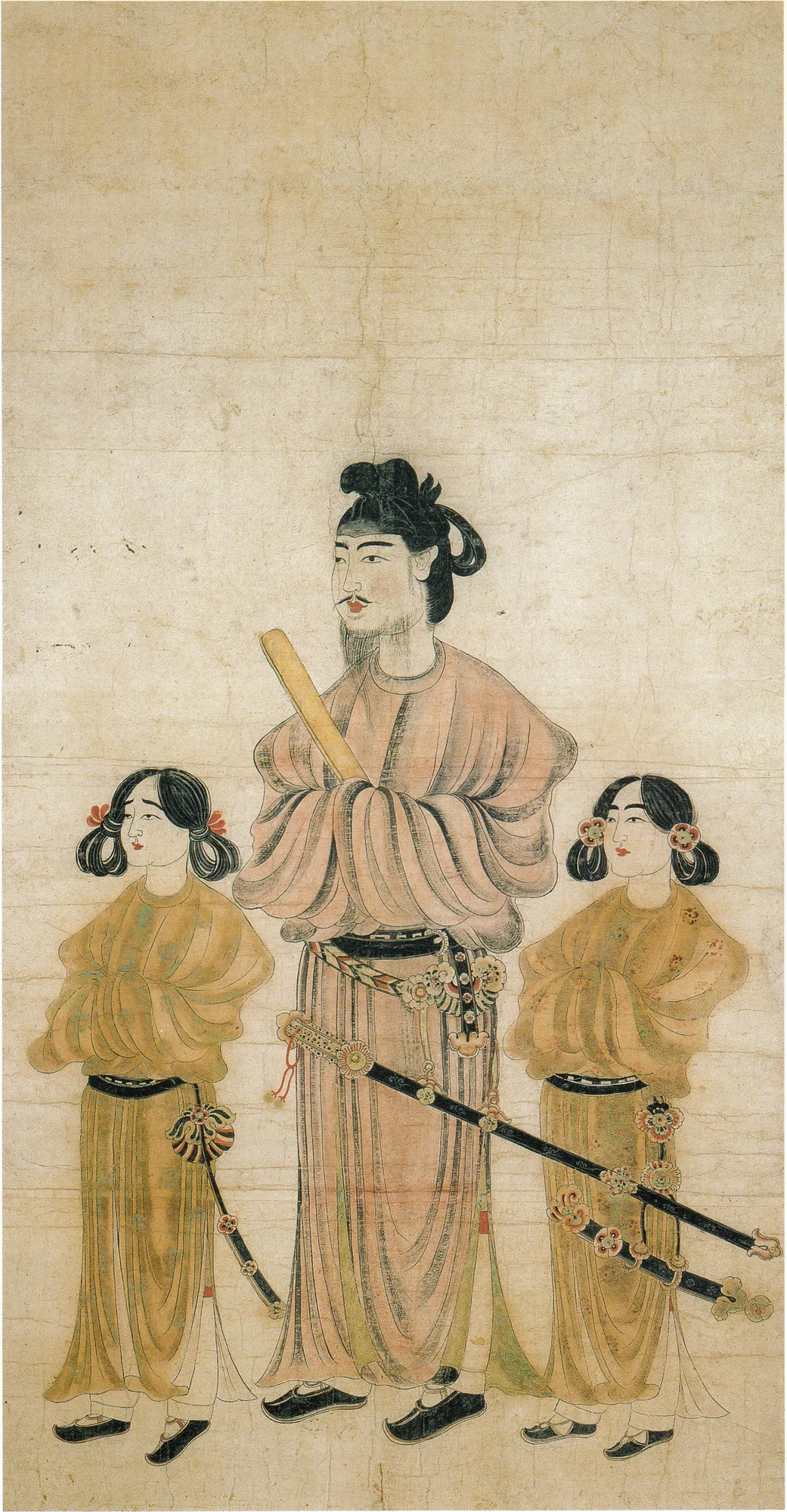
Story真ん中に、冠をかぶり、手に笏(しゃく)を持ち、腰に長い太刀をさげた男性が立っています。左右には、髪を耳の横で輪にまとめた「みずら」の少年が二人。昔から、聖徳太子と、弟の殖栗王(えくりおう)・長男の山背大兄王(やましろのおおえのおう)の姿と伝えられてきました。日本に残るもっとも古い肖像画の一つとされ、「唐本御影」とも呼ばれます。
In the center stands a man wearing a crown, holding a flat scepter called a shaku, with a long sword at his waist. On each side is a boy with his hair tied in loops beside the ears. It has long been said to show Prince Shōtoku with his younger brother Prince Ekuri and his eldest son Prince Yamashiro no Ōe. It is often called one of the oldest surviving portraits in Japan, and it is also known as the Tōhon Miei.
言い伝えでは、597年に日本へ来た百済(朝鮮半島の国)の阿佐太子が描いたとされますが、これは伝説です。服装や笏、絵の描き方などから、実際には7世紀の終わりから8世紀ごろ、つまり太子が亡くなった622年より後に描かれたと考えられています。二人の王子の名前も、鎌倉時代の書物にはじめて出てくる説で、中国の絵の構図にならった可能性も指摘されています。
Legend says that Prince Asa of Baekje, a kingdom on the Korean Peninsula, painted it when he came to Japan in 597, but this is only a legend. From the clothes, the shaku and the painting style, it is thought to have been made between the late 7th and the 8th century, after Prince Shōtoku died in 622. The names of the two princes first appear in a book from the Kamakura period, and the composition may follow a Chinese painting.
この絵は長く奈良の法隆寺に伝わり、1878年(明治11年)、ほかの宝物とともに皇室へ献納されました。今は皇室の持ち物「御物(ぎょぶつ)」として宮内庁が管理しています。中央の人物の顔は、1万円札をはじめ日本のお札に何度も使われ、「聖徳太子の顔」として日本中に知られるようになりました。
The painting was kept for a long time at Hōryūji Temple in Nara. In 1878 it was given to the Imperial Household together with other temple treasures. Today it is imperial property, looked after by the Imperial Household Agency. The face of the central figure was used on many Japanese banknotes, including the 10,000-yen note, and became known all over Japan as 'the face of Prince Shōtoku'.
真ん中に男の人が立っています。左右に少年が二人います。この男の人は聖徳太子だといわれています。その顔は何度も日本のお札になりました。でも「本当に太子なの?」と考える人もいます。
A man stands in the middle. A boy stands on each side. People say the man is Prince Shotoku. His face was on Japanese money many times. But some people ask, 'Is it really him?'
英語のレベルは上の「やさしい/ふつう」で切りかえられます。
えっ!?な裏ネタ
Secretsこの絵をもとにした聖徳太子の顔は、1930年の百円札からはじまり、千円札・五千円札・一万円札など、日本のお札に合計7回登場しました。これは日本のお札の人物で最多です。昔は「聖徳太子」が高額なお札の代名詞になったほどでした。
Prince Shōtoku's face, based on this painting, first appeared on the 100-yen note in 1930. It later appeared on 1,000-yen, 5,000-yen and 10,000-yen notes, seven times in all, more than any other person on Japanese banknotes. People even used 'Shōtoku Taishi' as a nickname for big bills.
明治時代にはすでに、歴史家の黒川真頼が、服装や笏は太子の時代より後のものだと指摘していました。そのため、描かれた人がだれなのかは、今も確かめられていません。最近の教科書などでは「聖徳太子と伝えられる肖像」のような書き方をすることもあります。
Already in the Meiji period, the historian Kurokawa Mayori pointed out that the clothes and the shaku came from a later time than Prince Shōtoku. Because of this, no one has proved who the man really is. Recent textbooks sometimes call it 'a portrait said to be Prince Shōtoku'.
1980年代、ある歴史学者が、絵の表装に「川原寺」という文字があり、太子ではない別人の像かもしれないと発表して話題になりました。ところが、のちの調査で、それは銀の糸で織られた「康」という字の一部がはがれて見えたものだとわかりました。
In the 1980s, a historian announced that the mounting showed the name of a temple, 'Kawaradera', which might mean the portrait was of someone else. This caused a stir. But later research showed it was really the character 'kō', woven in silver thread, which had partly peeled away.
明治のはじめ、お寺は苦しい時代をむかえていました。1878年、法隆寺は300点ほどの宝物を皇室に献納し、お礼として1万円が下されました。宝物の多くは今、東京国立博物館の法隆寺宝物館にありますが、この肖像は皇室の持ち物として残されました。
In the early Meiji period, temples were going through hard times. In 1878, Hōryūji gave about 300 treasures to the Imperial family and received 10,000 yen in return. Most of these treasures are now in the Gallery of Hōryūji Treasures at the Tokyo National Museum, but this portrait stayed in the Imperial collection.
ここを見て!
Look Closer1冠をかぶった顔Face with a crown
黒い冠とうすいひげ。この顔が、お札の「聖徳太子」のもとになりました。
A black crown and a thin beard. This face became the 'Prince Shōtoku' on banknotes.
2笏(しゃく)The shaku scepter
両手で持つ細長い板。儀式のときに持つもので、身分の高さをあらわします。
A long, flat board held in both hands. It was carried at ceremonies and showed high rank.
3長い太刀Long sword
腰からななめにさげた、飾りのついたまっすぐな太刀。古い時代の刀の形です。
A straight, decorated sword hangs at an angle from his waist, in an ancient style.
4みずらの少年Boy with looped hair
髪を耳の横で輪にまとめた「みずら」。左右の少年は、太子の弟と息子と伝えられます。
Hair tied in loops beside the ears. The two boys are said to be the prince's brother and son.
英語で名画を語ろう
Talk about Art in EnglishThe prince is flanked by two young boys.
皇子は両わきに二人の少年をしたがえています。
💡 flank は「わき腹・側面」。主役の左右に人や物があるときに使える、美術解説の定番表現です。
英語で説明すると… Describe it
これは3人の人物を描いた古い肖像画です。真ん中に背の高い男性が立っています。冠をかぶり、平たい棒を持っています。左右には、髪を輪にまとめた少年が二人います。
This is an old portrait of three people. In the center, a tall man is standing. He is wearing a crown and holding a flat stick. On the left and right, there are two boys with looped hair.
考えてみよう Think & Talk
- 描かれた人がだれか確かめられなくても、その肖像画は大切だと思いますか?それはなぜ?If we cannot prove who is in a portrait, is it still important? Why?
- なぜお札には有名な人の顔がのるのだと思いますか?Why do you think a famous person's face is put on money?
この作品の英単語
WordsThe prince stands between two boys.
皇子は二人の少年のあいだに立っています。
This is one of the oldest portraits in Japan.
これは日本でもっとも古い肖像画の一つです。
His face was on many banknotes.
彼の顔はたくさんのお札にのりました。
The story about the painter is a legend.
画家についての話は伝説です。
ミニクイズ
QuizQ. 聖徳太子の肖像は、日本のお札に合計何回登場した?How many times did Prince Shōtoku appear on Japanese banknotes?
百円札から一万円札まで、合計7回。日本のお札の人物で最多です。
Seven times, from the 100-yen note to the 10,000-yen note. That is the most of anyone.
ウソ?ホント? この絵は、聖徳太子が生きていた時代に描かれたことが確かめられている。It has been proved that this was painted while Prince Shōtoku was alive.
服装などから、太子が亡くなった後の7世紀末〜8世紀ごろの作と考えられています。
From the clothes and other details, it is thought to be from after his death, the late 7th to 8th century.
ウソ?ホント? 左右の少年は、太子の弟と息子だと伝えられている。The two boys are said to be the prince's brother and son.
弟の殖栗王と長男の山背大兄王と伝えられますが、これも確かではありません。
They are said to be Prince Ekuri and Prince Yamashiro no Ōe, but this is not certain either.
 画像の出典とライセンス / Image credit
- PDPortrait of Prince Shōtoku and Two Princes.jpg(Wikimedia Commons)
ライセンス:Public domain(パブリックドメイン)/作者・撮影者の表記:伝・阿佐太子 (Prince Asa)
この作品は、作者の死後長い年月がたち著作権の保護期間が終わった「パブリックドメイン」の作品です。画像は平面の作品を忠実に写したもので、新しい著作権は生じません(Wikimedia Commons の PD-Art の考え方)。 所蔵:宮内庁(御物)(Imperial Household Agency (Imperial Collection))。画像は表示のために縮小・WebP 形式に変換しています。
