

 ワークシート
 ぬりえ
 迷路
敵の大船に乗りこめ!モンゴル軍と戦った武士の「がんばり報告書」。Board the enemy ship! A samurai's report of his own bravery against the Mongols.
この作品のお話
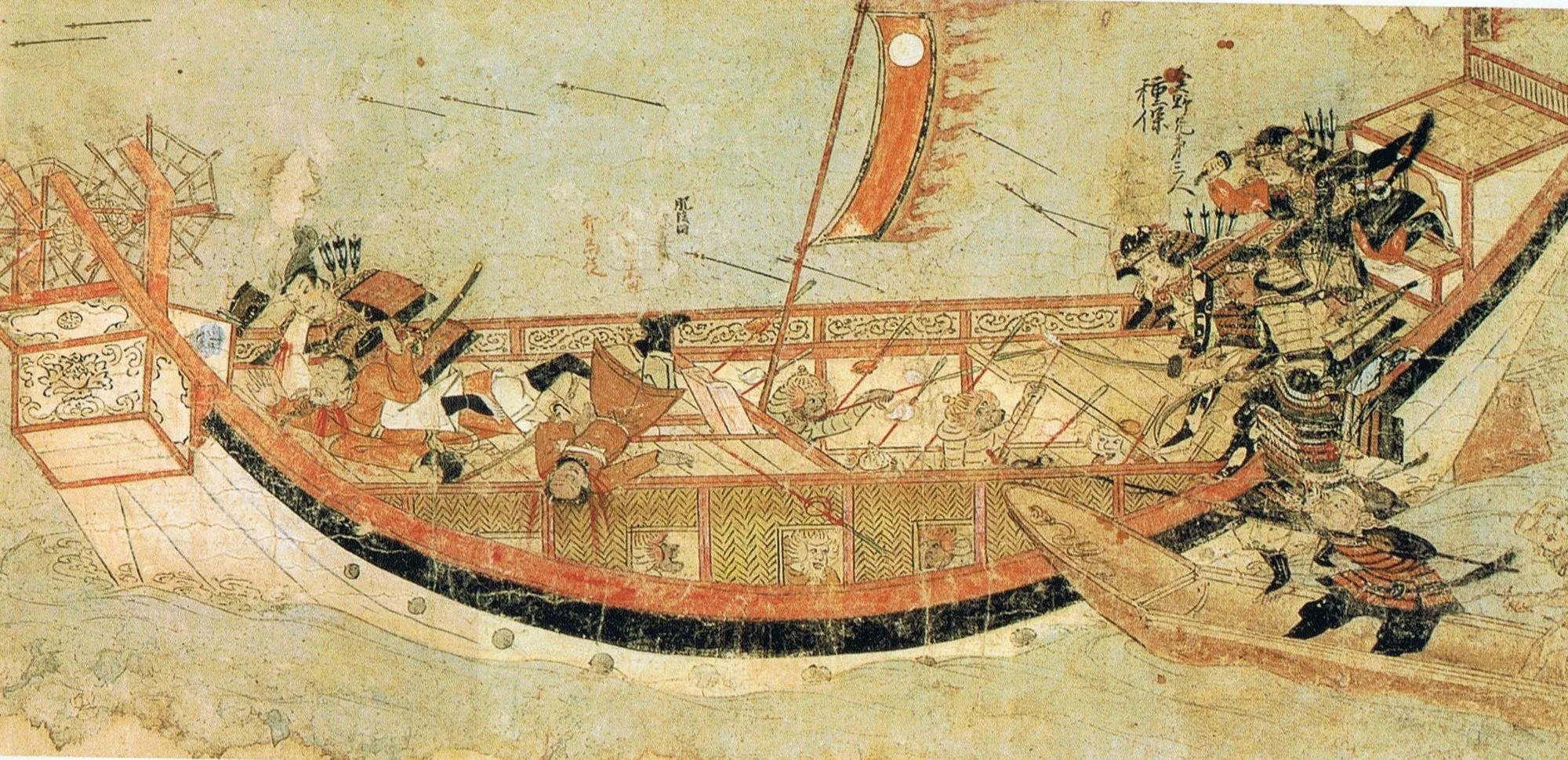
Story『蒙古襲来絵詞』は、1274年(文永の役)と1281年(弘安の役)の2度にわたるモンゴル(元)軍の襲来を、肥後国(いまの熊本県)の武士・竹崎季長(たけざきすえなが)の活躍を中心にえがいた絵巻です。この場面は2度目の戦い。小舟でこぎよせた日本の武士たちが、敵の大きな船に乗りこんでいきます。
This scroll shows the two Mongol invasions of Japan in 1274 and 1281. It focuses on Takezaki Suenaga, a samurai from Higo, now Kumamoto. This scene is from the second invasion. Japanese warriors row up in small boats and climb onto a large enemy ship.
1274年、季長は先がけて敵に向かいましたが、ほうびはもらえませんでした。そこで翌年、はるばる鎌倉まで出かけ、幕府の安達泰盛に直接うったえて、ついに土地と馬をさずかります。この絵巻は、季長が自分の手がらを記録し、恩人への感謝を伝えるために作らせたと考えられています。
In 1274, Suenaga charged at the enemy first, but he got no reward. The next year, he traveled all the way to Kamakura and spoke directly to Adachi Yasumori, a shogunate leader. At last, he received land and a horse. Suenaga probably had this scroll made to record his deeds and thank the man who helped him.
元軍の船や武器、日本の武士の鎧などが細かくえがかれ、当時の戦いを知るための大切な資料です。ただし長い年月のあいだに、あとから描き直されたり、順番が入れかわったりした部分もあると考えられています。2021年、国宝に指定されました。日本の歴史の教科書にもよく登場します。
It shows the enemy ships, weapons and Japanese armor in detail. It is an important record of how battles were fought. But over the centuries, some parts seem to have been repainted or put in a different order. In 2021, it was named a National Treasure. It often appears in Japanese history textbooks.
むかし、大きな軍隊が海から日本にやって来ました。武士たちは小さな舟で戦いました。季長という武士は勇かんに戦いました。彼はほうびを求めて、それをもらいました。そして、そのことを残すためにこの絵を作らせました。
Long ago, a big army came from the sea to Japan. Samurai fought on small boats. A samurai named Suenaga fought bravely. He asked for a reward, and he got it. Then he made this picture to remember it.
英語のレベルは上の「やさしい/ふつう」で切りかえられます。
えっ!?な裏ネタ
Secrets季長は、九州から鎌倉まで旅をして、幕府の実力者・安達泰盛にほうびをうったえました。その訴えが認められ、土地(海東郷の地頭職)と馬をもらいます。その一部始終も、絵巻にしっかりえがかれています。
Suenaga traveled from Kyushu to Kamakura to ask the powerful official Adachi Yasumori for his reward. His claim was accepted, and he received land and a horse. The whole story is painted in the scroll.
絵巻には、元軍の「てつはう」という爆弾がはじける場面があります。長崎県の鷹島の海の底からは、元軍の沈没船とともに、この爆弾と考えられる焼き物の玉が見つかっています。
The scroll shows an exploding bomb called tetsuhau. Under the sea near Takashima in Nagasaki, divers have found sunken Mongol ships and clay balls thought to be these bombs.
「てつはう」の場面で、季長の前にいる3人の元軍の兵士は、筆づかいがまわりとちがうため、のちの時代に描き足されたという説があります。名画にも「加筆」のナゾがあるのです。
In the bomb scene, three enemy soldiers in front of Suenaga look different in style. Some experts think they were added much later. Even famous scrolls can hide mysteries.
この場面の空には「大矢野兄弟三人」「種保」などと、武士の名前が書きこまれていて、まるで記念写真のキャプションのようです。ただし、この絵巻には後の時代の加筆や描きかえもあるため、こうした書きこみがすべて当時のものとは限りません。
In the sky of this scene, warriors' names, such as 'the three Ōyano brothers,' are written, like captions on a photo. But parts of this scroll were added or changed in later times, so not every label may be original.
ここを見て!
Look Closer1乗りこむ武士Samurai climbing aboard
右から敵の船に乗りこむ日本の武士たち。背中には矢を入れた箙(えびら)。
Japanese samurai climb onto the enemy ship from the right. Quivers of arrows are on their backs.
2名前の書きこみWritten names
「大矢野兄弟三人」「種保」と読める書きこみ。武士の名前ですが、後の時代に書き加えられた可能性もあります。
The words name warriors, such as the three Ōyano brothers. Some labels like this may have been added later.
3船の上の兵士たちSoldiers on the ship
大きな船の中で、兵士たちがあわてています。船の作りも細かくえがかれています。
Soldiers panic inside the big ship. The ship itself is drawn in detail.
4小舟Small boat
日本の武士たちは、小さな舟で大きな船にこぎよせて戦いました。
Japanese warriors rowed small boats up to the big ships to fight.
英語で名画を語ろう
Talk about Art in EnglishThe samurai climb aboard the enemy ship from a small boat.
武士たちは小舟から敵の船に乗りこみます。
💡 aboard は「船・飛行機に乗って」。Welcome aboard!(ご搭乗ありがとう)でもおなじみ。
英語で説明すると… Describe it
これは海の上の戦いです。真ん中に、兵士たちが乗った大きな船があります。右では、日本の武士たちが船に乗りこんでいます。空には矢が飛びかっています。
This is a battle at sea. In the middle, there is a big ship with soldiers on it. On the right, Japanese samurai are climbing aboard. Arrows are flying across the sky.
考えてみよう Think & Talk
- 自分のすごさを伝えるために絵を作らせるのは、いいことだと思いますか?Is it OK to make a picture to show how great you are?
- もし相手の側がこの戦いを描いたら、どんな絵になると思いますか?How would this battle look if the other side painted it?
この作品の英単語
WordsThe Mongol invasion came from the sea.
モンゴルの襲来は海からやって来た。
Suenaga asked for a reward.
季長はほうびを求めた。
The brave samurai climbed onto the ship.
勇かんな武士は船に乗りこんだ。
He made the scroll to record his deeds.
彼は自分の手がらを記録するために絵巻を作らせた。
ミニクイズ
QuizQ. 竹崎季長は、ほうびをもらうためにどこへ行った?Where did Takezaki Suenaga go to ask for his reward?
鎌倉幕府の安達泰盛にうったえ、土地と馬をもらいました。
He went to the shogunate in Kamakura and received land and a horse.
ウソ?ホント? モンゴル軍は日本に2度やって来た。The Mongols came to Japan twice.
1274年の文永の役と、1281年の弘安の役の2度です。
They came in 1274 and in 1281.
ウソ?ホント? この絵巻は、元の皇帝が作らせたものだ。The Mongol emperor ordered this scroll.
日本の武士・竹崎季長が、自分の活躍を残すために作らせました。
A Japanese samurai, Takezaki Suenaga, had it made to record his deeds.
 画像の出典とライセンス / Image credit
- PDMokoshuraiekotoba.jpg(Wikimedia Commons)
ライセンス:Public domain(パブリックドメイン)/作者・撮影者の表記:Unknown authorUnknown author/提供元:from: Mōko Shūrai Ekotoba (蒙古襲来絵詞), 2 handscrolls (1275 and 1293)
この作品は、作者の死後長い年月がたち著作権の保護期間が終わった「パブリックドメイン」の作品です。画像は平面の作品を忠実に写したもので、新しい著作権は生じません(Wikimedia Commons の PD-Art の考え方)。 所蔵:皇居三の丸尚蔵館(The Museum of the Imperial Collections, Sannomaru Shōzōkan)。画像は表示のために縮小・WebP 形式に変換しています。
