


 この展示室のワークシート
1848年、ロンドンの若い画家、ロセッティ、ミレイ、ハントの3人を中心に「ラファエル前派兄弟団」が結成されました。当時のイギリスの美術学校では、ラファエロを手本にした描き方が「正解」とされていました。彼らはそれに反発し、ラファエロより前の、中世や初期ルネサンスの素直で細やかな絵にもどろうとしたのです。
In 1848, a group of young London artists, led by Dante Gabriel Rossetti, John Everett Millais and William Holman Hunt, formed the Pre-Raphaelite Brotherhood. British art schools at the time taught that Raphael's style was the 'right' way to paint. The group rebelled and looked back to the honest, detailed art of the Middle Ages and early Renaissance, before Raphael.
彼らは「自然に忠実に」を合言葉に、草花や水面を、実物を見ながら細かく描きました。白い下地の上に明るい色を重ねる方法で、ステンドグラスのように鮮やかな色を生み出しました。題材には、シェイクスピアや中世の伝説、アーサー王物語など、文学の悲しくも美しい場面がよく選ばれました。
Their motto was 'truth to nature'. They painted plants and water in fine detail, looking at the real thing. By laying bright colors over a white base, they created colors as vivid as stained glass. They often chose sad but beautiful scenes from literature, such as Shakespeare, medieval legends and the tales of King Arthur.
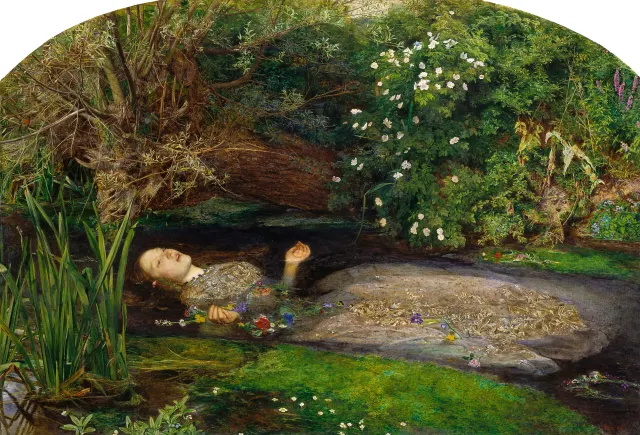
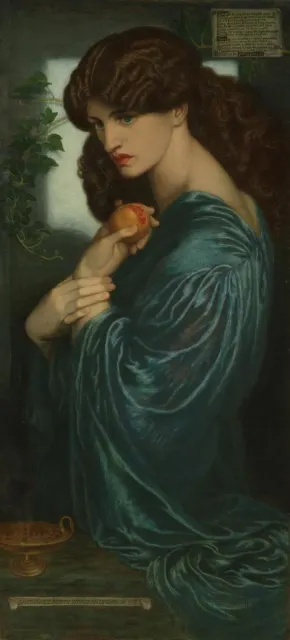
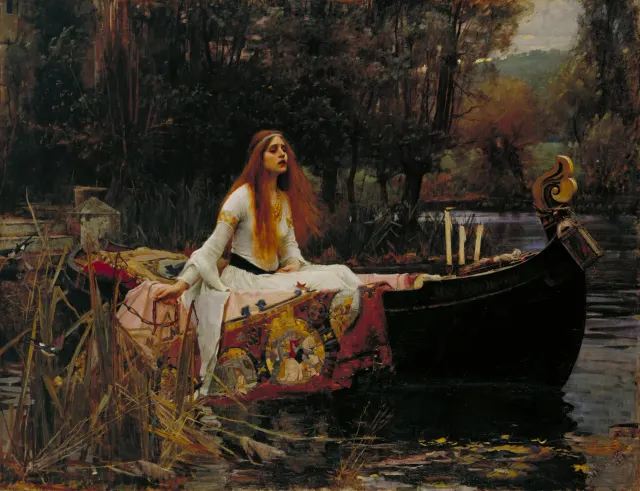
ミレイの『オフィーリア』は、シェイクスピアの『ハムレット』の悲しいヒロインが、花とともに川に浮かぶ場面です。ロセッティは長い髪のなぞめいた女性像を描き、のちの世代のウォーターハウスは『シャロットの女』を描きました。グループ自体は数年でばらばらになりましたが、その美意識はアール・ヌーヴォーや象徴主義に受けつがれました。
Millais's Ophelia shows the tragic heroine of Shakespeare's Hamlet floating in a river among flowers. Rossetti painted mysterious women with long hair, and John William Waterhouse, from a later generation, painted The Lady of Shalott. The group broke up within a few years, but its sense of beauty lived on in Art Nouveau and Symbolism.
