 ワークシート
 ぬりえ
 迷路
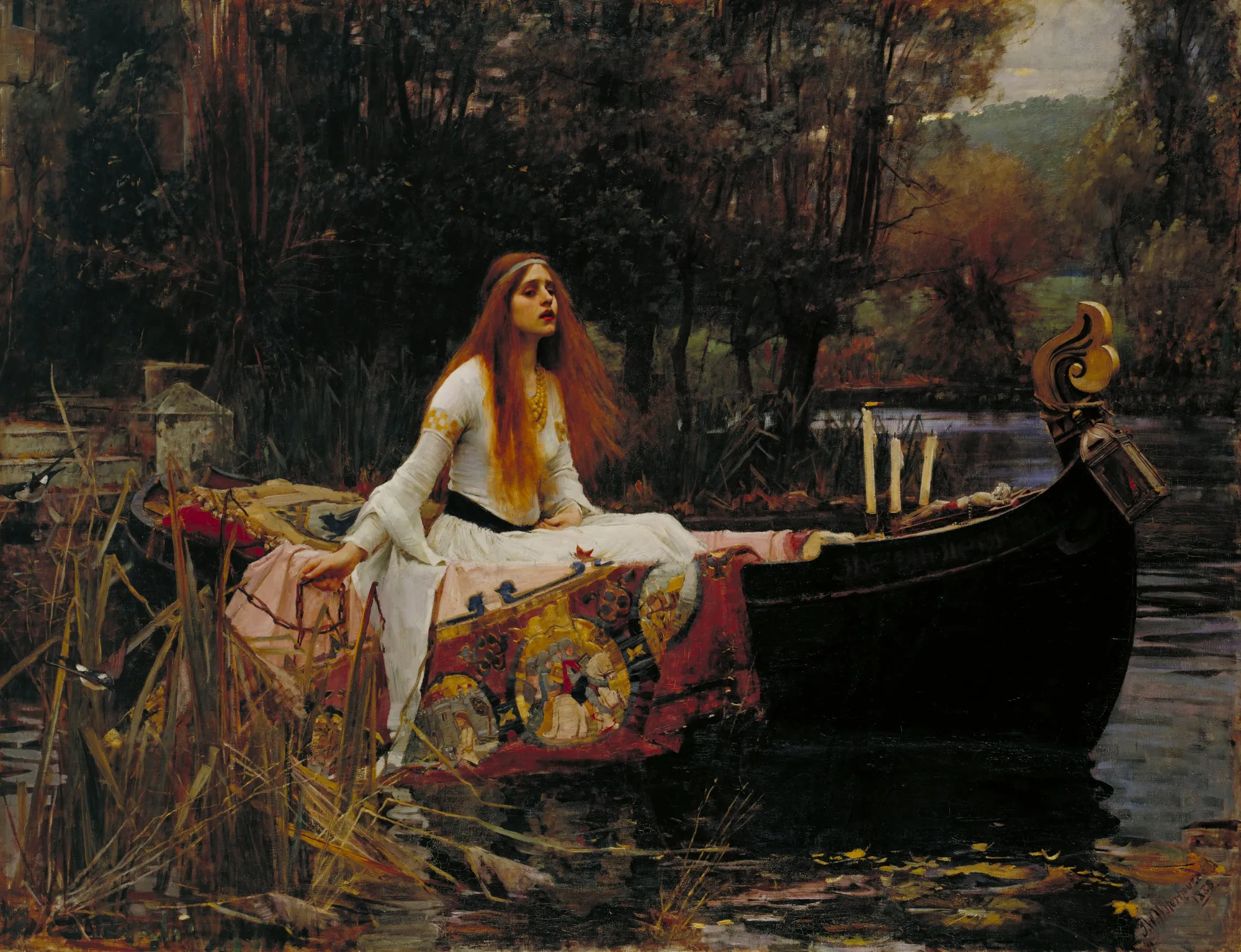
鏡がわれ、呪いが始まった。小舟で旅立つ姫の、3本のろうそくの意味は?The mirror cracked, and the curse began. What do the three candles on her boat mean?
この作品のお話
Storyアーサー王伝説をもとにした、テニスンの詩「シャロットの女」の一場面です。塔に閉じこめられた姫が、鎖をほどいて小舟で川へこぎ出そうとしています。白いドレスの姫、赤い織物、秋の色にそまった岸辺。1888年、ウォーターハウスが描いたイギリスで最も愛される絵の一つです。
This scene comes from 'The Lady of Shalott', a poem by Alfred Tennyson based on the legends of King Arthur. A lady who lived alone in a tower is untying the chain of her boat. She is about to float down the river. Waterhouse painted it in 1888, and it is one of Britain's best-loved paintings.
詩の中の姫は「外の世界を直接見てはいけない」という呪いをかけられ、鏡にうつる景色を見ながら織物を織って暮らしていました。ある日、鏡に騎士ランスロットがうつり、思わず窓の外を見たとたん、鏡には端から端までひびが入ります。姫は舟に乗り、キャメロットの都へ向かって流れていくのです。
In the poem, the lady is under a curse: she must not look at the world directly. She watches the world in a mirror and weaves what she sees into a tapestry. One day she sees the knight Lancelot in the mirror and looks out of the window. The mirror cracks, and she sets off in a boat toward Camelot.
ウォーターハウスはローマ生まれのイギリスの画家で、ラファエル前派の画家たちより一世代あと。それでも物語の世界を美しく描く作風から「最後のラファエル前派」とも呼ばれます。この絵は1894年、砂糖で財をなしたヘンリー・テートが国に寄贈しました。
Waterhouse was a British painter born in Rome. He was a generation younger than the Pre-Raphaelites, but he is sometimes called 'the last Pre-Raphaelite' because he painted stories so beautifully. In 1894, the sugar businessman Henry Tate gave this painting to the nation.
女の人が小さな舟に座っています。長い赤い髪で、白いドレスを着ています。彼女は塔に住み、鏡の中でしか世界を見られませんでした。今、彼女は川へ出ていきます。3本のろうそくを見てください。まだ燃えているのは1本だけです!
A lady sits in a small boat. She has long red hair and a white dress. She lived in a tower and saw the world only in a mirror. Now she goes out on the river. Look at the three candles. Only one is still burning!
英語のレベルは上の「やさしい/ふつう」で切りかえられます。
えっ!?な裏ネタ
Secrets舟の先の3本のろうそくをよく見ると、火がついているのは1本だけ。ろうそくの火は「命」の象徴とされ、姫の旅の終わりが近いことを、ことばを使わずに伝えていると読まれています。そばには十字架も置かれています。
Look closely at the three candles on the boat. Only one is still burning. A candle flame is often a symbol of life, so many people read it as a sign that her journey will soon end. A crucifix lies beside them.
詩の有名な一節「鏡は端から端までひびわれた(The mirror crack'd from side to side)」は、ミステリーの女王アガサ・クリスティの小説『鏡は横にひび割れて』の題名になりました。小説の中でも、この詩が大事な手がかりになります。
A famous line from the poem, 'The mirror crack'd from side to side', became the title of Agatha Christie's mystery novel. The poem also plays an important part in the story itself.
ウォーターハウスはこの姫にひかれ、1888年のこの絵のほか、1894年に鏡の中のランスロットを振り返る瞬間(リーズ美術館)、1915年に織り機の前でため息をつく姿(オンタリオ美術館)も描きました。3枚で物語の流れがわかります。
Waterhouse loved this story. Besides this 1888 painting, he painted her turning to look at Lancelot in 1894 (Leeds Art Gallery) and sitting at her loom in 1915 (Art Gallery of Ontario). Together, the three tell the story.
テート・ブリテンを作ったヘンリー・テートは、角砂糖を作る機械の特許を買って大成功した実業家です。集めた絵を国に寄贈し、美術館まで建てました。この絵もミレイの『オフィーリア』も、彼の寄贈品です。
Henry Tate, who founded the Tate Gallery, became rich after buying the rights to a machine that made sugar cubes. He gave his paintings to the nation and even paid for a museum. This painting and Millais's Ophelia were both his gifts.
ここを見て!
Look Closer1姫の顔The lady's face
口を少し開け、まぶたを重たげにふせています。詩の中で姫は、最後の歌を歌いながら流れていきます。
Her mouth is slightly open, and her eyelids are heavy and lowered. In the poem, she sings her last song as she floats away.
23本のろうそくThree candles
火がついているのは左の1本だけ。右の2本はもう消えています。
Only the candle on the left is burning. The two on the right have gone out.
3姫が織った織物The lady's tapestry
鏡で見た世界を織りこんだ織物。騎士や城のような模様が見え、舟のへりから水にたれています。
This is the tapestry she wove from the world in her mirror. You can see figures like knights and a castle. It hangs over the side of the boat into the water.
4鎖をほどく手Hand on the chain
舟をつなぐ鎖を、今まさに手放そうとしています。この瞬間から、もう後戻りはできません。
She is just about to let go of the chain that holds the boat. After this moment, there is no going back.
英語で名画を語ろう
Talk about Art in EnglishThe lady is about to let go of the chain.
姫は今にも鎖を手放そうとしています。
💡 物語の「次の瞬間」を感じさせる絵にぴったり。be about to+動詞の原形で使います。
英語で説明すると… Describe it
これは秋の川の風景です。真ん中で、長い白いドレスの女性が舟に座っています。舟のへりには絵柄のある赤い布がかかっています。右側には3本のろうそくがあり、奥には暗い木々があります。
This is a river scene in autumn. In the middle, a woman in a long white dress is sitting in a boat. There is a red cloth with pictures over the side of the boat. On the right, there are three candles, and in the background there are dark trees.
考えてみよう Think & Talk
- もしあなたが姫だったら、窓の外を見ますか?それはなぜ?If you were the lady, would you look out of the window? Why?
- この物語で、鏡は何を表していると思いますか?What do you think the mirror means in this story?
この作品の英単語
WordsThe lady lives under a curse.
姫は呪いをかけられて暮らしている。
She weaves the world she sees in the mirror.
彼女は鏡で見た世界を織る。
Only one candle is still burning.
まだ燃えているろうそくは1本だけだ。
The lady in the boat seems doomed.
舟の姫は悲しい運命にあるようだ。
ミニクイズ
QuizQ. 姫は、外の世界を何を通して見ていた?How did the lady see the outside world?
呪いのため直接見ることができず、鏡にうつる景色を見ていました。
Because of the curse, she could not look directly. She watched the world in a mirror.
ウソ?ホント? この絵の物語は、テニスンの詩がもとになっている。This painting is based on a poem by Tennyson.
アーサー王伝説をもとにした、テニスンの詩「シャロットの女」の場面です。
It shows a scene from Tennyson's poem, which is based on the King Arthur legends.
ウソ?ホント? 舟のろうそくは、3本とも明るく燃えている。All three candles on the boat are burning brightly.
燃えているのは1本だけ。2本はもう消えています。
Only one is burning. The other two have gone out.
 画像の出典とライセンス / Image credit
- PDJohn William Waterhouse - The Lady of Shalott - Google Art Project.jpg(Wikimedia Commons)
ライセンス:Public domain(パブリックドメイン)/作者・撮影者の表記:John William Waterhouse/提供元:Google Arts & Culture — RQHFwa4u2LTw0g Tate Images (
この作品は、作者の死後長い年月がたち著作権の保護期間が終わった「パブリックドメイン」の作品です。画像は平面の作品を忠実に写したもので、新しい著作権は生じません(Wikimedia Commons の PD-Art の考え方)。 所蔵:テート・ブリテン(Tate Britain)。画像は表示のために縮小・WebP 形式に変換しています。