

 この展示室のワークシート
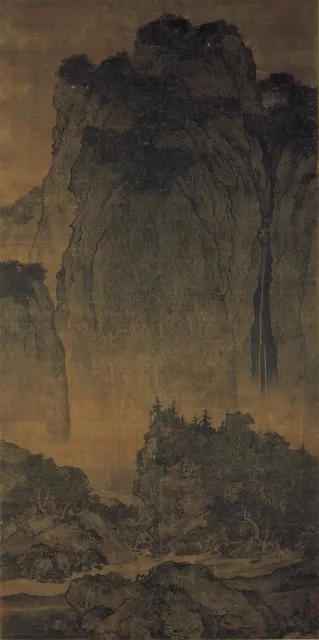
中国では、絵は詩や書道と並ぶ、教養ある人のたしなみでした。とくに大切にされたのが、山と水を描く「山水画」です。10〜11世紀の北宋の時代には、范寛の『谿山行旅図』のように、見上げるような大きな山の足もとを、小さな旅人が行く雄大な絵が生まれました。人間は大自然のほんの一部だ、という考えが表れています。
In China, painting stood beside poetry and calligraphy as an art for educated people. The most respected subject was landscape, called shanshui, meaning 'mountains and water'. In the Northern Song dynasty, in the 10th and 11th centuries, artists like Fan Kuan painted towering mountains with tiny travelers at their feet, as in Travelers among Mountains and Streams. It shows the idea that humans are only a small part of nature.
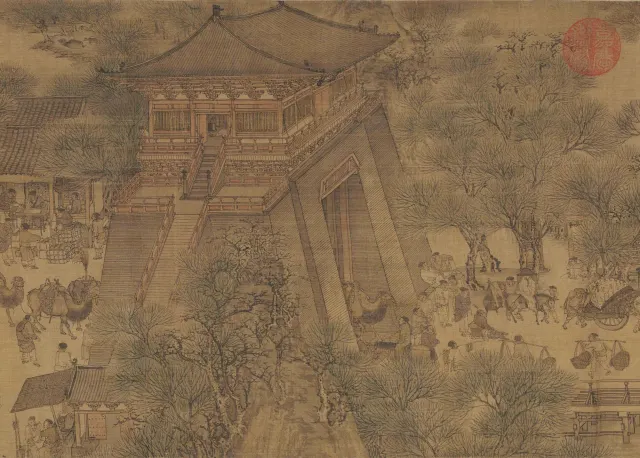
中国の絵の多くは、絹や紙に墨と筆で描かれ、掛け軸や巻物に仕立てられました。横に長い巻物は、右から左へ少しずつ広げて、旅をするように見ていきます。張択端の作とされる『清明上河図』には、北宋の都の川ぞいのにぎわいが、たくさんの人々や船とともに、ぎっしりと描かれています。
Many traditional Chinese paintings were made with ink and brush on silk or paper, and mounted as hanging scrolls or handscrolls. A long handscroll is unrolled a little at a time from right to left, so viewing it feels like a journey. Along the River During the Qingming Festival, credited to Zhang Zeduan, is packed with people and boats along a river in the Northern Song capital.
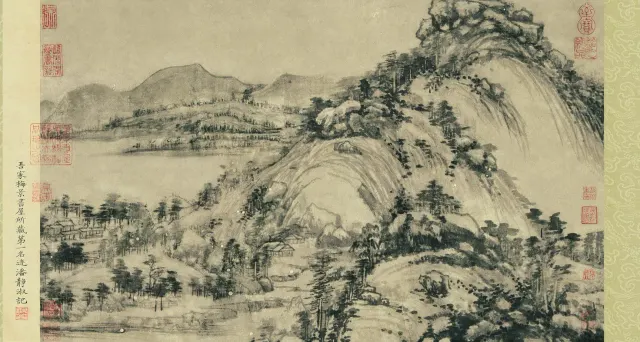
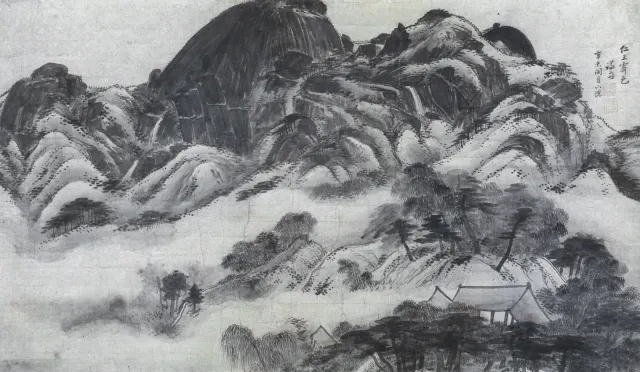
元の時代になると、学者や役人が自分の心を表すために描く「文人画」が大切にされ、黄公望の『富春山居図』はその最高傑作とされます。朝鮮半島では18世紀に、鄭敾(チョン・ソン)が、中国の手本ではなく、実際の朝鮮の山を見て描く「真景山水」を切り開き、『仁王霽色図』を残しました。
In the Yuan dynasty, 'literati painting', made by scholars and officials to express their own minds, became highly valued. Huang Gongwang's Dwelling in the Fuchun Mountains is seen as its masterpiece. In 18th-century Korea, Jeong Seon created 'true-view landscape', painting real Korean mountains instead of copying Chinese models, as in Clearing after Rain on Mount Inwang.
