

 ワークシート
 ぬりえ
 迷路
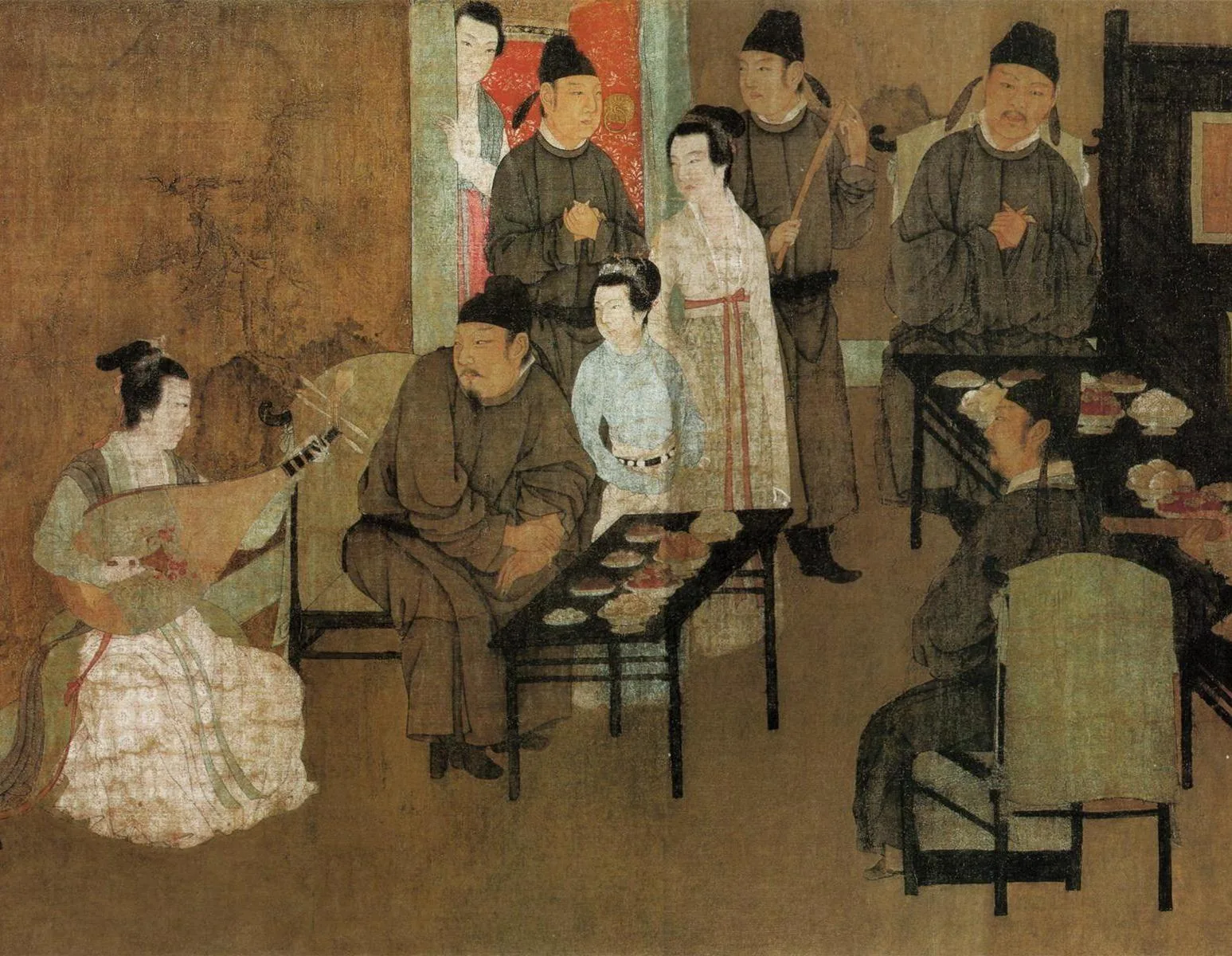
王さまのスパイが見た?千年前の中国の夜のパーティー。Did a spy paint this? A night party in China a thousand years ago.
この作品のお話
Story中国の南唐という国の大臣・韓熙載(かんきさい)の屋敷で開かれた、夜の宴会を描いた長い巻物です。全体の長さは3メートルをこえ、5つの場面に分かれています。この画像は、最初の場面「琵琶を聴く」の一部です。原作は10世紀の宮廷画家・顧閎中(ここうちゅう)とされ、北京の故宮博物院にあるこの巻物は、12世紀の宋の時代に写されたものと考えられています。
This long scroll shows a night party at the home of Han Xizai, a minister of the Southern Tang kingdom in China. It is more than three meters long and is divided into five scenes. This image shows part of the first scene, 'Listening to the Pipa.' The original is credited to the 10th-century court painter Gu Hongzhong. The scroll in the Palace Museum in Beijing is thought to be a copy made in the Song dynasty, in the 12th century.
伝えられるところでは、韓熙載は北の国からのがれてきた有能な人物で、たびたび客を招いて夜の宴会を開いていました。南唐の王・李煜(りいく)は、彼を重い役につけたいと考える一方で、そのうわさも気にしていました。そこで画家を屋敷に行かせ、宴のようすを見て描かせた、と伝えられています。韓熙載は、わざと遊んでいるふりをして重い役目をさけたのだ、という説もあります。
According to traditional accounts, Han Xizai was a talented man who had fled from the north and often held night parties for his guests. Li Yu, the ruler of the Southern Tang, wanted to give him an important post, but he was also worried by the rumors. So, the story goes, Li Yu sent a painter to the house to watch the party and paint it. Some say Han only pretended to enjoy parties so that he could avoid a heavy job.
巻物は何百年ものあいだ、皇帝や収集家の手から手へと渡りました。清の乾隆帝も、宮廷の名品の目録にのせています。その後いったん宮殿の外へ出ましたが、20世紀のなかばに北京の故宮博物院に戻りました。衣装や家具、楽器がくわしく描かれているため、今では千年前の中国の暮らしを知る、貴重な手がかりにもなっています。
For hundreds of years, the scroll passed from hand to hand among emperors and collectors. The Qianlong Emperor of the Qing dynasty listed it in his catalogue of palace treasures. Later it left the palace for a time, but in the mid-20th century it returned to the Palace Museum in Beijing. Its clothes, furniture and instruments are painted in detail, so it is now a valuable record of life in China a thousand years ago.
これは昔の中国の夜のパーティーです。女性が琵琶をひいています。まわりの人が聴いています。王さまが画家にこのパーティーを見に行かせた、と言われています。主人は巻物に5回も登場します!
This is a party at night in old China. A woman plays a pipa. People listen around her. People say a king sent a painter to watch this party. The host is in the scroll five times!
英語のレベルは上の「やさしい/ふつう」で切りかえられます。
えっ!?な裏ネタ
Secrets巻物は右から左へ見ていきます。韓熙載は5つの場面すべてに登場し、琵琶を聴き、踊りに合わせて太鼓をたたき、ひと休みし、笛の演奏を楽しみ、客を見送ります。同じ人が何度も出てくる、まるでマンガのコマ割りのような作りです。高い帽子と豊かなひげが目じるしです。
You read the scroll from right to left. Han Xizai appears in all five scenes. He listens to the pipa, plays a drum for a dancer, takes a rest, enjoys flute music and sees his guests off. The same man appears again and again, like panels in a comic. Look for his tall hat and full beard.
にぎやかな宴会の絵なのに、人びとの表情は静かで、大笑いしている人は見あたりません。画家がわざと重い空気を描いた、と言われることもあります。主人の本当の気持ちや、国の行く末への不安が表れている、と読む人もいます。南唐はこのあと、宋にほろぼされました。
This is a party, but the faces are quiet, and no one is laughing out loud. Some say the painter made the mood heavy on purpose. Some people see the host's true feelings, or worry about the future of the kingdom, in these faces. Not long after, the Southern Tang was conquered by the Song.
中国では床に座る習慣が長く続きましたが、唐から宋にかけて、イスや高い机がしだいに広まりました。この絵にも、イスに座る男性と料理を置いた高い机が描かれています。暮らしの変化がわかる絵として、歴史の研究にも使われています。
Sitting on floor mats had a long history in China, but chairs and high tables became increasingly common from the Tang to the Song dynasty. This painting shows men on chairs beside high tables of food, so historians use it as evidence of this change.
左で琵琶をひく女性は、宮廷の音楽を取りしきる役所の副長官・李家明(りかめい)の妹とされます。そばに座って見守る男性が、兄の李家明だと考えられています。青い服の小柄な女性は、次の場面で踊りを見せる王屋山(おうおくざん)だといわれます。
The woman playing the pipa on the left is said to be the sister of Li Jiaming, a deputy head of the court music office. The man sitting beside her and watching is thought to be Li Jiaming himself. The small woman in light blue is said to be Wang Wushan, who dances in the next scene.
ここを見て!
Look Closer1琵琶をひく女性The pipa player
白い衣の女性が、大きな琵琶をかかえて演奏しています。部屋じゅうの人が、この音に耳をかたむけています。
A woman in white holds a large pipa and plays. Everyone in the room is listening to her music.
2のぞく女性The woman peeking in
屏風のかげから、女性が顔だけを出しています。宴のようすを、こっそり見ているようです。
A woman shows only her face from behind a screen. She seems to be secretly watching the party.
3青い服の女性The woman in light blue
小柄な女性が、手を前で組んで立っています。次の場面で踊る王屋山だといわれます。
A small woman stands with her hands together. She is said to be Wang Wushan, the dancer in the next scene.
4料理の並ぶ机A table of food
高い机の上に、果物やお菓子のような料理が並んでいます。イスと机の暮らしがわかる部分です。
Fruit and sweets are laid out on a high table. This part shows a life with chairs and tables.
英語で名画を語ろう
Talk about Art in EnglishEveryone in the room is listening to the pipa player.
部屋じゅうの人が、奏者のひく琵琶に耳をかたむけています。
💡 listen to は「意識して聴く」。絵の人物が何に注目しているかを言うときに便利です。
英語で説明すると… Describe it
これは夜のパーティーの一場面です。左では、女性が琵琶をひいています。そのとなりに男性が座って聴いています。まん中には、料理ののった小さな机があります。その後ろには、黒い帽子の人たちが立っています。
This is a scene from a party at night. On the left, a woman is playing the pipa. A man sits next to her and listens. In the middle, there is a small table with food. Behind it, people in black hats are standing.
考えてみよう Think & Talk
- このパーティーでは、なぜだれも大笑いしていないのだと思いますか?Why do you think nobody is laughing at this party?
- もしあなたがこの宴会に送られた画家なら、王に何と報告しますか?If you were the painter sent to this party, what would you tell the king?
この作品の英単語
WordsHan Xizai held a banquet almost every night.
韓熙載はほとんど毎晩、宴会を開いていました。
A woman is playing the pipa on the left.
左で女性が琵琶をひいています。
According to the story, the king sent a painter to observe the party.
伝承では、王は宴会のようすを見させるために画家を送りました。
The women wear elegant long robes.
女性たちは優雅な長い衣を着ています。
ミニクイズ
QuizQ. この巻物は、全部でいくつの場面に分かれている?How many scenes are in this scroll?
琵琶を聴く・踊りを見る・休む・笛を聴く・客を見送る、の5場面です。
There are five: listening to the pipa, watching a dance, resting, enjoying flutes and seeing guests off.
ウソ?ホント? 韓熙載は、5つの場面すべてに登場する。Han Xizai appears in all five scenes.
同じ人が場面ごとにくり返し描かれています。
The same man is painted again in each scene.
ウソ?ホント? 北京にあるこの巻物は、顧閎中が描いた原本だと確かめられている。The scroll in Beijing has been proven to be Gu Hongzhong's original.
12世紀の宋の時代に写されたものと考えられています。
It is thought to be a copy made in the Song dynasty, in the 12th century.
 画像の出典とライセンス / Image credit
- PDGu Hongzhong's Night Revels 1 edit (cropped2) (cropped) (cropped).jpg(Wikimedia Commons)
ライセンス:Public domain(パブリックドメイン)/作者・撮影者の表記:After Gu Hongzhong
この作品は、作者の死後長い年月がたち著作権の保護期間が終わった「パブリックドメイン」の作品です。画像は平面の作品を忠実に写したもので、新しい著作権は生じません(Wikimedia Commons の PD-Art の考え方)。 所蔵:故宮博物院(The Palace Museum)。画像は表示のために縮小・WebP 形式に変換しています。
