

 ワークシート
 ぬりえ
 迷路
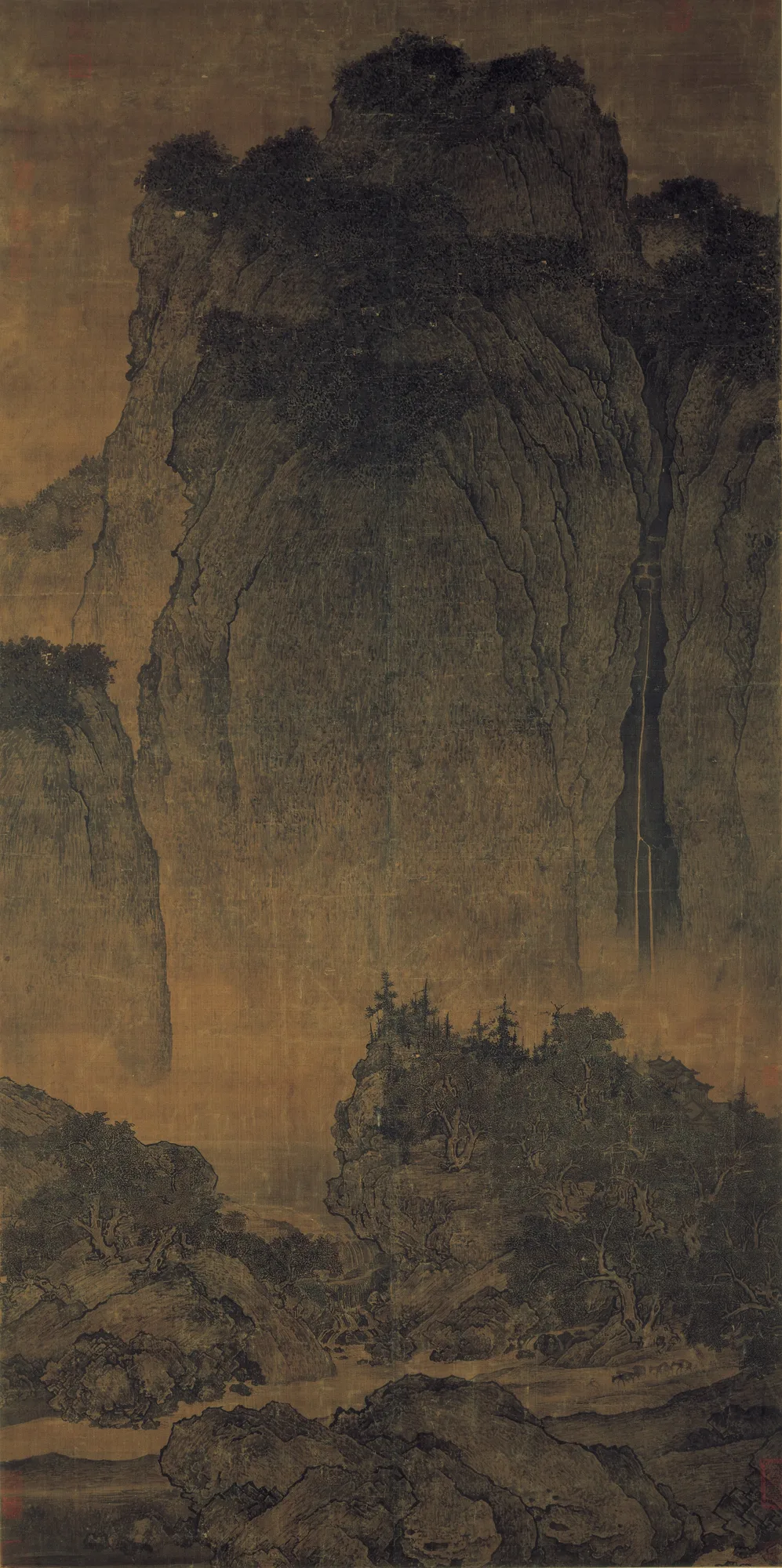
そびえる大山と、豆つぶの旅人。サインは葉っぱの中にかくれてた!A giant mountain and tiny travelers. The signature hid among the leaves!
この作品のお話
Story画面の上半分を、巨大な岩山がどっしりとふさいでいます。右には細い滝が一すじ。下のほうの道には、ロバに荷物をつんだ小さな旅人の行列が見えます。描いたのは北宋の画家・范寛で、1000年ごろの作品です。高さ2メートルをこえる大きな掛け軸で、今は台湾・台北の国立故宮博物院にあります。
A giant rocky mountain fills the top half of the picture. A thin waterfall falls on the right. On the path below, tiny travelers walk with donkeys carrying loads. Fan Kuan, a painter of the Northern Song dynasty, painted it around 1000. This hanging scroll is over two meters tall. It is in the National Palace Museum in Taipei.
范寛は、山の中にこもって、朝も夕方も自然をじっと見つめて描いたと伝えられています。岩肌には、筆先で小さな点を雨つぶのように無数に打つ「雨点皴(うてんしゅん)」という技法が使われ、山の重さとかたさが表されています。人間を小さく、山をとても大きく描くことで、自然の偉大さを感じさせます。
It is said that Fan Kuan lived in the mountains and watched nature from morning to evening. On the rocks, he used countless tiny dots like raindrops. This brush technique shows how heavy and hard the mountain is. By making people tiny and the mountain huge, he shows the greatness of nature.
この絵は、中国の山水画(山や川を描く風景画)の最高傑作の一つとされ、のちの画家たちが手本にしてきました。台北の国立故宮博物院では、郭熙の「早春図」、李唐の「萬壑松風図」とあわせて山水画の「三宝」ともよばれる、特別な宝物です。山を下から見上げる構図の代表例としても知られています。
It is seen as one of the greatest Chinese landscape paintings, and later painters learned from it. At the National Palace Museum, it is sometimes called one of three treasures of landscape painting, together with Guo Xi's Early Spring and Li Tang's Wind in Pines Among a Myriad Valleys. It is also a classic example of looking up at a mountain from below.
この絵には、とても大きな山がそびえています。下のほうの小さな旅人たちが見つかるかな?ロバといっしょに歩いています。画家は葉っぱの中に、とても小さく名前を書きました。それが見つかったのは1958年になってから!
A very big mountain stands in this picture. Can you find the little travelers at the bottom? They walk with donkeys. The painter wrote his name in tiny letters among the leaves. People noticed it only in 1958!
英語のレベルは上の「やさしい/ふつう」で切りかえられます。
えっ!?な裏ネタ
Secrets1958年、国立故宮博物院の研究者・李霖燦が、右下の旅人の近く、木の葉のしげみの中に「范寛」という小さな2文字がかくれているのを見つけました。それまで本当に范寛の絵かどうか迷う声もありましたが、この発見で大きな手がかりが得られました。
In 1958, Li Lin-ts'an, a researcher at the National Palace Museum, found two tiny characters, 'Fan Kuan', hidden among the leaves near the travelers. Before that, some people were not sure who painted it. This was a big clue.
古い記録によると、范寛の本名は「中正」で、おおらかでこだわらない性格だったため「寛(ゆったり)」とよばれるようになった、と言われています。あだ名が、そのまま歴史に残る画家の名前になったのです。
Old records say his real name was Zhongzheng. Because he was relaxed and easygoing, people called him 'Kuan', meaning 'generous' or 'easygoing'. The nickname became his name in history.
范寛ははじめ先輩画家をまねて学びましたが、やがて「人に学ぶより、自然に学ぶほうがよい。自然に学ぶより、自分の心に学ぶほうがよい」と考えるようになった、と伝えられています。
It is said that Fan Kuan first copied older painters. Later he decided it was better to learn from nature than from people, and better still to learn from his own heart.
絹に描かれた1000年前の絵は、光や空気でいたみやすいため、国立故宮博物院では展示できる期間がきびしく制限されています。もし本物に会えたら、それはとても幸運なことなのです。
This 1,000-year-old silk painting is easily damaged by light and air. The National Palace Museum strictly limits how long it can be shown. If you see the real one, you are very lucky.
ここを見て!
Look Closer1そびえる大山The towering mountain
画面の上半分をうめる岩山。雨つぶのような点を無数に打って、ごつごつした岩の重さを表しています。
The rocky mountain fills the upper half. Countless raindrop-like dots show the weight of the rough rock.
2一すじの滝A thin waterfall
右の谷を、白い滝が細く長く流れ落ちています。大きな山の静けさの中に、水の音が聞こえてきそうです。
A white waterfall drops down the valley on the right. You can almost hear the water in the quiet mountain.
3旅人の行列The travelers
右下の道を、荷物をつんだロバと人が進んでいます。とても小さく、山の大きさがよくわかります。このすぐ近くの葉の中に、范寛のサインがかくれています。
Donkeys with loads and people walk along the path at the lower right. They are tiny, which shows how big the mountain is. Fan Kuan's signature hides in the leaves nearby.
4森の中の寺Temple in the trees
右の木々の上に、寺のような建物の屋根がのぞいています。旅人たちの目的地でしょうか。
The roof of a temple-like building peeks out above the trees on the right. Maybe it is where the travelers are going.
英語で名画を語ろう
Talk about Art in EnglishThe huge mountain towers over the tiny travelers.
巨大な山が、小さな旅人たちの上にそびえ立っています。
💡 tower は名詞「塔」のほか、動詞で「高くそびえる」の意味もあります。
英語で説明すると… Describe it
これはたて長の中国の風景画です。巨大な岩山が上半分をうめています。右には細い滝があります。下のほうには木や岩、ロバを連れた小さな旅人たちがいます。
This is a tall Chinese landscape painting. A huge rocky mountain fills the top half. On the right, there is a thin waterfall. At the bottom, there are trees, rocks and some tiny travelers with donkeys.
考えてみよう Think & Talk
- とても大きな山の前に立つと、どんな気持ちになりますか?How do you feel when you stand in front of a very big mountain?
- 范寛はなぜ、葉の中に小さくサインを書いたのだと思いますか?Why do you think Fan Kuan put his tiny signature among the leaves?
この作品の英単語
WordsTiny travelers walk along the path.
小さな旅人たちが道を進んでいます。
A thin waterfall flows down the right side.
右に細い滝が流れ落ちています。
The mountain is huge compared to the people.
人と比べると、山は巨大です。
The signature was hidden in the leaves.
サインは葉の中にかくれていました。
ミニクイズ
QuizQ. 范寛のサインは、どこにかくれていた?Where was Fan Kuan's signature hidden?
1958年、右下の旅人の近くの葉のしげみから見つかりました。
In 1958, it was found among the leaves near the travelers at the lower right.
ウソ?ホント? この絵では、山にくらべて人がとても小さく描かれている。In this painting, people are tiny compared to the mountain.
自然の大きさと人の小ささを感じさせる構図です。
It makes us feel how great nature is and how small people are.
ウソ?ホント? 范寛のサインは、絵の上のほうに大きく書かれている。Fan Kuan's signature is written large at the top.
葉の中に小さくかくれていて、1958年まで見つかりませんでした。
It is tiny and hidden in leaves. No one found it until 1958.
 画像の出典とライセンス / Image credit
- PDFan Kuan - Travelers Among Mountains and Streams - Google Art Project.jpg(Wikimedia Commons)
ライセンス:Public domain(パブリックドメイン)/作者・撮影者の表記:Fan Kuan/提供元:WAHwkSr8lMK0uA at Google Cultural Institute maximum zoom level
この作品は、作者の死後長い年月がたち著作権の保護期間が終わった「パブリックドメイン」の作品です。画像は平面の作品を忠実に写したもので、新しい著作権は生じません(Wikimedia Commons の PD-Art の考え方)。 所蔵:国立故宮博物院(National Palace Museum)。画像は表示のために縮小・WebP 形式に変換しています。
