

 ワークシート
 ぬりえ
 迷路
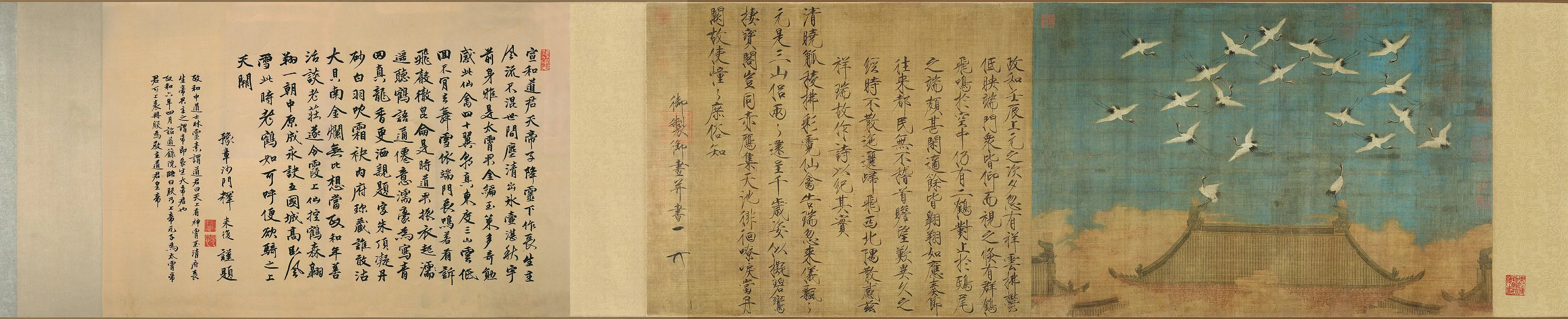
宮殿の上に20羽のツル!皇帝が残した「めでたい夕方」。Twenty cranes over the palace! An emperor records a lucky evening.
この作品のお話
Story北宋の皇帝・徽宗(きそう)が描いたとされる巻物です。右には、都・開封の宮殿の門の屋根と、青い空をまう白いツルの群れ。左には、皇帝自身がそのできごとを記した文と詩がならびます。1112年、正月の祭りの次の日の夕方、門の上にツルの群れが現れ、2羽が屋根の飾りにとまった、と書かれています。今は中国・瀋陽の遼寧省博物館にあります。
This scroll is said to be by Huizong, an emperor of the Northern Song dynasty. On the right are the roof of a palace gate in the capital, Kaifeng, and a flock of white cranes in a blue sky. On the left, the emperor wrote about the event in prose and a poem. He says that in 1112, on the evening after a New Year festival, cranes appeared over the gate and two landed on the roof ornaments. It is now in the Liaoning Provincial Museum in Shenyang, China.
徽宗は芸術を厚く保護した皇帝で、宮廷の画家たちを育て、自分も絵と書にすぐれていました。細くするどい独特の字は「痩金体(そうきんたい)」とよばれます。ツルは中国で長生きとめでたさのしるし。皇帝は、天が国の繁栄を祝ってくれた証拠として、この光景を絵と言葉に残したのです。空を青でぬりつぶした表現も、当時の絵ではめずらしいとされます。
Huizong was a major patron of the arts. He supported court painters and was himself a skilled painter and calligrapher. His thin, sharp style of writing is called 'Slender Gold.' In China, cranes are a sign of long life and good fortune. The emperor recorded this sight as proof that Heaven was blessing his country. Painting the whole sky blue is said to be unusual for that time.
けれど、めでたいはずの国の運命は暗転します。1127年、北の金の軍に都を占領され、徽宗は捕らえられて北の地へ連れて行かれ、そこで亡くなりました。絵はその後、多くの持ち主の手をへて、20世紀前半の戦乱もくぐりぬけました。今は遼寧省博物館の宝となっています。
But the lucky country soon met a dark fate. In 1127, the Jin army from the north took the capital. Huizong was captured, taken to the north, and died there. The painting later passed through many owners and survived the upheavals of the early twentieth century. It is now a treasure of the Liaoning Provincial Museum.
これは昔の中国の絵です。白い鳥が青い空を飛んでいます。2羽が屋根の上に立っています。1112年の作品で、徽宗が描いたとされています。のちに、皇帝は国を失いました。
This is a picture from old China. White birds fly in a blue sky. Two birds stand on a roof. It dates from 1112 and is attributed to Emperor Huizong. Later, he lost his country.
英語のレベルは上の「やさしい/ふつう」で切りかえられます。
えっ!?な裏ネタ
Secrets空を飛ぶツルと屋根にとまるツルを合わせると、ちょうど20羽。羽を広げたもの、首をのばしたものなど、1羽ずつ姿勢を変えて描き分けられています。皇帝の文にも、群れが空をまい、2羽が屋根の飾りにとまったと書かれています。
Count the cranes in the sky and on the roof, and you get exactly twenty. Each one has a different pose, with wings spread or neck stretched. The emperor's text also says a flock danced in the sky and two landed on the roof ornaments.
右の絵と、左の文と詩は、ひとつの作品として作られています。絵を描き、文を書き、詩をよむ。この三つをこなすことは、中国では教養の高さのあかしでした。皇帝の絵と文と詩がひとつにそろった、ぜいたくな巻物なのです。
The painting on the right and the prose and poem on the left were made as one work. Painting, writing and poetry together were a sign of high learning in China. This elaborate scroll brings together an emperor's painting, prose and poetry.
徽宗の字は、線が細く、とめやはねがするどい「痩金体」。まるで針金のような字で、徽宗が生み出したスタイルとして知られます。今も中国では、この書体をもとにしたフォントが作られ、看板やデザインに使われています。
Huizong's 'Slender Gold' script has thin lines and sharp ends, almost like wire. It is known as a style he created. Even today, fonts based on this script are made in China and used for signs and designs.
絵が描かれたのは1112年。そのわずか15年後の1127年、都は金の軍に占領され、徽宗は捕虜になりました。「天の祝福」を表したこの絵と、その後の皇帝の運命との対照に、歴史の皮肉を見る人もいます。
The painting dates from 1112. Just fifteen years later, in 1127, the Jin army took the capital and Huizong became a prisoner. Some viewers see a historical irony in the contrast between this image of Heaven's blessing and what happened to the emperor.
ここを見て!
Look Closer1空をまうツルの群れCranes in the sky
青い空いっぱいに、白いツルが羽を広げて飛んでいます。1羽ずつ姿がちがいます。
White cranes spread their wings across the blue sky. Each one has a different pose.
2屋根にとまるツルA crane on the roof
屋根のはしの飾りにとまるツル。右はしの飾りにも、もう1羽とまっています。
A crane stands on the ornament at the end of the roof. Another one stands on the far-right ornament.
3宮殿の門の屋根The palace gate roof
都の宮殿の門の屋根。雲の上にうかぶように、上の部分だけが描かれています。
The roof of the palace gate in the capital. Only the top is shown, as if it floats above the clouds.
4皇帝の書The emperor's writing
細くするどい「痩金体」で、できごとと詩が書かれています。
The event and a poem are written in the thin, sharp 'Slender Gold' script.
英語で名画を語ろう
Talk about Art in EnglishWhite cranes circle above the palace roof.
白いツルが宮殿の屋根の上をぐるぐる飛んでいます。
💡 circle は「円」だけでなく「〜の上を回る」という動詞にもなります。
英語で説明すると… Describe it
これは絵と文字のある長い巻物です。右では、たくさんの白いツルが青い空を飛んでいます。2羽のツルが屋根の両はしに立っています。左には、漢字の長い文が並んでいます。
This is a long scroll with a painting and writing. On the right, many white cranes are flying in a blue sky. Two cranes are standing on the ends of a roof. On the left, there are long lines of Chinese writing.
考えてみよう Think & Talk
- 皇帝はなぜ、この瞬間を記録に残したかったのだと思いますか?Why do you think the emperor wanted to record this moment?
- 動物は幸運のしるしになると思いますか?それはなぜ?Can animals be a sign of good luck? Why or why not?
この作品の英単語
WordsTwenty cranes fly over the palace.
20羽のツルが宮殿の上を飛んでいます。
The emperor thought the cranes were an auspicious sign.
皇帝はツルをめでたいしるしだと考えました。
The emperor wrote a poem about the cranes.
皇帝はツルについての詩を書きました。
Some cranes hover above the roof.
何羽かのツルが屋根の上にただよっています。
ミニクイズ
QuizQ. この絵に描かれたツルは何羽?How many cranes are in this painting?
空に18羽、屋根に2羽、合わせて20羽です。
Eighteen in the sky and two on the roof make twenty.
ウソ?ホント? 徽宗は、この絵のあともずっと平和に国を治めた。Huizong ruled his country in peace for a long time after this painting.
15年後の1127年、都を占領され、捕らえられました。
Fifteen years later, in 1127, the capital was taken and he was captured.
ウソ?ホント? 瑞鶴図の空は、青い色でぬられている。The sky in this painting is colored blue.
空を青でぬりつぶした表現は、当時の絵ではめずらしいとされます。
A fully blue sky is said to be unusual in paintings of that time.
 画像の出典とライセンス / Image credit
- PDSonghuizong5.jpg(Wikimedia Commons)
ライセンス:Public domain(パブリックドメイン)/作者・撮影者の表記:Emperor Huizong of Song
この作品は、作者の死後長い年月がたち著作権の保護期間が終わった「パブリックドメイン」の作品です。画像は平面の作品を忠実に写したもので、新しい著作権は生じません(Wikimedia Commons の PD-Art の考え方)。 所蔵:遼寧省博物館(Liaoning Provincial Museum)。画像は表示のために縮小・WebP 形式に変換しています。
