

 ワークシート
 ぬりえ
 迷路
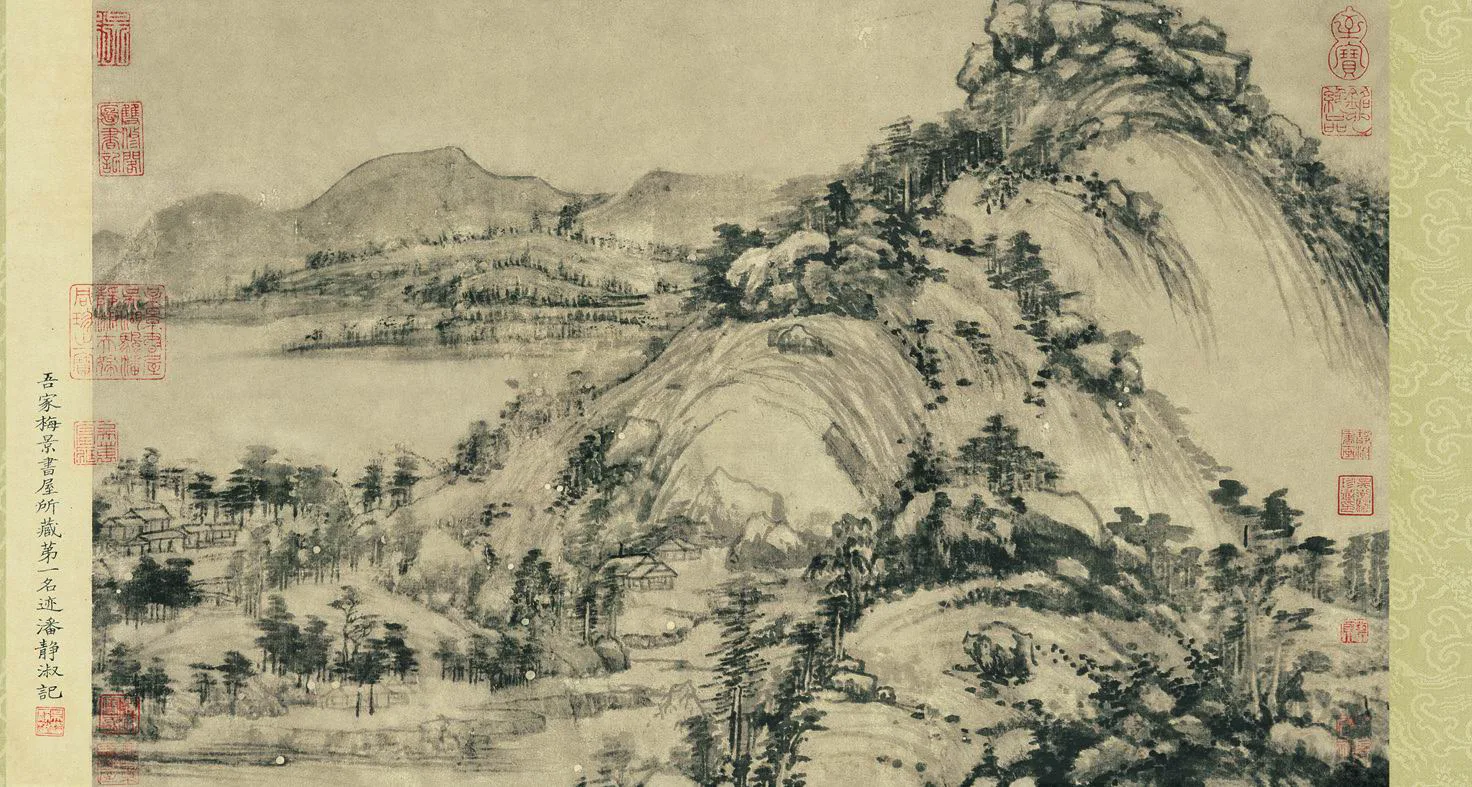
火に投げこまれて2つに!360年ぶりに再会した名画の前半。Thrown into a fire and split in two! Reunited after 360 years.
この作品のお話
Storyなだらかな山、川辺の木々、小さな家。水墨だけで、おだやかな山里の景色が、ゆったりと描かれています。これは元の時代の画家・黄公望が描いた長い巻物「富春山居図」の、はじめの部分にあたる「剰山図(じょうざんず)」です。中国・杭州の浙江省博物館にあります。
Gentle mountains, trees by the river and small houses are painted only in ink. This is The Remaining Mountain, the first part of a long handscroll called Dwelling in the Fuchun Mountains. Huang Gongwang painted it in the Yuan dynasty. This part is in the Zhejiang Provincial Museum in Hangzhou, China.
黄公望は、本格的に絵を描き始めたのが50歳ごろという遅咲きの画家でした。友人の道士(道教の修行者)のために、富春江という川ぞいの景色を、79歳ごろから3年以上かけて少しずつ描き、1350年に仕上げました。のちに「元の四大家」の一人に数えられ、この絵は中国山水画の傑作の一つとたたえられています。
Huang Gongwang started painting seriously at around 50. He painted the scenery along the Fuchun River for a Taoist friend. Starting at about 79, he worked on it little by little for more than three years and finished it in 1350. He became known as one of the Four Masters of the Yuan, and this scroll is praised as one of the masterpieces of Chinese landscape painting.
1650年、この巻物をこよなく愛した収集家が、死ぬ前に「いっしょに燃やせ」と命じ、絵は火に投げこまれました。おいが急いで引き出しましたが、巻物は焼けて2つに分かれてしまいます。短い前半がこの「剰山図」、長い後半「無用師巻」は今、台北の国立故宮博物院にあります。
In 1650, a collector who loved this scroll ordered it to be burned when he was dying. It was thrown into the fire. His nephew quickly pulled it out, but it had burned into two pieces. The short first part is this Remaining Mountain. The long second part, the Master Wuyong Scroll, is in the National Palace Museum in Taipei.
これは山を描いた長い絵の一部です。画家は80歳くらいでした!ある日、持ち主がこの絵を火に投げこみました。絵は2つに分かれてしまいました。2011年、2つはふたたび出会いました。
This is part of a long picture of mountains. The painter was about 80 years old! One day, the owner threw it into a fire. It broke into two parts. In 2011, the two parts met again.
英語のレベルは上の「やさしい/ふつう」で切りかえられます。
えっ!?な裏ネタ
Secrets持ち主の呉洪裕は、死を前にこの絵を燃やして「あの世へ持っていこう」としました。おいの呉静安は火の中から巻物を救い出しましたが、焼けた部分ではじめの一部が切りはなされ、名画は2つの運命をたどることになりました。
The owner, Wu Hongyu, wanted to burn the scroll so he could take it with him after death. His nephew rescued it from the fire. But the first part was cut away at the burned section, and the two pieces went different ways.
清の乾隆帝は、手に入れた「富春山居図」に何十回も感想を書きこむほど愛していました。ところがそれは模写のニセモノ。翌年、本物(後半の無用師巻)が届くと、皇帝はそちらを偽物と判断してしまいました。
The Qing emperor Qianlong loved his copy of this scroll and wrote on it dozens of times. But it was a fake! The next year, the real one (the Master Wuyong Scroll) arrived. The emperor decided the real one was the fake.
2011年、台北の国立故宮博物院で特別展が開かれ、浙江省博物館の「剰山図」が海をわたって、後半の「無用師巻」と並べて展示されました。火事で分かれてから、およそ360年ぶりの再会でした。
In 2011, the National Palace Museum in Taipei held a special exhibition. The Remaining Mountain came from Zhejiang and was shown next to the Master Wuyong Scroll. It was the first time in about 360 years that the two parts were together.
左はしの縦書きの文字は「吾家梅景書屋所藏第一名迹 潘静淑記」。20世紀の収集家・呉湖帆の妻、潘静淑が「わが家の書斎の、いちばんの名品」と書きそえたものです。剰山図はのちに浙江省博物館に入りました。
The vertical text on the left calls this 'the finest work in our family's Meijing Studio'. It was written by Pan Jingshu, wife of the 20th-century collector Wu Hufan. Later, the painting went to the Zhejiang Provincial Museum.
ここを見て!
Look Closer1大きな山The big mountain
右の大きな山は、たて長の筆の線を何本も重ねて、やわらかな土と岩のひだを表しています。黄公望らしい、おだやかな山の形です。
The large mountain on the right is made of many long brushstrokes. They show soft folds of earth and rock, typical of Huang Gongwang.
2遠くの山なみDistant hills
左奥には、うすい墨で遠くの山がかすんで見えます。手前の濃い墨との差で、広い空間が生まれています。
Far away on the left, pale ink shows misty hills. The difference from the dark ink in front creates a sense of wide space.
3木々の間の家A house among the trees
木の間に小さな家の屋根が見えます。題名の「山居(山の住まい)」を思わせる、静かなくらしの気配です。
A small roof appears among the trees. It suggests the quiet life of a mountain home, as in the title.
4持ち主の書きこみThe owner's note
左はしのたての文字は、20世紀の持ち主の家族が書きそえたもの。ハンコ(印)もたくさん押されています。
The vertical writing on the left was added by a 20th-century owner's family. Many seals are stamped too.
英語で名画を語ろう
Talk about Art in EnglishThe scroll was split into two parts by a fire.
巻物は火事で2つに分かれました。
💡 split は「割る・分ける」。split the bill(割り勘にする)も同じ単語です。
英語で説明すると… Describe it
これは中国の水墨画です。右には大きな丸みのある山があります。奥にはうすい色の山なみがあります。手前には木と小さな家がいくつかあります。左には漢字が書かれています。
This is a Chinese ink painting. On the right, there is a big round mountain. In the background, there are pale hills. In the front, there are trees and a few small houses. There is Chinese writing on the left.
考えてみよう Think & Talk
- 持ち主はなぜ、いちばん好きな絵を燃やそうとしたのだと思いますか?Why do you think the owner wanted to burn his favorite painting?
- 2つの部分は、同じ美術館でいっしょに保管するべきだと思いますか?Should the two parts be kept together in one museum? Why or why not?
この作品の英単語
WordsIt is painted only with ink.
墨だけで描かれています。
The owner wanted to burn the scroll.
持ち主は巻物を燃やそうとしました。
His nephew rescued it from the fire.
おいが火の中からそれを救い出しました。
The two parts were reunited in 2011.
2つの部分は2011年に再会しました。
ミニクイズ
QuizQ. この巻物が2つに分かれた原因は?Why did this scroll split into two parts?
1650年、持ち主が死ぬ前に燃やすよう命じ、火に投げこまれました。
In 1650, a dying owner ordered it burned, and it was thrown into a fire.
ウソ?ホント? 後半の部分は、台北の国立故宮博物院にある。The second part is in the National Palace Museum in Taipei.
長い後半「無用師巻」は台北に、前半「剰山図」は杭州にあります。
The long Master Wuyong Scroll is in Taipei, and this first part is in Hangzhou.
ウソ?ホント? 黄公望は20歳のときにこの絵を描いた。Huang Gongwang painted this when he was 20.
79歳ごろから描き始め、80代で完成させました。
He started at about 79 and finished it in his 80s.
 画像の出典とライセンス / Image credit
- PDDwelling in the Fuchun Mountains (first half).JPG(Wikimedia Commons)
ライセンス:Public domain(パブリックドメイン)/作者・撮影者の表記:Huang Gongwang/提供元:Zhejiang Provincial Museum in Hangzhou
この作品は、作者の死後長い年月がたち著作権の保護期間が終わった「パブリックドメイン」の作品です。画像は平面の作品を忠実に写したもので、新しい著作権は生じません(Wikimedia Commons の PD-Art の考え方)。 所蔵:浙江省博物館(Zhejiang Provincial Museum)。画像は表示のために縮小・WebP 形式に変換しています。
