

 PDF をダウンロード
Chinese and Korean Painting
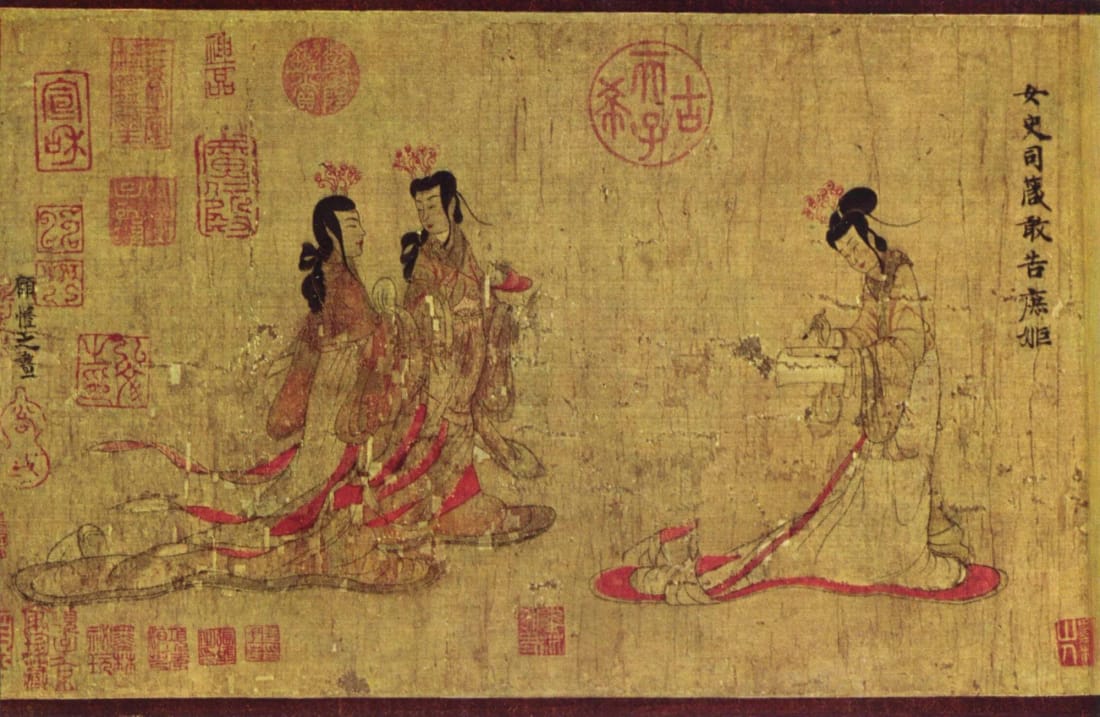
Unknown artist, after Gu Kaizhi, 5th–7th century (copy)
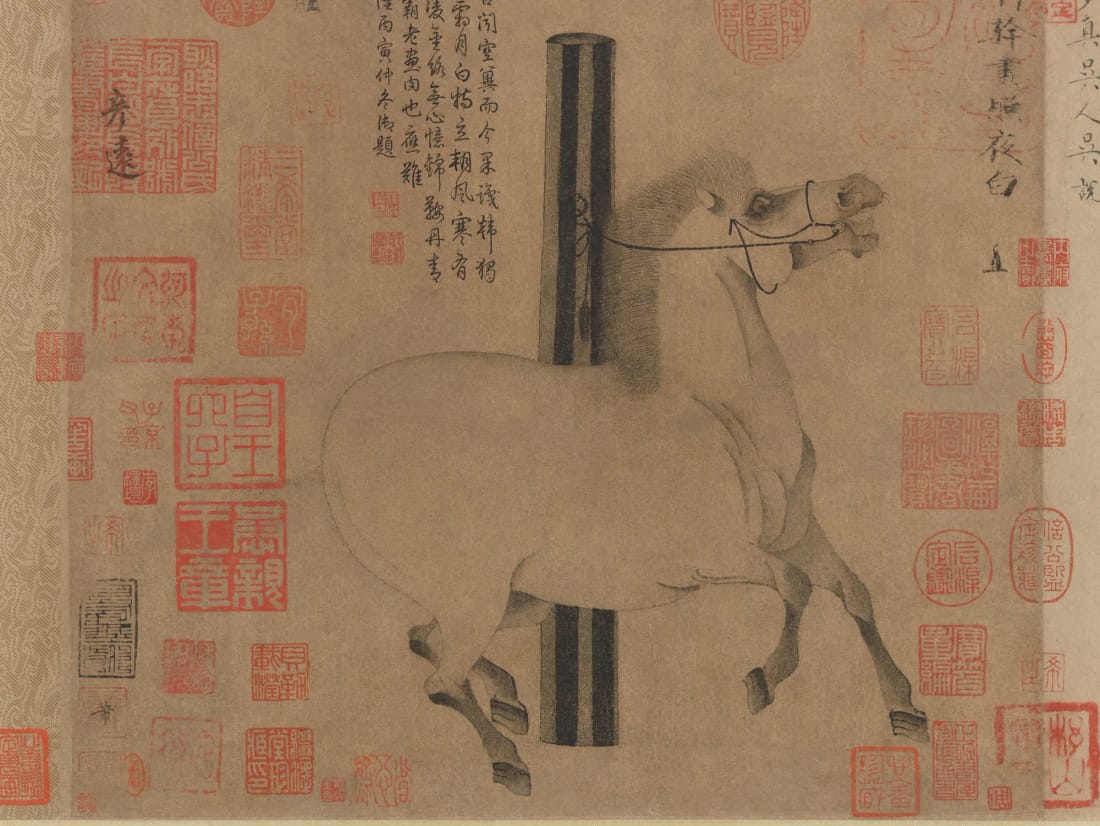
Han Gan, c. 750
1 How to spot it 2つの絵で見つけたら ✓ をつけよう。
| A | B | |
|---|---|---|
| Mountains, mist and distance are shown only with darker and lighter ink. | ☐ | ☐ |
| People and houses are tiny compared with the towering mountains. | ☐ | ☐ |
| Poems or writing appear in empty spaces, with red square seals. | ☐ | ☐ |
| A long handscroll where time and place flow from right to left. | ☐ | ☐ |
| The texture of rocks and mountains is built up with many small brushstrokes. | ☐ | ☐ |
2 Read 英文を読もう。
In China, painting stood beside poetry and calligraphy as an art for educated people. The most respected subject was landscape, called shanshui, meaning 'mountains and water'. In the Northern Song dynasty, in the 10th and 11th centuries, artists like Fan Kuan painted towering mountains with tiny travelers at their feet, as in Travelers among Mountains and Streams. It shows the idea that humans are only a small part of nature.
Write one thing you learned:
Chinese and Korean Painting
3 Art words — Match them. 英語と日本語を線で結ぼう。
- handscroll ●
- hanging scroll ●
- seal ●
- literati painting ●
- ● 印(はんこ)
- ● 巻物(手巻)
- ● 文人画
- ● 掛け軸
4 Quiz
In which direction do you unroll a handscroll?
- Left to right
- Right to left
- Top to bottom
- From the middle outward
5 Quiz
Which masterpiece was split in two after being thrown into a fire?
- Dwelling in the Fuchun Mountains
- Along the River During the Qingming Festival
- Travelers among Mountains and Streams
- Clearing after Rain on Mount Inwang
6 Which do you like better, A or B? Why? AとB、どちらが好き?理由も英語で。
I like ____ better because ________________________________.
Answers & Notes
1 How to spot it(訳)
- Mountains, mist and distance are shown only with darker and lighter ink.
墨の濃い・うすいだけで、山や霧、遠さや近さが表されている。 - People and houses are tiny compared with the towering mountains.
見上げるような山にくらべて、人や家がとても小さい。 - Poems or writing appear in empty spaces, with red square seals.
余白に詩や文字が書かれ、赤い四角いはんこが押されている。 - A long handscroll where time and place flow from right to left.
横に長い巻物で、右から左へ時間や場所が流れていく。 - The texture of rocks and mountains is built up with many small brushstrokes.
岩や山のしわが、細かい筆の線の重なりで描かれている。
A:女史箴図(巻末の場面) B:照夜白図
2 Read(訳)
中国では、絵は詩や書道と並ぶ、教養ある人のたしなみでした。とくに大切にされたのが、山と水を描く「山水画」です。10〜11世紀の北宋の時代には、范寛の『谿山行旅図』のように、見上げるような大きな山の足もとを、小さな旅人が行く雄大な絵が生まれました。人間は大自然のほんの一部だ、という考えが表れています。
3 Art words
1–b(handscroll=巻物(手巻):横に長い絵。手で少しずつ広げながら、右から左へ見ていく。)
2–d(hanging scroll=掛け軸:縦長の絵を布や紙で仕立て、壁にかけて楽しむ形式。)
3–a(seal=印(はんこ):作者や持ち主が押した赤いはんこ。持ち主の歴史がわかることもある。)
4–c(literati painting=文人画:学者や役人が、写実的なうまさよりも、書のような筆づかいや心、教養を表そうとして描いた絵。)
4 Quiz
B 問:横に長い巻物は、どちらの方向に広げて見る?
選択肢:A 左から右/B 右から左/C 上から下/D まん中から外
解説:文字を書く順と同じく、右から左へ少しずつ広げて見ていきます。
5 Quiz
A 問:火に投げこまれて2つに分かれてしまった名作は?
選択肢:A 富春山居図/B 清明上河図/C 谿山行旅図/D 仁王霽色図
解説:黄公望の『富春山居図』です。今は中国大陸と台湾に分かれて所蔵されています。
Fun Fact(訳)
『清明上河図』には800人以上が登場! 長さ約5メートルの巻物に、800人をこえる人物、たくさんの動物、船や橋が描かれているといわれます。中国では国の宝とされ、北京の故宮博物院でも、公開されるのは特別なときだけです。
