

 ワークシート
 ぬりえ
 迷路
千年以上前の宮廷の心得。皇帝のハンコだらけの中国絵画の名品!Palace advice from more than a thousand years ago, covered with an emperor's seals!
この作品のお話
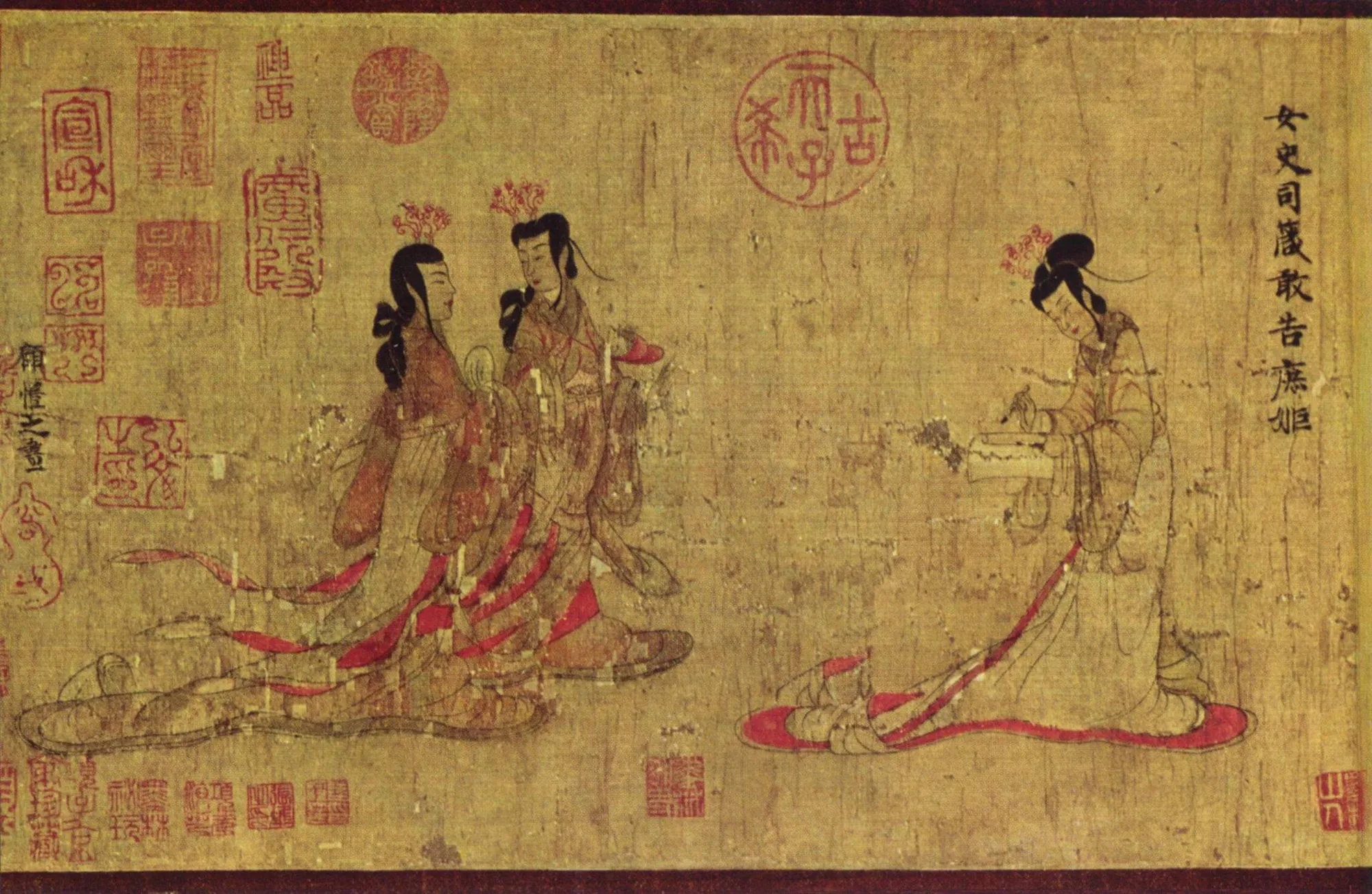
Story東晋の画家・顧愷之の作と伝えられる失われた原画をもとに、作者不明の画家が描いた絵巻「女史箴図」の一場面です。巻物のいちばん最後の場面で、右には筆を持って書きものをする「女史(宮廷の女性の教育係)」、左にはそちらへ歩いていく2人の女性。右上の文字は、教育係が宮廷の女性たちに心得を告げる、という意味です。
This is a scene from the Admonitions Scroll, an early copy by an unknown artist after a lost design traditionally said to be by Gu Kaizhi of China's Eastern Jin dynasty. It is the very last scene. On the right, the Instructress, a teacher of the palace ladies, writes with a brush. On the left, two ladies walk toward her. The words at the upper right mean that the Instructress speaks these words of advice to the palace ladies.
もとになった文章は、292年に西晋の役人・張華が書いた「女史箴」という詩です。乱暴なふるまいで宮廷を乱していた皇后をいさめるため、宮廷の女性の正しい生き方を説いたものでした。絵巻はその文に合わせて場面を描いたもので、もとは12場面だったと考える研究者が多く、最初の3場面は失われて、今は9場面が残っています。
The text comes from a poem written in 292 by Zhang Hua, an official of the Western Jin dynasty. He wrote it to scold an empress whose violent behavior was upsetting the court, and to teach palace women how to live properly. The scroll shows scenes that match the text. It is generally thought to have had twelve scenes. The first three are missing, so nine remain today.
今残る巻物は顧愷之本人の作ではなく、5〜7世紀ごろの写し(模本)だと考えられています。18世紀には清の乾隆帝が大切にし、たくさんの印を押しました。義和団事件のさなかの1900年、英領インド軍の将校クラレンス・ジョンソンが北京で手に入れましたが、くわしいいきさつはわかっていません。1903年に大英博物館が買い取りました。光に弱いため、展示は1年に6週間ほどです。
The scroll that survives is not thought to be by Gu Kaizhi himself. It is probably a copy made sometime between the 5th and 7th centuries. In the 18th century, the Qianlong Emperor of the Qing dynasty treasured it and stamped many seals on it. During the Boxer Rebellion in 1900, Clarence Johnson, an officer of the British Indian Army, acquired it in Beijing amid widespread looting; the exact circumstances are unclear. The British Museum bought it from him in 1903. Because light can damage it, it is shown for only about six weeks a year.
これは中国の古い巻物です。絹に描かれています。先生が宮廷の女性たちのために心得を書いています。中国の皇帝がこの巻物を愛し、たくさんの印を押しました。今はロンドンにあります。
This is an old Chinese scroll. It is painted on silk. A teacher writes advice for palace ladies. A Chinese emperor loved it and put many stamps on it. Now it is in London.
英語のレベルは上の「やさしい/ふつう」で切りかえられます。
えっ!?な裏ネタ
Secrets巻物を持ち帰ったジョンソン大尉は、1902年、巻物についていた玉(ヒスイ)の留め具の値段を調べてもらうため、大英博物館にやって来たといわれます。ところが本当の宝は絵のほうでした。博物館は翌1903年、たった25ポンドで買い取りました。
Captain Johnson, who brought the scroll to Britain, came to the British Museum in 1902, it is said, to have the jade clasp on the scroll valued. But the real treasure was the painting. In 1903, the museum bought it for only 25 pounds.
乾隆帝はこの巻物が大好きで、1746年に表装しなおし、自分で題字や長い感想文、さらに自分の描いた蘭の絵まで書き加えました。押した印は全部で37個。この場面の大きな丸い印にも「古稀天子」(70歳の天子)と読める文字があります。
The Qianlong Emperor loved this scroll. In 1746 he had it remounted and added his own title, a long comment and even a painting of orchids by his own hand. He stamped 37 seals on it in total. The big round seal in this scene can be read as 'Son of Heaven at Seventy'.
乾隆帝はこの巻物を、宋の画家・李公麟の作と伝わる3点の絵と合わせて「四美」と呼び、特別な部屋にしまっていました。中国の皇帝の宝物の中でも、とくにお気に入りの1点だったことがわかります。
The Qianlong Emperor called this scroll and three paintings said to be by the Song painter Li Gonglin the 'Four Beauties', and kept them in a special room. It was clearly one of his favorite treasures.
北京の故宮博物院には、南宋の時代(12世紀)に紙に墨だけで描かれた、もう一つの女史箴図があります。こちらは12場面がそろっていて、大英博物館の巻で失われた最初の場面を知る手がかりになっています。
The Palace Museum in Beijing has another version, painted in ink only on paper in the Southern Song period, in the 12th century. It has all twelve scenes, so it helps us know what the lost first scenes of the British Museum scroll looked like.
ここを見て!
Look Closer1書きものをする女史The Instructress writing
筆を持ち、紙に心得を書きつける教育係の女性。この巻物の題名にもなった人物です。
The Instructress holds a brush and writes her advice. She gives the scroll its name.
2題の文字The inscription
「女史司箴、敢告庶姫」。教育係が宮廷の女性たちに心得を告げる、という意味です。
It means: the Instructress in charge of advice speaks to all the palace ladies.
3歩む2人の女性Two walking ladies
長い衣のすそと赤いリボンを引きずる2人。ひらひらした線が、ゆったりした動きを伝えます。
Two ladies with long robes and red ribbons. The flowing lines show their slow, graceful movement.
4大きな丸い印Big round seal
乾隆帝の印のひとつ。絵の上にも堂々と押されています。
One of the Qianlong Emperor's seals, stamped boldly right on the painting.
英語で名画を語ろう
Talk about Art in EnglishThe Instructress is writing with a brush.
教育係の女性は筆で書いています。
💡 with+道具で「〜を使って」。write with a pen、eat with chopsticks も同じ形です。
英語で説明すると… Describe it
これは中国の古い巻物の一部です。左では、長い衣を着た2人の女性が歩いています。右では、1人の女性が立って筆で書いています。絵の上には赤い印がたくさんあります。
This is part of an old Chinese scroll. On the left, two women in long robes are walking. On the right, a woman is standing and writing with a brush. There are many red stamps on the picture.
考えてみよう Think & Talk
- 持ち主が絵に印を押すのはよいことだと思いますか?それはなぜ?Is it a good idea for owners to put stamps on a painting? Why or why not?
- 今の人たちに心得を書くとしたら、あなたはどんなことを書きますか?What advice would you write for people today?
この作品の英単語
WordsThe scroll is more than three meters long.
その巻物は3メートル以上の長さがあります。
It is painted on silk.
それは絹に描かれています。
The poem advises the palace ladies.
その詩は宮廷の女性たちに忠告しています。
This is a copy of an ancient Chinese painting.
これは古代中国の絵の写しです。
ミニクイズ
QuizQ. 1903年、大英博物館はこの巻物をいくらで買った?How much did the British Museum pay for this scroll in 1903?
たった25ポンドでした。今では値段がつけられないほどの宝です。
Only 25 pounds. Today it is a priceless treasure.
ウソ?ホント? 今の巻物は、顧愷之本人が描いたものだと確かめられている。It has been proven that Gu Kaizhi himself painted this scroll.
5〜7世紀ごろの写しだと考えられ、作者や年代には今も議論があります。
It is thought to be a copy from the 5th to 7th centuries, and experts still discuss who made it and when.
ウソ?ホント? 光に弱いので、展示される期間は限られている。Because it is sensitive to light, it is shown only for a short time.
1年に6週間ほどしか展示されません。
It is shown for only about six weeks a year.
 画像の出典とライセンス / Image credit
- PDKu K'ai-chih 001.jpg(Wikimedia Commons)
ライセンス:Public domain(パブリックドメイン)/作者・撮影者の表記:Gu Kaizhi
この作品は、作者の死後長い年月がたち著作権の保護期間が終わった「パブリックドメイン」の作品です。画像は平面の作品を忠実に写したもので、新しい著作権は生じません(Wikimedia Commons の PD-Art の考え方)。 所蔵:大英博物館(The British Museum)。画像は表示のために縮小・WebP 形式に変換しています。
