原田英語の時事英語ジュニア|英語ニュース ワークシート(高校生レベル)
Class ____ No. ____ Name ____________________
ウニは英語で?ウニの「のど」に住む新種の貝、深さ約4000〜5000mの海で発見
A New Clam Makes Its Home Inside a Deep-Sea Urchin's Throat
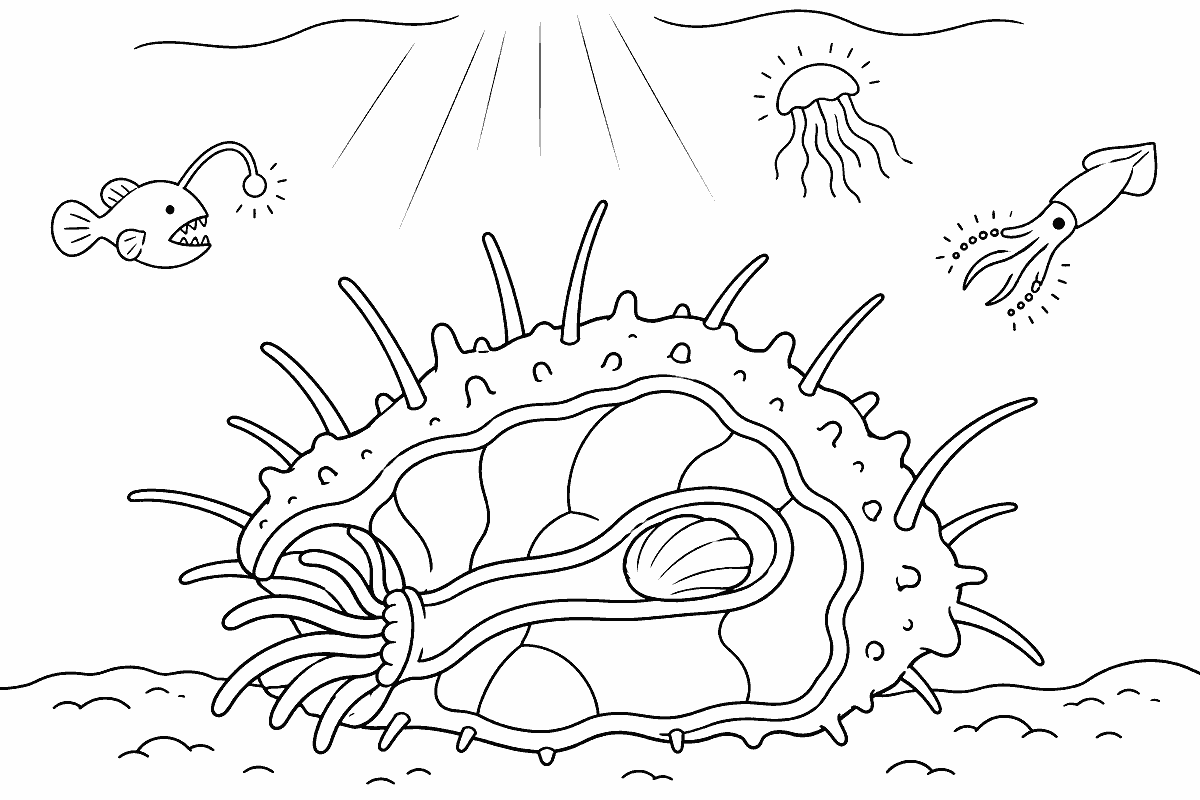
1Scientists have described a new species of clam that lives in the esophagus of a deep-sea urchin, just behind the urchin's mouth. The animals were found off the southern coast of Australia, about 4,000 to 5,000 meters below the surface. Kyoto University announced the discovery on November 19, and the study was published in the journal ZooKeys on November 9.
2The research was carried out by Ryutaro Goto of Kyoto University with two museum scientists in North America. The clams came from deep-sea surveys in 2015 and 2017 led by CSIRO, Australia's national science agency. Many of them had come loose from their host when they were pulled up in nets. Then the team noticed some clams inside a thin, slimy tube, which turned out to be part of a sea urchin's esophagus.
3The species was named Vaticinaria gulicola, and gulicola means "one that lives in the throat" in Latin. Its shell grows up to about 19 millimeters long. It looks like an ordinary clam. Its host is a fragile urchin that feeds on mud from the sea floor, so the urchin's esophagus is packed with mud. The clam may feed on bits of food that the urchin swallows.
4The new clam belongs to a group of small clams called Galeommatoidea, which includes more than 620 species. Many of them live on the bodies of other sea animals or in their burrows. Until now, the only genus in the group known to live inside a host was one found in the esophagus of sea cucumbers. Vaticinaria is the first genus known to live inside sea urchins.
5Russian researchers had reported clams in the gut of the same urchin in the 1970s. The team also examined an urchin collected by the British Challenger expedition in the 1870s. The urchin is kept at the Natural History Museum in London. Inside its esophagus, they found several clams of a related species that had gone unnoticed for about 150 years.
Words 単語
| speciesB2 | 名 | (生き物の)種one type of animal or plant |
| esophagus外 | 名 | 食道the tube that carries food from the mouth to the stomach |
| agencyA2 | 名 | (国などの)機関a group that does a special job for a country |
| hostA2 | 名 | (すみかになる)相手の生き物、宿主an animal that another living thing lives on or in |
| turned outA1 | 動 | ~だとわかったwas found to be true in the end |
| ordinaryB1 | 形 | ふつうのnot special or different |
| fragile外 | 形 | こわれやすいeasy to break or damage |
| swallowsA2 | 動 | 飲みこむmakes food go down the throat |
| expeditionB2 | 名 | 探検、調査の旅a long trip made to explore or study a place |
| unnoticed外 | 形 | 気づかれないnot seen or found by anyone |
単語のレベル:CEFR-J(『CEFR-J Wordlist Version 1.6』 東京外国語大学投野由紀夫研究室. (URL: https://www.cefr-j.org/download.html より 2026年8月ダウンロード))
1. Reading Quiz 本文の内容に合うものを選ぼう
Where in the sea urchin does the new clam live?
A. On its spinesB. In its esophagus, just behind the mouthC. Under its shell on the sea floorD. In its eggs
How did the team find out where the clams lived?
A. They filmed the clams with a robot camera.B. They read an old book about clams.C. They saw clams inside a slimy tube that was part of an urchin's esophagus.D. They kept the clams in a tank for a year.
Why is the urchin's esophagus packed with mud?
A. The urchin feeds on mud from the sea floor.B. The clams carry mud into it.C. The nets pushed mud into it.D. The water is very dirty there.
Before this study, which animal was known to have clams of this group living inside it?
A. SharksB. OctopusesC. CrabsD. Sea cucumbers
What did the team find in the urchin from the Challenger expedition?
A. Several clams of a related speciesB. A map of the deep seaC. Pearls made by the clamsD. Nothing at all
2. True or False 正しければ T、違っていれば F
( ) The new clam looks very different from ordinary clams.
( ) Most clams in this group live inside other animals.
( ) Russian researchers reported clams in this urchin in the 1970s.
( ) The Challenger urchin is kept at a museum in London.
3. Fill in the Blanks 下の語から選んで空らんをうめよう(形を変えずに)
fragileagencyordinaryhostspeciesesophagus
Its host is a _____ urchin that feeds on mud from the sea floor, so the urchin's esophagus is packed with mud.
Scientists have described a new _____ of clam that lives in the esophagus of a deep-sea urchin, just behind the urchin's mouth.
Then the team noticed some clams inside a thin, slimy tube, which turned out to be part of a sea urchin's _____.
The clams came from deep-sea surveys in 2015 and 2017 led by CSIRO, Australia's national science _____.
It looks like an _____ clam.
Many of them had come loose from their _____ when they were pulled up in nets.
4. Word Order 語を並べかえて正しい文にしよう
( about / 19 / Its / long / shell / millimeters / to / grows / up ) .
( looks / like / an / clam / ordinary / It ) .
( that / clam / the / feed / may / swallows / food / The / bits / of / urchin / on ) .
5. Think and Write 英語で答えてみよう
The clams in the old urchin went unnoticed for about 150 years. Why do you think museums keep old specimens?(古いウニの中の貝は約150年も気づかれませんでした。博物館が古い標本を残しておくのはなぜだと思いますか?)
Scientists say the deep sea is one of the least explored places on Earth. Should countries spend more money on exploring it? Explain your view.(深海は地球でいちばん調べられていない場所の1つだと言われます。国はもっとお金をかけて深海を調べるべきだと思いますか。理由も説明しよう。)
Answers 解答
1. (1) B (2) C (3) A (4) D (5) A
2. (1) F (2) F (3) T (4) T
3. (1) fragile (2) species (3) esophagus (4) agency (5) ordinary (6) host
4.
- Its shell grows up to about 19 millimeters long.
- It looks like an ordinary clam.
- The clam may feed on bits of food that the urchin swallows.
全文訳
1科学者たちが、深海のウニの口のすぐ奥にある食道で暮らす、新種の二枚貝を報告しました。生き物は、オーストラリアの南の沖の、深さ約4000〜5000メートルで見つかりました。京都大学が11月19日に発見を発表し、研究は11月9日に学術誌『ZooKeys』に掲載されました。
2研究をしたのは、京都大学の後藤龍太郎さんと、北アメリカ(アメリカとカナダ)の博物館の2人の研究者です。貝は、オーストラリアの国の科学研究機関CSIROが中心になって2015年と2017年に行った深海調査で集められたものです。多くの貝は、網で引き上げられたときに、くっついていた相手からはずれてしまっていました。そのあと、チームは、うすくてぬるぬるした管の中に入っている貝に気づきました。その管は、ウニの食道の一部だとわかりました。
3この種は Vaticinaria gulicola と名づけられました。gulicola はラテン語で「のどに住むもの」という意味です。殻の長さは最大で約19ミリになります。見た目はふつうの二枚貝です。すみかになっているのは海底の泥を食べるこわれやすいウニで、その食道は泥でいっぱいです。貝は、ウニが飲みこんだ食べ物のかけらを食べているのかもしれません。
4新しい貝は、ウロコガイ上科という小さな二枚貝のグループのなかまで、このグループには620以上の種がいます。その多くは、ほかの海の生き物の体の表面や巣穴で暮らしています。これまで、このグループで相手の体の中で暮らすことが知られていた属は、ナマコの食道にすむものだけでした。Vaticinaria は、ウニの体の中で暮らすことが知られた初めての属です。
51970年代に、ロシアの研究者が同じウニの消化管の中に二枚貝がいると報告していました。チームは、1870年代にイギリスのチャレンジャー号の探検で集められたウニの標本も調べました。そのウニは、ロンドンの自然史博物館に保管されています。その食道の中から、約150年間だれにも気づかれていなかった、近いなかまの別の種の貝がいくつか見つかりました。
文法ポイント:過去完了(had + 過去分詞)
過去のある時よりも前に起きていたことを表す。本文の Many of them had come loose from their host when they were pulled up in nets.(網で引き上げられたとき、もうはずれてしまっていた)や Russian researchers had reported clams ... in the 1970s(今回の研究より前に報告していた)がその例。
出典:京都大学、ZooKeys ほか(記事は原田英語の時事英語ジュニアのオリジナル)|https://www.haradaeigo.com/jijieigo-junior/news/2026-11-30-clam-lives-in-urchin-throat/