原田英語の時事英語ジュニア|英語ニュース ワークシート(高校生レベル)
Class ____ No. ____ Name ____________________
嘘をつくとまばたきが増える?隠しごとをした人はまばたきが減った ドイツの大学の実験
Concealing a Card Changed People's Eyes, but Spoken Lies Showed in Their Timing
1People who tried to hide which card they had chosen blinked less and held their gaze longer, according to a study by psychologists at Ulm University in Germany. Valentin Foucher and Anke Huckauf published the results in the journal PLOS ONE on November 18.
2The researchers wanted to see what happens when a real person is watching. Thirty-seven people took part, and data from 36 of them were used.
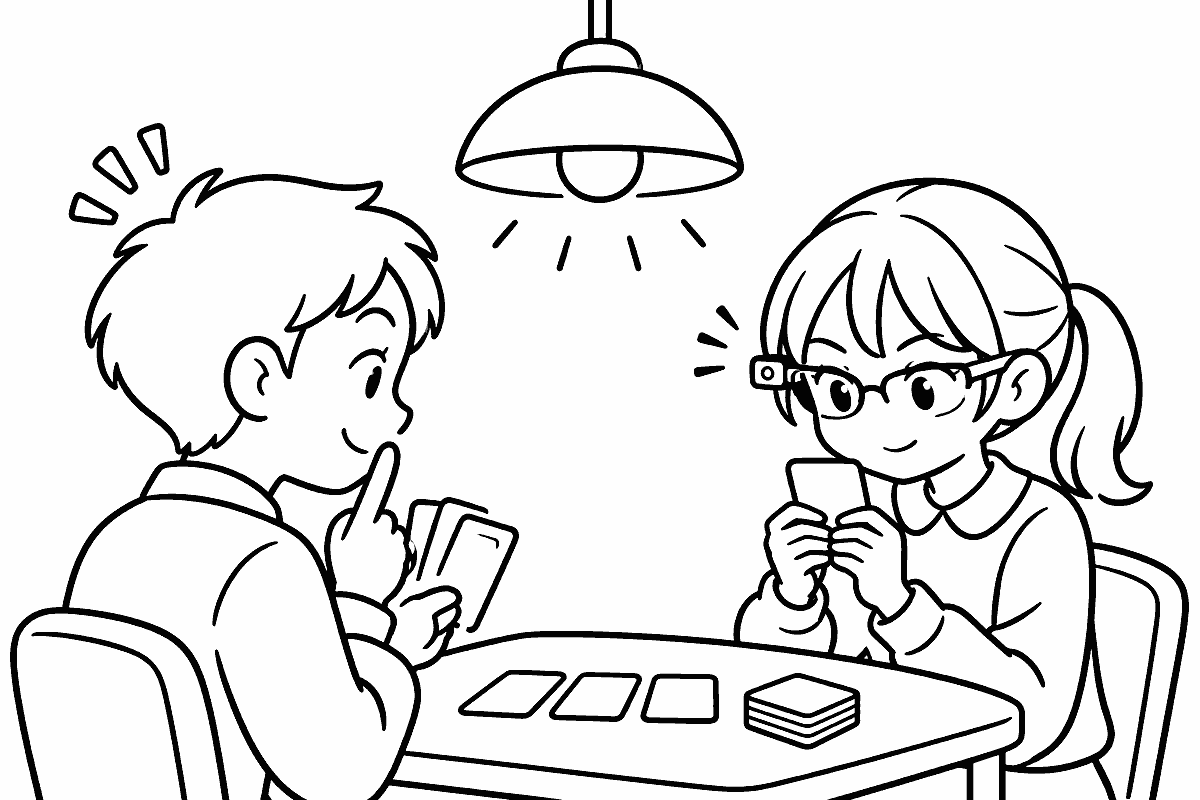
3Each participant chose one of six cards numbered 1 to 6 and sat about one meter from a so-called mentalist, who was actually working with the researchers. The cards were shown one at a time, and each stayed on the screen for five seconds while eye-tracking glasses recorded where the participant looked. In different parts of the test, participants were told to reveal their card, conceal it, or point the mentalist toward a different card.
4When concealing, participants blinked less often and fixed their eyes on a spot fewer times, but for longer, holding their gaze for about 1.2 seconds on average compared with about 0.9 seconds when revealing. These changes seemed clearer when participants were looking at the mentalist's face. The researchers think the drop in blinking and the longer looks may come from people trying to hold back their reactions. Participants' pupils still widened at the sight of the card they had picked, even when they were trying to hide it.
5In a second stage, the mentalist asked yes-or-no questions, and eye movements revealed little. Instead, answers given while concealing took about one second longer than truthful ones. The authors say some of the results may need more data to be confirmed. They also say people were told when to lie. Nobody had anything to lose if they were caught.
Words 単語
| gazeB2 | 名 | 視線、見つめることthe way or place you are looking |
| psychologistsA2 | 名 | 心理学者scientists who study the mind and actions |
| participantB1 | 名 | 参加者a person who takes part in something |
| so-calledB2 | 形 | いわゆるnamed this way, though it may not be true |
| revealA2 | 動 | 明かす、見せるto let others know or see something hidden |
| concealB2 | 動 | 隠すto keep something from being seen or known |
| confirmB1 | 動 | 確かめる、裏づけるto show that something is really true |
| widenedB2 | 動 | 広がった、大きくなったbecame wider or larger |
| reactionsB2 | 名 | 反応what you do or feel because of something |
| truthfulB2 | 形 | 正直な、本当のtelling what really happened |
単語のレベル:CEFR-J(『CEFR-J Wordlist Version 1.6』 東京外国語大学投野由紀夫研究室. (URL: https://www.cefr-j.org/download.html より 2026年8月ダウンロード))
1. Reading Quiz 本文の内容に合うものを選ぼう
What did the team want to find out?
A. How animals hide foodB. What happens when a real person is watchingC. Which card number is the most popularD. How fast people can read numbers
Who was the so-called mentalist?
A. A famous TV starB. One of the participantsC. A computer programD. Someone working with the researchers
How long did participants hold their gaze on average when concealing?
A. About 1.2 secondsB. About 0.9 secondsC. About 3 secondsD. About 0.2 seconds
What happened to participants' pupils when the card they had picked appeared?
A. They became smaller.B. They stayed the same only when hiding.C. They widened, even when hiding the card.D. They could not be measured.
In the yes-or-no stage, what showed that a participant was concealing?
A. More blinkingB. Longer answer timesC. Louder voicesD. Smaller pupils
2. True or False 正しければ T、違っていれば F
( ) Thirty-seven people took part in the study.
( ) The cards were shown all at the same time.
( ) The changes seemed clearer when participants looked at the mentalist's face.
( ) Participants could lose a prize if they were caught lying.
3. Fill in the Blanks 下の語から選んで空らんをうめよう(形を変えずに)
concealingwidenedconfirmedrevealparticipantgaze
Each _____ chose one of six cards numbered 1 to 6 and sat about one meter from a so-called mentalist, who was actually working with the researchers.
When _____, participants blinked less often and fixed their eyes on a spot fewer times, but for longer, holding their gaze for about 1.2 seconds on average compared with about 0.9 seconds when revealing.
The authors say some of the results may need more data to be _____.
In different parts of the test, participants were told to _____ their card, conceal it, or point the mentalist toward a different card.
Participants' pupils still _____ at the sight of the card they had picked, even when they were trying to hide it.
People who tried to hide which card they had chosen blinked less and held their _____ longer, according to a study by psychologists at Ulm University in Germany.
4. Word Order 語を並べかえて正しい文にしよう
( of / were / and / from / 36 / took / Thirty-seven / people / them / used / part, / data ) .
( when / These / changes / clearer / the / participants / were / seemed / looking / at / mentalist's / face ) .
( also / say / lie / told / They / when / people / to / were ) .
5. Think and Write 英語で答えてみよう
Should police or schools use eye-tracking to find out if someone is lying? Why or why not?(警察や学校は、嘘を見つけるために視線を記録する機械を使うべきだと思いますか?その理由は?)
Do you think people can really tell when others are lying? Explain your opinion.(人は、ほかの人が嘘をついているのを本当に見ぬけると思いますか?意見を説明しましょう。)
Answers 解答
1. (1) B (2) D (3) A (4) C (5) B
2. (1) T (2) F (3) T (4) F
3. (1) participant (2) concealing (3) confirmed (4) reveal (5) widened (6) gaze
4.
- Thirty-seven people took part, and data from 36 of them were used.
- These changes seemed clearer when participants were looking at the mentalist's face.
- They also say people were told when to lie.
全文訳
1どのカードを選んだかを隠そうとした人は、まばたきが減り、視線を長く止めていたことが、ドイツのウルム大学の心理学者の研究でわかりました。バレンティン・フーシェさんとアンケ・フッカウフさんが、11月18日に学術誌 PLOS ONE で結果を発表しました。
2この研究チームは、本物の人間が見ているときに何が起きるかを知りたいと考えました。37人が参加し、そのうち36人のデータが使われました。
3参加者はそれぞれ1から6の数字のカードを選び、いわゆる「メンタリスト」から約1メートルはなれてすわりました。その人は実は研究者の協力者でした。カードは1枚ずつ5秒間ずつ見せられ、そのあいだ、視線を記録するメガネが、参加者がどこを見ているかを記録しました。回ごとに、参加者は、カードを教える、隠す、メンタリストに別のカードだと思わせる、のどれかをするよう指示されました。
4隠しているとき、参加者はまばたきが少なくなり、視線を止める回数は減ったものの1回が長くなりました。教えているときは平均約0.9秒だったのに対し、約1.2秒視線を止めていました。こうした変化は、メンタリストの顔を見ているときにより目立つようでした。研究者たちは、まばたきが減ったことや長く見つめたことは、人が自分の反応をおさえようとすることから来ているのかもしれないと考えています。隠そうとしているときでも、自分のカードが出てくると、ひとみは大きくなりました。
5第2段階では、メンタリストが「はい・いいえ」で答える質問をしましたが、目からはほとんど何もわかりませんでした。そのかわり、隠しながら答えた返事は、正直な返事より約1秒長くかかりました。著者たちは、結果の一部はたしかめるのにもっとデータが必要かもしれないと述べています。また、いつ嘘をつくかは指示で決められていたとも述べています。ばれても、だれも何も失うものはありませんでした。
文法ポイント:関係代名詞 who(非制限用法)
「, who ~」で、前に出てきた人について説明を付け足す。本文の a so-called mentalist, who was actually working with the researchers は「いわゆるメンタリストで、その人は実は研究者の協力者だった」という意味。コンマがあるときは that に置きかえられない。
出典:PLOS ONE、Nautilus ほか(記事は原田英語の時事英語ジュニアのオリジナル)|https://www.haradaeigo.com/jijieigo-junior/news/2026-11-26-hiding-secret-fewer-blinks/