yubune ni tsukaru
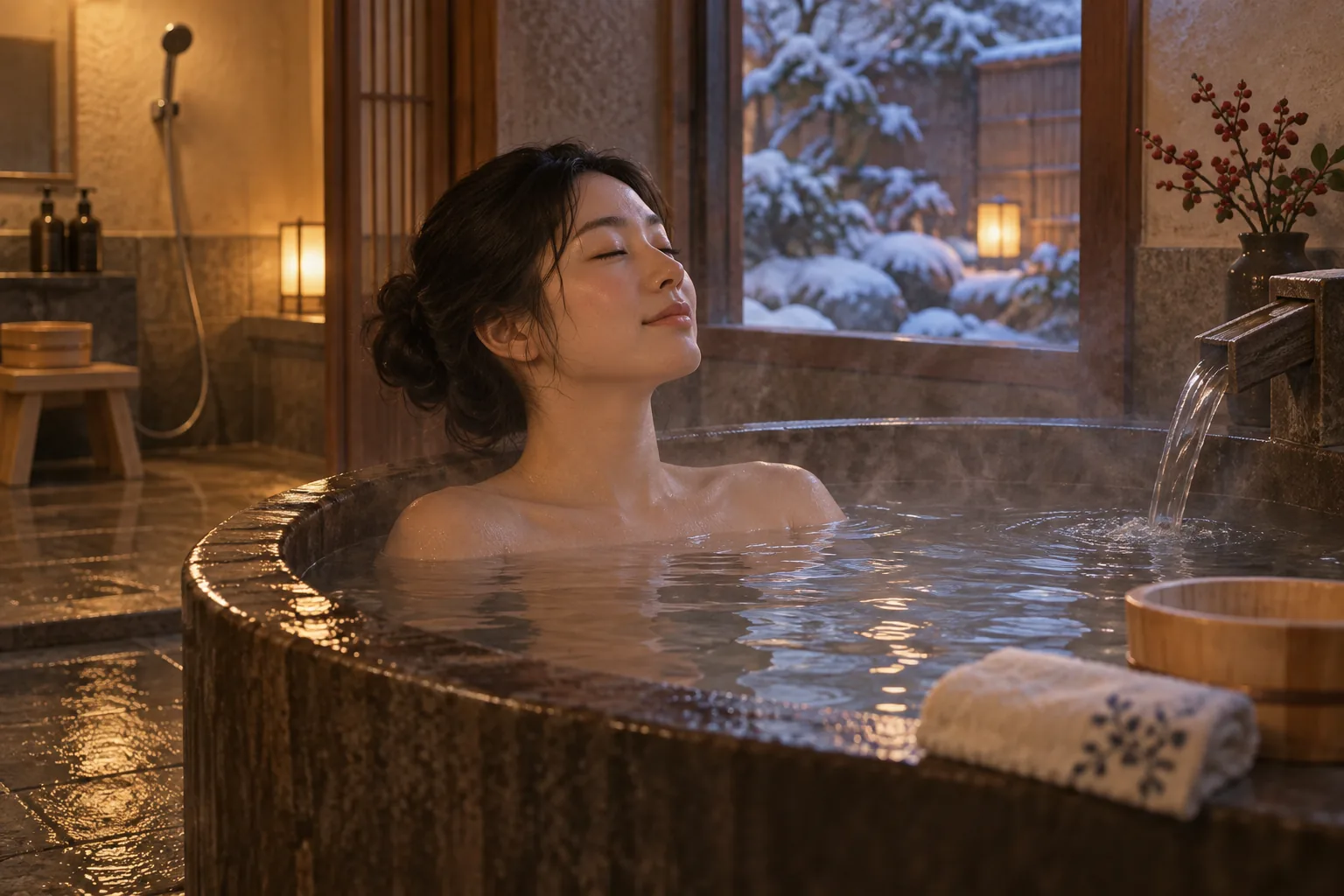
soaking in the tub rather than just showering
湯船につかる(ゆぶねにつかる)
In one line
The shortest answer that works
In Japan the tub is for warming up, not for washing — you wash first, then soak.
日本では湯船は体を温める場所で、洗う場所ではありません。先に洗ってから、つかります。
In 30 seconds
The standard explanation
In most countries the tub is where you wash. In Japan it is the opposite. You wash and rinse completely outside the tub, sitting on a low stool, and only then get into the water. Because you get in clean, the same water can be used by the whole family, one after another, and it is kept warm rather than drained. Soaking for ten or fifteen minutes at the end of the day is the point of the whole thing.
多くの国では、湯船は体を洗う場所です。日本は逆です。低い椅子に座り、湯船の外で体を洗って流しきってから湯に入ります。きれいな状態で入るので、同じ湯を家族が順番に使えますし、抜かずに温かいまま保ちます。一日の終わりに10分か15分つかる。それがこの仕組みの目的です。
As a short speech
A full paragraph you can read aloud
One thing that confuses visitors in a Japanese home is the bathroom. There is a tub, but also a shower area with a stool and a drain in the floor, and the tub is already full of hot water when you arrive.
The rule is simple: wash outside the tub, then get in. You never wash in the water, and you never let the water out when you are done, because the next person is going to use it. Many Japanese families keep the same water all evening with a reheating button.
Visitors often ask whether that is unhygienic, and the answer is that nobody gets in dirty, so it is not the same thing as sharing a bath in the Western sense. What the tub is really for is heat. Many Japanese houses, especially older ones, are poorly insulated and cold in winter, and a long soak is how people warm up before bed.
日本の家で外国の方が戸惑うのが浴室です。湯船があり、そのほかに椅子と床の排水口がある洗い場があって、着いたときには湯船にもう湯が張ってあります。
決まりは簡単で、湯船の外で洗ってから入る。湯の中では洗いませんし、終わっても湯を抜きません。次の人が使うからです。多くの家庭では、追い焚きの機能で同じ湯を一晩使います。
不衛生ではないかとよく聞かれますが、汚れたまま入る人はいないので、西洋の「同じ風呂に入る」とは意味が違います。湯船の目的は熱です。日本の家は、とくに古いものほど断熱が弱く冬は寒いので、寝る前に長くつかって温まるのです。
Questions people actually ask
And how to answer them.
Do I really not drain the water?
In a family home, no. Ask your host to be sure, but the default is to leave it and put the lid back on so it stays warm. Draining someone else's bath water by mistake is a classic guest mistake.
家庭では抜きません。念のためご家族に確認してもよいですが、基本はそのままにして、ふたを戻して温かさを保ちます。よその家の湯を間違って抜いてしまうのは、お客さんのよくある失敗です。
Who goes first?
It varies by family. Often guests are offered first, which is meant as a courtesy since the water is cleanest and hottest then. If you are offered, it is fine to accept.
家庭によります。お客さんに先を勧めることが多く、湯がいちばんきれいで熱いときだからです。勧められたら、遠慮せず入って大丈夫です。
Can I just shower?
You can, and plenty of Japanese people do in summer. But if someone has filled the bath for you, it is a small effort on their part, so it is polite to use it.
できますし、夏はシャワーだけの日本人も多いです。ただ、あなたのために湯を張ってくれたのなら、それは手間をかけてくれたということなので、使うのが礼儀です。
A common misunderstanding
MYTHJapanese families share dirty bath water to save money.
FACTEveryone washes completely before getting in, so the water stays clean. Reusing it saves water and gas, but the reason the tub exists at all is warmth, not washing.
Phrases you can use
- Please wash yourself outside the tub first.先に湯船の外で体を洗ってください。
- Don't let the water out — the next person uses it.湯は抜かないでください。次の人が使うので。
- Put the lid back on so it stays warm.ふたを戻して、温かさを保ってください。
- You're welcome to go first.お先にどうぞ。
- There's a button to reheat it if it's gone cold.ぬるくなっていたら、追い焚きのボタンがあります。
Words you need
- tub, bathtub湯船、浴槽
- washing area洗い場
- reheat追い焚きする
- soakつかる
- lid, coverふた
Watch
From YouTubeBackground (Japanese)
日本の住宅の浴室は、湯船と洗い場が同じ空間にあり、床全体が濡れる前提で作られている。ユニットバスと呼ばれる規格化された浴室が普及したのは、1964年の東京オリンピックに向けたホテル建設で工期を縮めるために開発されたものが始まりとされる。追い焚き機能は日本の給湯器に広く付いているが、海外では一般的ではない。なお、冬場の入浴中の事故は高齢者に多く、脱衣所と浴室を暖める、湯温を上げすぎない、長湯を避けるといった注意が各所から呼びかけられている。