zaitaku kinmu
why remote work spread and then shrank again in Japan
在宅勤務(ざいたくきんむ)
In one line
The shortest answer that works
Zaitaku kinmu, or remote work, is a practice that surged in 2020, then partly retreated, leaving Japan below many countries.
在宅勤務とは、2020年に急に広がったあと一部が元に戻り、日本では多くの国より低い水準にとどまっている働き方です。
In 30 seconds
The standard explanation
Before 2020 working from home was rare in Japan. The pandemic forced it, and at the peak around four in ten employees in the Tokyo area had worked remotely. The rate then fell back, and in international comparisons Japan sits low. The reasons given are practical: small homes with no room for a desk, paperwork requiring a physical seal, and management that evaluates presence. Larger companies and IT firms have kept hybrid arrangements.
2020年より前、日本で在宅勤務はまれでした。感染症がそれを強い、最も多いときには東京圏の雇用者の四割ほどが在宅勤務を経験しました。その後、比率は下がり、国際的な比較では日本は低いほうです。理由として挙げられるのは現実的なことです。机を置く場所のない狭い住まい、押印の要る書類、そして「いること」で評価する管理。大企業やIT系の会社では、週に何日かの形で残っています。
As a short speech
A full paragraph you can read aloud
Working from home in Japan is a useful subject because the story does not follow the pattern people expect. Before 2020 it was genuinely rare: a small minority of firms allowed it, and doing it regularly marked you out. The pandemic changed that overnight, and at the peak around four in ten employees in the Tokyo area were working remotely at least some of the time.
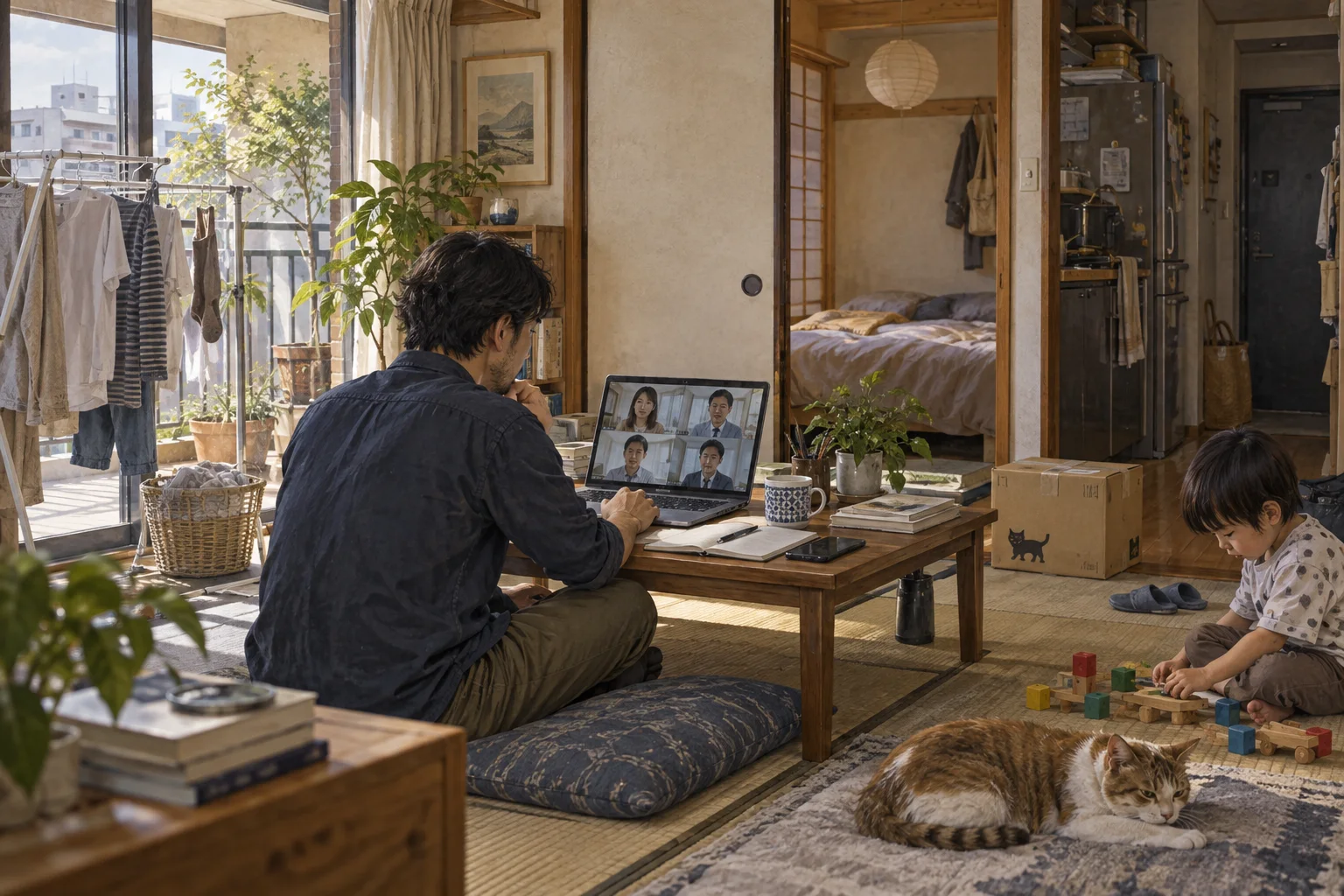
Then it receded, and Japan's rate is now low compared with many similar countries. Three reasons get cited, and all three are worth explaining. First, housing: a typical urban apartment does not have a spare room, and a lot of people were working at the kitchen table with a family in the same room.
Second, paper: many processes still required a document with a physical seal on it, which meant somebody had to go to the office to stamp things — the government pushed to remove this requirement, with real but partial results. Third, management: evaluation in many Japanese companies is based on being seen to work, and managers who came up that way were uncomfortable with a team they could not see.
日本の在宅勤務は、話の筋が予想どおりに進まないので、取り上げる値打ちがあります。2020年より前、これは本当にまれでした。認めている会社は少なく、常にそうしていれば目立つほどでした。感染症がそれを一夜で変え、最も多いときには東京圏の雇用者のおよそ四割が、何らかの形で在宅になりました。
そのあと比率は下がり、いまでは比較できる国の多くより低い水準です。理由として三つが挙げられ、どれも説明する値打ちがあります。一つめは住まいです。都市部のふつうの集合住宅に空き部屋はなく、多くの人は家族と同じ部屋の食卓で働いていました。二つめは紙です。
押印のある書類を必要とする手続きが多く残っていて、誰かが判を押すために出社することになりました。政府はこの要件をなくそうと進め、実際に減りましたが、全部ではありません。三つめは管理です。多くの日本の会社では、働いている様子が見えることが評価の土台になっています。そのやり方で上がってきた管理職にとって、見えない部下は落ち着かないものでした。
Questions people actually ask
And how to answer them.
Is it still possible to work from home?
In many larger companies and in IT, yes, usually a few days a week. In small firms and customer-facing work it has largely gone back to full attendance.
大企業やIT系なら、週に何日かという形で残っています。中小企業や接客のある仕事では、ほぼ出社に戻りました。
Was the seal really a problem?
Yes, for a while. Approvals needed a stamped document, so someone had to be in the office. Many procedures have since been changed, but not all of them.
一時期は本当に問題でした。決裁に押印した書類が要るので、誰かが出社することになりました。その後、多くの手続きが改められましたが、すべてではありません。
Why does housing matter so much?
Urban apartments are small and rarely have a spare room. Sharing a table with family all day is a real constraint, and it is cited in surveys more than people expect.
都市部の住まいは狭く、空き部屋があることはまれです。一日じゅう家族と同じ机を使うのは実際の制約で、調査でも思った以上に挙げられています。
A common misunderstanding
MYTHJapan embraced remote work after 2020 and kept it.
FACTIt spread suddenly and then partly fell back, and Japan's rate remains lower than in many comparable countries. Housing, paperwork and presence-based evaluation are the usual explanations.
Phrases you can use
- It spread in 2020 and then went back.2020年に広がって、そのあと戻りました。
- Homes here are small — there's no spare room.住まいが狭く、空き部屋がありません。
- Some approvals still need a stamped document.押印の要る手続きが、まだ残っています。
- Being seen at your desk still counts here.席にいることが、いまも評価に響きます。
- Big companies often allow a few days a week.大企業では週に何日かを認めることが多いです。
Words you need
- remote workテレワーク
- hybrid出社と在宅の併用
- personal sealハンコ・印鑑
- commuting通勤
- evaluation評価
Watch
From YouTubeBackground (Japanese)
東京都の調査では、都内企業のテレワーク実施率は2020年から2021年にかけて6割を超えた時期があり、その後は下がって推移している。2020年には政府が押印を求める行政手続きの見直しを進め、多くの手続きで押印が廃止された。国土交通省のテレワーク人口実態調査では、首都圏の雇用型テレワーカーの割合は2021年度に42.3%に達し、その後は横ばいからやや低下で推移している。住宅の広さや執務環境が、実施をためらう理由として調査で繰り返し挙げられている。