yunitto basu
the Japanese bathroom layout
ユニットバス(ユニットバス)
In one line
The shortest answer that works
A Japanese bathroom separates the toilet from a waterproof room where you wash before bathing.
日本の浴室はトイレと分かれていて、防水の部屋で体を洗ってから湯船に入ります。
In 30 seconds
The standard explanation
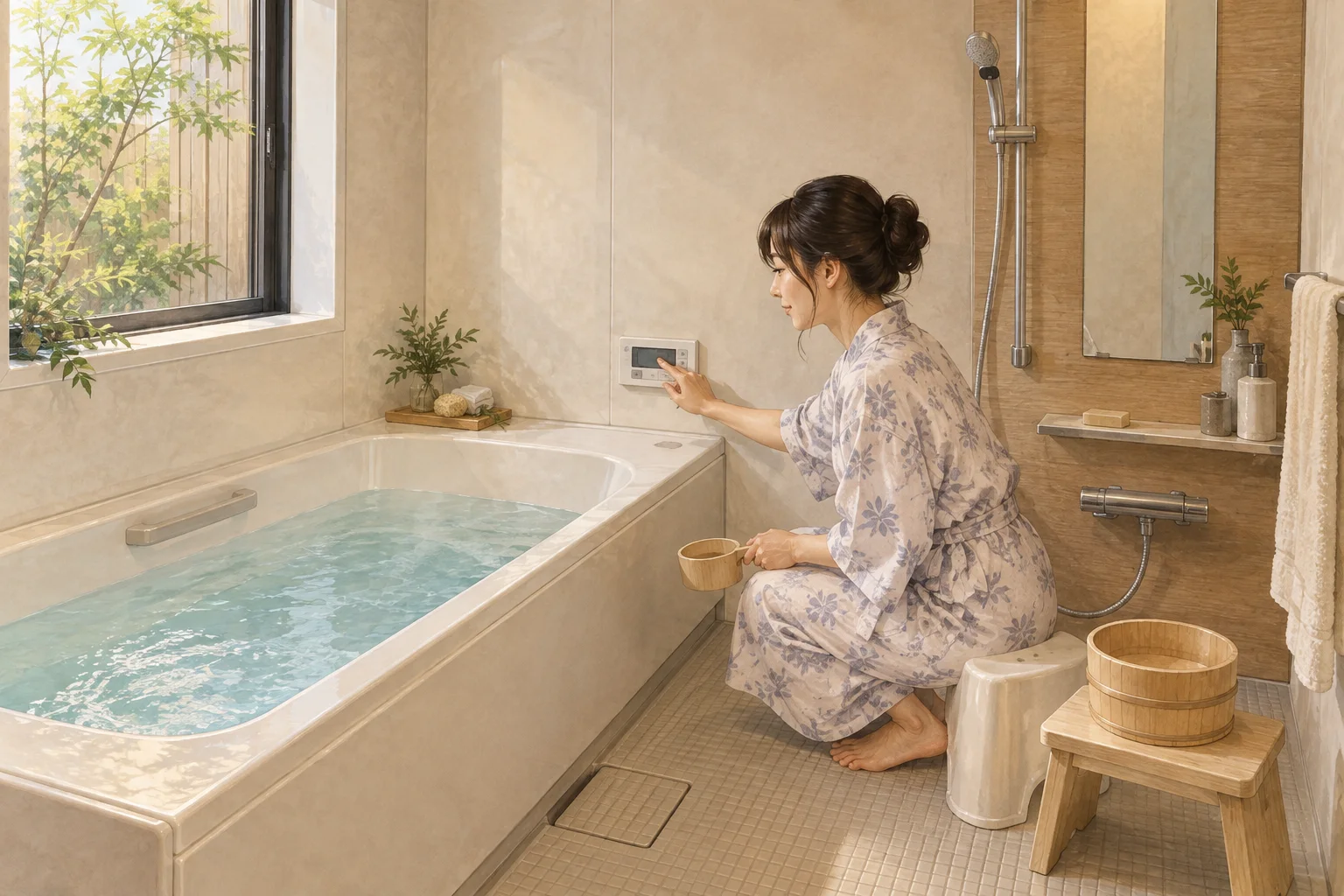
In most Japanese homes the toilet is in its own small room, and the bathroom is a fully waterproof space with a washing area beside the tub. You soap and rinse outside the tub, then soak in clean hot water. A changing room with the washing machine usually sits between the bathroom and the corridor.
日本の多くの家では、トイレは独立した小さな部屋にあり、浴室は全体が防水で、湯船の横に洗い場があります。湯船の外で体を洗って流し、それからきれいな湯に浸かります。浴室と廊下の間には、洗濯機を置いた脱衣所があるのがふつうです。
As a short speech
A full paragraph you can read aloud
The Japanese bathroom is designed around one idea: you wash before you get in, so the water in the tub stays clean. That produces a layout visitors find unusual. The whole room is waterproof, with a drain in the floor, a low stool, a hand shower and a tub that is deep and short rather than long and shallow.
Beside it is a changing room with a sink and usually the washing machine. The toilet is in a separate room entirely, which is why a Japanese person may be genuinely puzzled by a Western bathroom where the toilet sits next to the bath.
In apartments and hotels you will also meet the three-in-one unit bath, a molded plastic module with tub, toilet and sink together, which is compact and cheap but disliked by many residents. One rule matters for a guest: do not drain the tub, because the family after you will use the same water.
日本の浴室は一つの考えを中心に設計されています。入る前に洗うから、湯船の湯はきれいなまま、という考えです。そこから、訪日客には見慣れない間取りが生まれます。部屋全体が防水で、床に排水口があり、低い腰かけと手持ちのシャワー、そして長く浅いのではなく深く短い湯船が置かれます。
その手前は脱衣所で、洗面台と、たいていは洗濯機があります。トイレはまったく別の部屋です。だから日本人は、浴槽の隣に便器のある欧米の浴室を見て、本当に戸惑うことがあります。
集合住宅やホテルでは、浴槽と便器と洗面台が一体に成形された三点式のユニットバスにも出会います。場所をとらず安いのですが、住む人には嫌われがちです。客として大事な決まりが一つ。湯を抜かないでください。あとの家族が同じ湯を使うからです。
Questions people actually ask
And how to answer them.
Why is the toilet in a separate room?
Cleanliness and practicality. The bath is for soaking and is treated as a clean space, and separating them also means one person can bathe while another uses the toilet.
清潔さと使い勝手のためです。風呂は浸かる場所で、清潔な空間として扱われます。分けておけば、誰かが入浴している間に別の人がトイレを使えるという利点もあります。
Do I really share the same bathwater?
Yes, within a household. Everyone washes thoroughly outside the tub first, so the water stays clean, and a lid keeps it warm between users. Many homes reuse it for the washing machine afterwards.
家族の中ではそうです。全員が湯船の外でしっかり洗ってから入るので湯はきれいなままで、ふたをして次の人まで温かさを保ちます。そのあと洗濯に使う家庭も多くあります。
What is a three-in-one unit bath?
A prefabricated module with tub, toilet and sink in one waterproof shell, common in small apartments and business hotels. It is efficient but leaves no separate washing area, so you cannot soap down outside the tub.
浴槽、便器、洗面台が一つの防水の枠に収まった既製の設備で、小さな賃貸やビジネスホテルによくあります。無駄がない一方で洗い場がないため、湯船の外で体を洗うことができません。
Phrases you can use
- Please wash before getting in.湯船に入る前に体を洗ってください。
- Don't let the water out.お湯は抜かないでください。
- Put the lid back on.ふたを戻しておいてください。
- The toilet is the door on the left.トイレは左の扉です。
- The washing machine is in the changing room.洗濯機は脱衣所にあります。
Words you need
- washing area洗い場
- bathtub浴槽
- changing room脱衣所
- bath lid風呂のふた
- reheating function追い焚き
Watch
From YouTubeBackground (Japanese)
ユニットバスという語は、日本では工場で成形した部材を組み立てる浴室を指します。浴槽と便器と洗面台が一体の三点式だけでなく、浴室だけのものも含みます。1964年の東京オリンピックに向けたホテル建設で工期を縮めるために普及したと言われます。家庭の浴室は洗い場と脱衣所を伴う形が一般的で、給湯器の追い焚き機能で湯を温め直せます。残り湯を洗濯に使えるよう、ポンプのついた洗濯機も売られています。