oidaki
reheating the same bathwater
追い焚き(おいだき)
In one line
The shortest answer that works
Japanese water heaters can reheat the bath so the whole family uses the same water.
日本の給湯器は風呂の湯を沸かし直せるので、家族全員が同じ湯を使えます。
In 30 seconds
The standard explanation
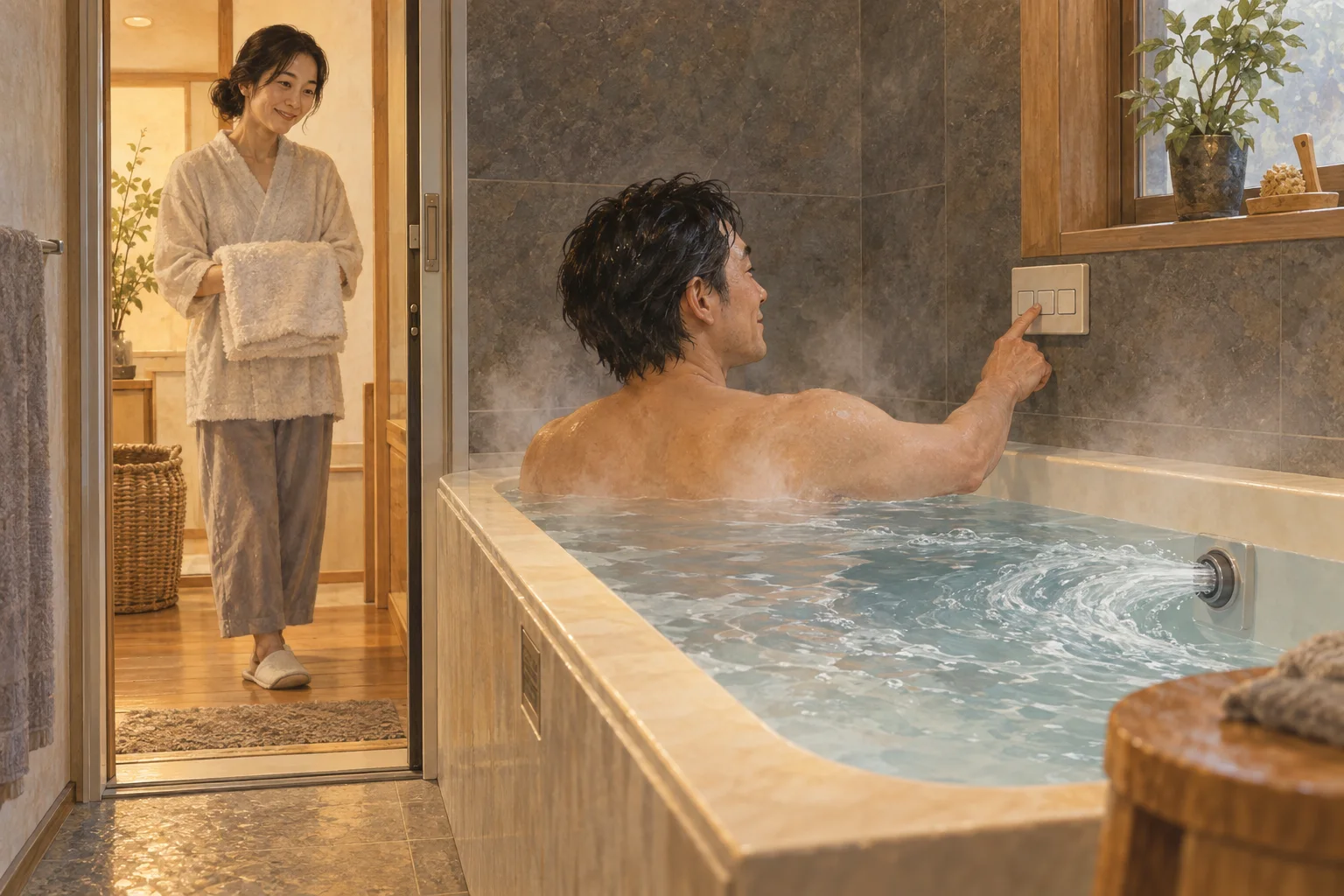
Oidaki is a function on many Japanese water heaters that reheats the water already in the tub. Because everyone washes before getting in, the same bathwater serves the whole household over an evening, kept warm by a lid and reheated at the press of a button. Many families then pump the water into the washing machine.
追い焚きは、日本の多くの給湯器についている、浴槽にたまった湯を温め直す機能です。全員が入る前に体を洗うので、同じ湯が一晩かけて家族全員に使われます。ふたで保温し、ボタンを押せば沸かし直せます。そのあと、その湯をポンプで洗濯機に送る家庭も多くあります。
As a short speech
A full paragraph you can read aloud
Oidaki is one of those small domestic technologies that only makes sense once you understand the habit behind it. In a Japanese home, everyone washes and rinses outside the tub, so the water in the tub stays clean and is used by the whole family in turn over the course of an evening.
The problem is that it cools, and the answer is a reheating function built into the water heater: the bath is connected to the heater by a circuit, and a button on the wall panel brings it back to the set temperature in a few minutes.
The same panel usually has a button to fill the tub automatically to a set depth, and a voice announcement telling you the bath is ready. A thick insulating lid goes on between users. Many washing machines come with a pump and hose to draw the leftover water for the wash cycle, which saves a meaningful amount of water over a year.
追い焚きは、その背後にある習慣を知って初めて意味の分かる、家庭の小さな技術の一つです。日本の家では、全員が湯船の外で体を洗って流すので、湯船の湯はきれいなまま、一晩かけて家族が順に使います。
困るのは湯が冷めることで、その答えが給湯器に組み込まれた追い焚きです。浴槽と給湯器が配管でつながっていて、壁の操作盤のボタンを押せば数分で設定の温度に戻ります。
同じ操作盤にはたいてい、決めた深さまで自動で湯を張るボタンがあり、沸いたことを音声で知らせます。次の人までは厚い保温のふたをします。洗濯機にはポンプとホースがついたものが多く、残り湯を洗いに使えます。一年で見れば、かなりの量の水が節約できます。
Questions people actually ask
And how to answer them.
Is it hygienic to reuse the water?
Within a household it is treated as normal, because nobody enters the tub dirty or soapy. Water left overnight is usually not reused for bathing, and families with an infant or someone unwell usually run fresh water.
家族の中では当たり前のこととされています。汚れたままや石けんのついたままで湯船に入る人はいないからです。一晩置いた湯はふつう入浴には使い回さず、赤ちゃんや体調の悪い人がいる家庭では新しい湯を張ります。
What do the buttons on the wall panel do?
Typically: set the temperature, fill the bath automatically, reheat, and keep warm. There is often a call button between the bathroom and the kitchen panel, used to tell someone the bath is ready.
ふつうは、温度の設定、自動でお湯を張る、追い焚き、保温です。浴室と台所の操作盤の間で呼び出しができるボタンもよくあり、風呂が沸いたことを知らせるのに使います。
Can I reuse the water for laundry?
Yes, and many washing machines include a pump for it. Use it for the washing cycle rather than the final rinse, which is the advice makers give.
使えますし、そのためのポンプがついた洗濯機が多くあります。すすぎではなく洗いに使うのがよい、というのが作り手の案内です。
Phrases you can use
- The bath is ready.お風呂が沸きました。
- Shall I reheat it for you?追い焚きしましょうか。
- Put the lid back so it stays warm.保温のためふたをしてください。
- Please don't drain the tub.お湯は抜かないでください。
- We use the leftover water for laundry.残り湯は洗濯に使います。
Words you need
- to reheat the bath追い焚きする
- water heater給湯器
- control panel操作盤
- insulating lid保温のふた
- leftover bathwater残り湯
Watch
From YouTubeBackground (Japanese)
追い焚きは、浴槽と給湯器を配管でつなぎ、湯を循環させて温め直す仕組みです。ガス給湯器のほか、電気でお湯をためる機器にも備わっていることがあります。自動で湯を張り、沸いたことを音声で知らせる機能は1980年代以降に広まりました。集合住宅では配管の都合で追い焚きのない住戸もあり、その場合は熱い湯を足して温めます。残り湯を洗濯に使う家庭は多く、洗濯機にポンプが付属している機種があります。