terakoya
the neighborhood schools of the Edo period
寺子屋(てらこや)
In one line
The shortest answer that works
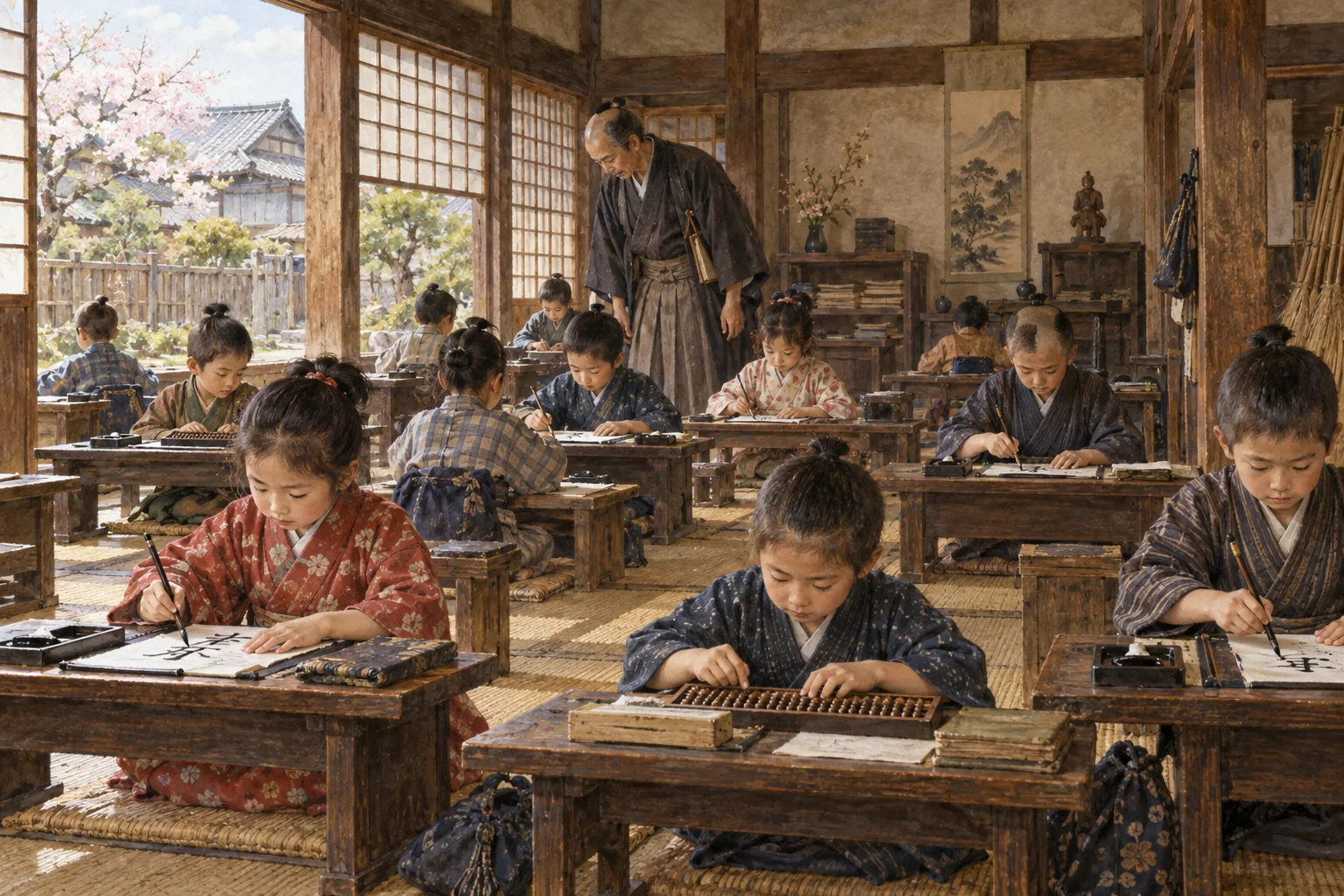
Terakoya, or temple schools, are small private Edo-period schools where local children learned reading, writing and the abacus.
寺子屋とは、近所の子どもが読み書きとそろばんを習った、江戸時代の小さな私塾です。
In 30 seconds
The standard explanation
Before Japan had a national school system, ordinary children were taught in terakoya: one room, one teacher, often a priest, a masterless samurai or a village official's wife. Pupils copied model texts, practiced writing with a brush, and learned the abacus. Fees were informal and sometimes paid in goods. The spread of these schools is usually cited as a major reason Japan could build a modern school system quickly after 1872.
国の学校制度ができる前、ふつうの子どもは寺子屋で学びました。部屋は一つ、師は一人。僧、浪人、村役人の妻などが教えました。手本を写し、筆で字を書き、そろばんを習います。謝礼は決まっておらず、品物で払うこともありました。こうした塾が広く存在したことが、1872年の学制のあと日本が学校制度を急いで作れた大きな理由として挙げられます。
As a short speech
A full paragraph you can read aloud
Terakoya were the schools of Edo-period Japan, and they were not built by the government. The word means temple-child-house, because many were held in temples, but the teacher could equally be a masterless samurai, a doctor, a shopkeeper or a woman of the village, and the classroom was often just a room in a house.
Children of merchants and farmers, both boys and girls, came from around the age of six or seven, sat at low individual desks, and worked at their own pace rather than as a class. The core was the brush, the copybook and the abacus, with model texts on letter-writing and trade arithmetic, since the point was practical competence for a working life. Fees were loose and could be rice or seasonal gifts.
The usual conclusion drawn is that this gave Japan an unusually literate population before modernization, which then made the national school system of 1872 possible in a short time. That is broadly accepted, though the specific literacy percentages that get quoted are estimates and vary a great deal by region and by what counts as being able to read.
寺子屋は江戸時代の学校で、国が作ったものではありません。寺で開かれたものが多かったのでこの名がありますが、師は浪人でも医者でも商人でも、村の女性でもよく、教場は家の一間ということも珍しくありませんでした。
商人や農民の子が、男女ともに六つ七つごろから通い、一人ずつの低い机に向かい、学級としてではなく各自の進み方で学びます。中心は筆と手本とそろばん。手紙の書き方や商いの計算といった往来物を使いました。働いて生きるための実用が目的だったからです。謝礼はゆるやかで、米や季節の贈り物のこともありました。
ここから導かれる結論はふつう、近代化の前の日本には読み書きのできる人が多く、だから1872年の学制のあと短い期間で学校制度を作れた、というものです。大筋は受け入れられていますが、よく引かれる識字率の数字は推計であり、地域によっても、何をもって読めるとするかによっても、大きく変わります。
Questions people actually ask
And how to answer them.
Did girls attend?
Yes, though fewer than boys and often for a shorter time, with more emphasis on writing and etiquette. Some terakoya were taught by women.
通いました。数は男子より少なく、期間も短いことが多く、書きと作法に重きが置かれました。女性が師を務める寺子屋もありました。
Was it free?
No, but the payment was informal: a set fee was rare, and families gave money, rice or seasonal gifts according to what they could manage.
無料ではありませんが、決まった額はまれで、家の事情に応じて金や米や季節の品を渡しました。
How is it different from a modern juku?
A juku supplements school and prepares for entrance exams. A terakoya was the only schooling most children got, and it taught the skills of a trade rather than a syllabus.
塾は学校の補いで、入試に備えるものです。寺子屋は多くの子にとって唯一の学びの場で、教科の範囲ではなく暮らしの技を教えました。
A common misunderstanding
MYTHEdo-period Japan had the highest literacy rate in the world.
FACTLiteracy was high for the time, but the figures are estimates, vary widely by region and class, and the claim of being first in the world is not established.
Phrases you can use
- They were private neighborhood schools.町や村の私塾でした。
- One teacher, one room, children of all ages.師は一人、部屋は一つ、年齢もばらばらでした。
- They learned brush writing and the abacus.筆で字を書き、そろばんを習いました。
- Parents paid in money, rice or gifts.謝礼は金や米や品物でした。
- This is why the modern school system spread fast.だから近代の学校制度が早く広まりました。
Words you need
- private school私塾
- abacusそろばん
- copybook, model text手本・往来物
- masterless samurai浪人
- school system of 1872学制
Watch
From YouTubeBackground (Japanese)
寺子屋の呼び名は上方で使われたもので、江戸では「手習所」「筆学所」などと呼ぶことも多かった。教材には『庭訓往来』『商売往来』などの往来物が用いられ、職業に応じて選ばれた。1872年(明治5年)の学制により全国に小学校が置かれ、寺子屋の多くはそこへ吸収された。歌舞伎の「菅原伝授手習鑑」に「寺子屋」の段があり、演目名としても知られる。