soroban
the Japanese abacus
そろばん(そろばん)
In one line
The shortest answer that works
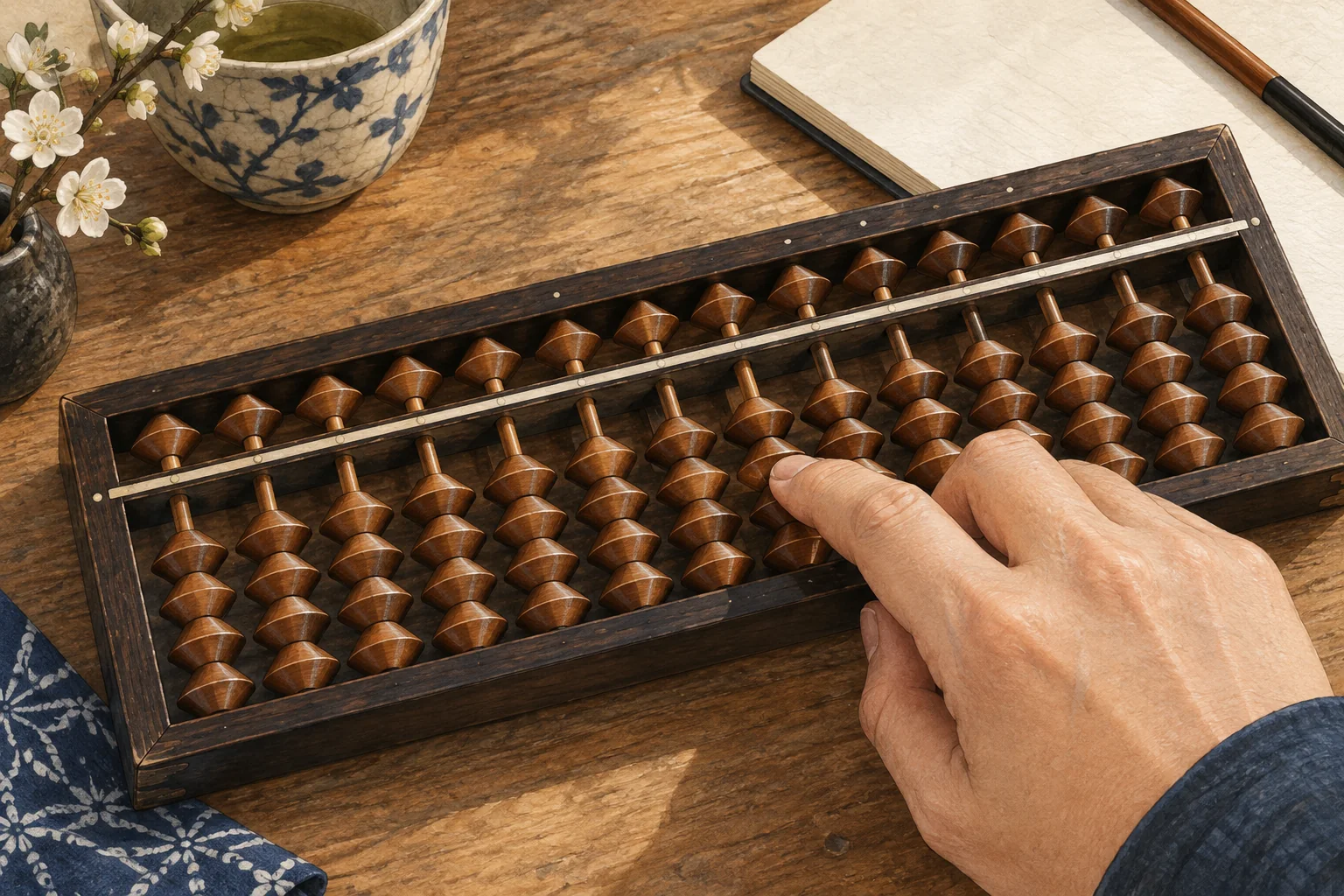
The soroban is the Japanese abacus, still taught in primary school long after calculators arrived.
そろばんは日本の計算器で、電卓が広まったあとも小学校で教えられ続けています。
In 30 seconds
The standard explanation
The soroban is a wooden frame of rods, each with one bead above the bar and four below. It came from China and spread through Edo-period schools as one of the three basics, along with reading and writing. Japanese primary schools still teach it for a few lessons, not to produce calculators but because working the beads builds a picture of numbers in the head.
そろばんは、木の枠に桁を並べ、各桁に梁の上の玉が一つ、下に四つ付いた計算器です。中国から伝わり、江戸時代には読み書きと並ぶ基礎の一つとして寺子屋で広まりました。今も小学校で数時間は教えます。計算係を育てるためではなく、玉を動かすことで数の形が頭の中にできるからです。
As a short speech
A full paragraph you can read aloud
Japan still teaches children to use an abacus, which surprises visitors in a country famous for electronics. The Japanese version has one bead above the dividing bar and four below, a simplification of the Chinese original, and it is worked with the thumb and index finger.
In the Edo period reading, writing and the abacus were the three things a merchant's child had to learn, and terakoya schools taught all three. Today it appears in the primary school curriculum for a short unit, and outside school there are abacus clubs and graded examinations. The real reason it survives is what happens after you stop using the frame.
Experienced learners move the beads in their heads and calculate by picturing them, which is called anzan, and children who train this way can add long columns of figures faster than someone with a phone. Whether that is a useful skill now is debated; that it is impressive is not.
日本では今も子どもにそろばんを教えます。電子機器で知られる国だけに、外国の人は驚きます。日本のそろばんは、梁の上に玉が一つ、下に四つ。中国のものを簡略にした形で、親指と人差し指で弾きます。
江戸時代、商家の子が身につけるべきものは読み書きそろばんの三つで、寺子屋がそのすべてを教えました。今は小学校の算数に短い単元として置かれ、学校の外にはそろばん教室と検定があります。この道具が生き残っている本当の理由は、枠を手放したあとに起きることです。
慣れた人は頭の中で玉を動かして計算します。これを暗算と呼び、この訓練をした子どもは、長い数字の列を、スマートフォンの電卓を使う人より速く足せます。それが今も役に立つ技能かどうかは意見が分かれますが、見事であることは確かです。
Questions people actually ask
And how to answer them.
Is it still actually taught?
Yes. It appears in the national curriculum for elementary arithmetic, usually a handful of lessons in the third and fourth years. Beyond that it is an after-school activity rather than a school subject.
教えています。学習指導要領の算数に入っており、ふつうは三年と四年で数時間です。それ以上は学校の科目ではなく、習いごととして続けます。
How is it different from a Chinese abacus?
The Chinese frame has two beads above the bar and five below, which suits counting in sixteenths as well as tens. Japan gradually cut it down to one and four, which is faster for decimal work and is what you see today.
中国の算盤は梁の上に玉が二つ、下に五つで、十進法だけでなく十六進の計算にも向いていました。日本はこれを段階的に一と四に減らし、十進の計算を速くしました。今見るのはその形です。
What is mental abacus?
Calculating by imagining the beads instead of touching them. Trained children move an invisible frame with their fingers or with nothing at all, and competitions are held where figures are flashed on a screen faster than most people can read them.
玉に触れず、頭の中で玉を動かして計算することです。訓練した子どもは、見えない枠を指でなぞるか、何も動かさずに解きます。画面に数字を次々映して競う大会もあり、その速さは多くの人が読み取れないほどです。
Phrases you can use
- That is an abacus, not a toy.それは玩具ではなく、そろばんです。
- One bead above, four below.上に一つ、下に四つの玉です。
- Children still learn it at school.今も学校で習います。
- He is calculating in his head.頭の中で計算しています。
- There are graded exams for it.そろばんには検定があります。
Words you need
- abacusそろばん
- bead珠
- rod桁
- mental calculation暗算
- graded examination検定
Watch
From YouTubeBackground (Japanese)
そろばんは中国の算盤が室町から戦国のころに伝わったものとされ、江戸時代に読み書きそろばんとして寺子屋で広く教えられました。中国のものが上二玉・下五玉であるのに対し、日本では上一玉・下四玉に簡略化され、十進の計算に特化しています。現在も小学校の算数で三年と四年に扱われ、教室と検定は学校の外に広く残っています。産地としては島根の雲州そろばんと兵庫の播州そろばんが知られます。玉を頭の中で動かす暗算は、そろばんの訓練から生まれた技能です。