hanko
the schools each domain ran for its samurai
藩校(はんこう)
In one line
The shortest answer that works
Hanko, or domain schools, are schools each feudal domain set up to educate the sons of its samurai.
藩校とは、それぞれの藩が家臣である武士の子を教えるために設けた学校です。
In 30 seconds
The standard explanation
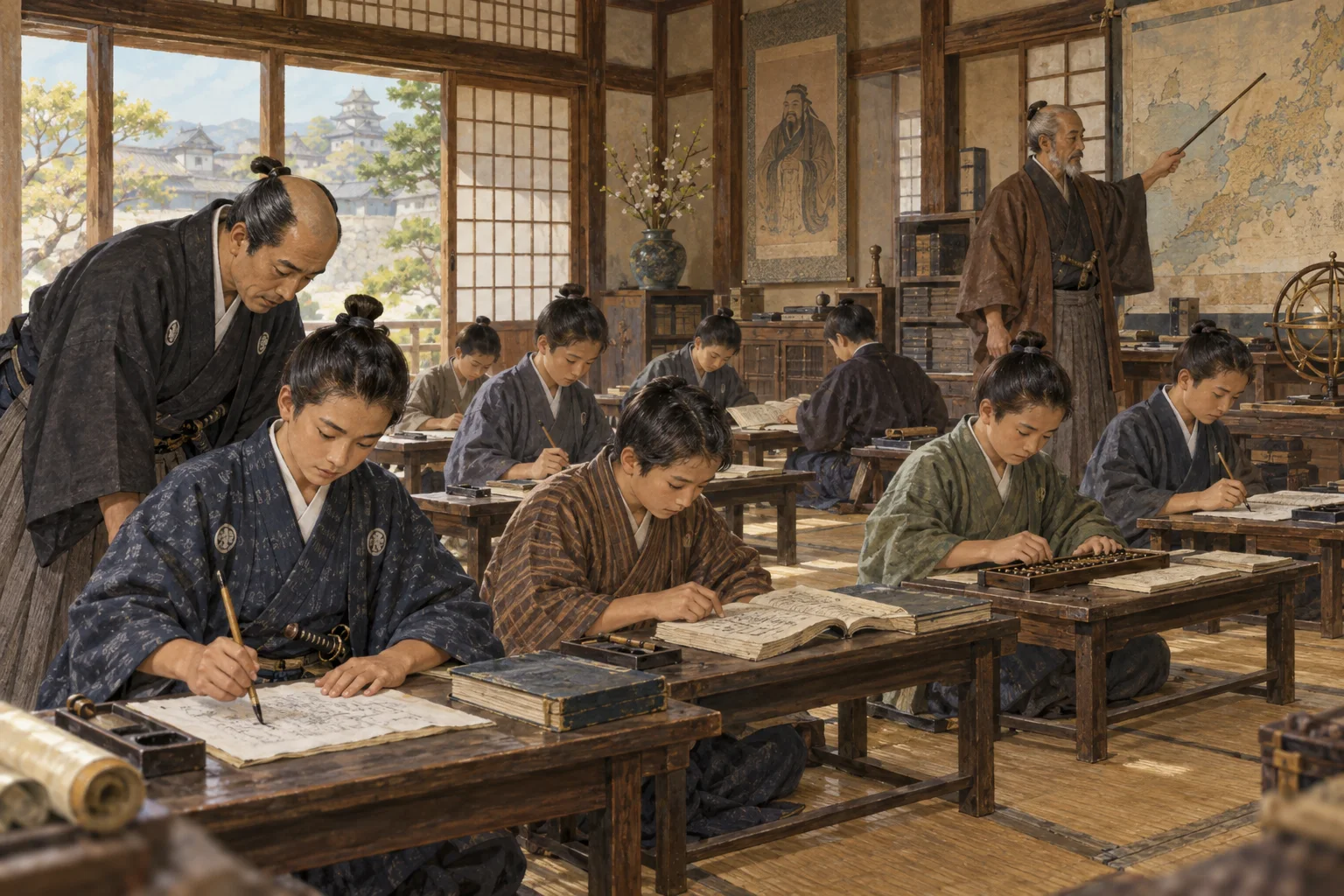
A hanko was a school run by a domain for the children of its samurai. Pupils studied the Chinese classics, calligraphy and history in the morning and martial arts in the afternoon, and attendance was expected rather than chosen. By the end of the Edo period there were over two hundred of them, and several buildings survive as museums.
藩校とは、藩が家臣の子のために運営した学校です。午前は漢文の古典、書、歴史を学び、午後は武芸に当てるのが一般的で、通うかどうかは選べるものではありませんでした。幕末には二百数十校があり、建物が残って資料館になっているところもあります。
As a short speech
A full paragraph you can read aloud
Edo-period Japan had two parallel school systems that almost never met. Ordinary children went to terakoya and learned the writing and arithmetic a trade needed. Samurai children went to a domain school, a hanko, paid for by the domain and, in many domains, effectively compulsory for boys of the class from around the age of seven or eight.
There they read the Chinese classics aloud until they knew them, practiced calligraphy, studied history and law, and spent the afternoon on swordsmanship, archery and horsemanship. Many domains later added medicine, Dutch learning and gunnery as the outside world pressed in.
Because the same books produced the same reference points, a samurai from one end of the country could argue with one from the other in a shared vocabulary, and that common ground carried into the political debates of the 1860s.
江戸時代の日本には、ほとんど交わらない二つの学校の系統がありました。庶民の子は寺子屋に通い、商いに要る読み書きと算を覚えます。武士の子は藩校に通いました。
藩が費用を持ち、多くの藩では男子は七、八歳ごろから通うのが事実上の義務でした。そこでは漢文の古典を声に出して繰り返し読み、書を習い、歴史と法を学び、午後は剣術、弓術、馬術に当てます。
外の世界が迫るにつれ、医学、蘭学、砲術を加える藩も増えました。同じ書物を読んだことで、国の端と端の武士が同じ語彙で議論できるようになります。その共通の素地は、1860年代の政治の論争にも生きました。
Questions people actually ask
And how to answer them.
Could a commoner attend?
As a rule no, though some domains admitted able commoners later in the period, and a few schools were founded for both. The clearest surviving example open to commoners is Shizutani in Okayama.
原則として通えませんでした。ただ幕末に近づくと、優秀な庶民を受け入れた藩もあり、身分を問わない学校も作られました。残っている例では、岡山の閑谷学校がよく知られています。
What happened to them?
They closed with the domains themselves in 1871. Some buildings became the first middle schools of their region, and a number of today's prefectural high schools trace their founding to a domain school.
1871年に藩そのものがなくなり、藩校も廃されました。建物が地域最初の中学校になった例があり、今の県立高校の中には創立を藩校にさかのぼるところがあります。
Can I visit one?
Yes. Kodokan in Mito and Shizutani in Okayama survive, and Nisshinkan in Aizu has been rebuilt. All three are open, and they show the lecture halls and the martial arts floors side by side, which is the point of the place.
あります。水戸の弘道館と岡山の閑谷学校は当時の建物が残り、会津の日新館は復元されたものです。三つとも公開されています。講堂と武芸の道場が並んでいる様子が見られ、そこがこの学校の要点です。
Phrases you can use
- As a rule, only samurai children came here.原則として、ここに通えたのは武士の子だけです。
- Mornings were books, afternoons were swords.午前は学問、午後は武芸でした。
- Each domain ran its own school.藩ごとに学校を持っていました。
- They closed when the domains did.藩がなくなると同時に廃されました。
- This high school traces back to one.この高校は藩校が前身です。
Words you need
- domain school藩校
- the Chinese classics漢学
- martial arts training武芸
- feudal domain藩
- lecture hall講堂
Watch
From YouTubeBackground (Japanese)
藩校は、各藩が家臣の子弟を教育するために設けた学校で、幕末には二百数十校あったとされます。教育の柱は四書五経を中心とする漢学で、素読と呼ばれる音読から入り、書、歴史、礼法が続き、午後は剣術や弓術に当てるのが一般的でした。幕末には医学、蘭学、砲術を加える藩も現れます。水戸の弘道館や岡山の閑谷学校などが残り、戊辰戦争で焼けた会津の日新館は復元された建物が公開されています。会津の什の掟にある、ならぬことはならぬものです、という一節は今も引かれます。