io no nioi
the rotten-egg smell of sulfur hot springs
硫黄のにおい(いおうのにおい)
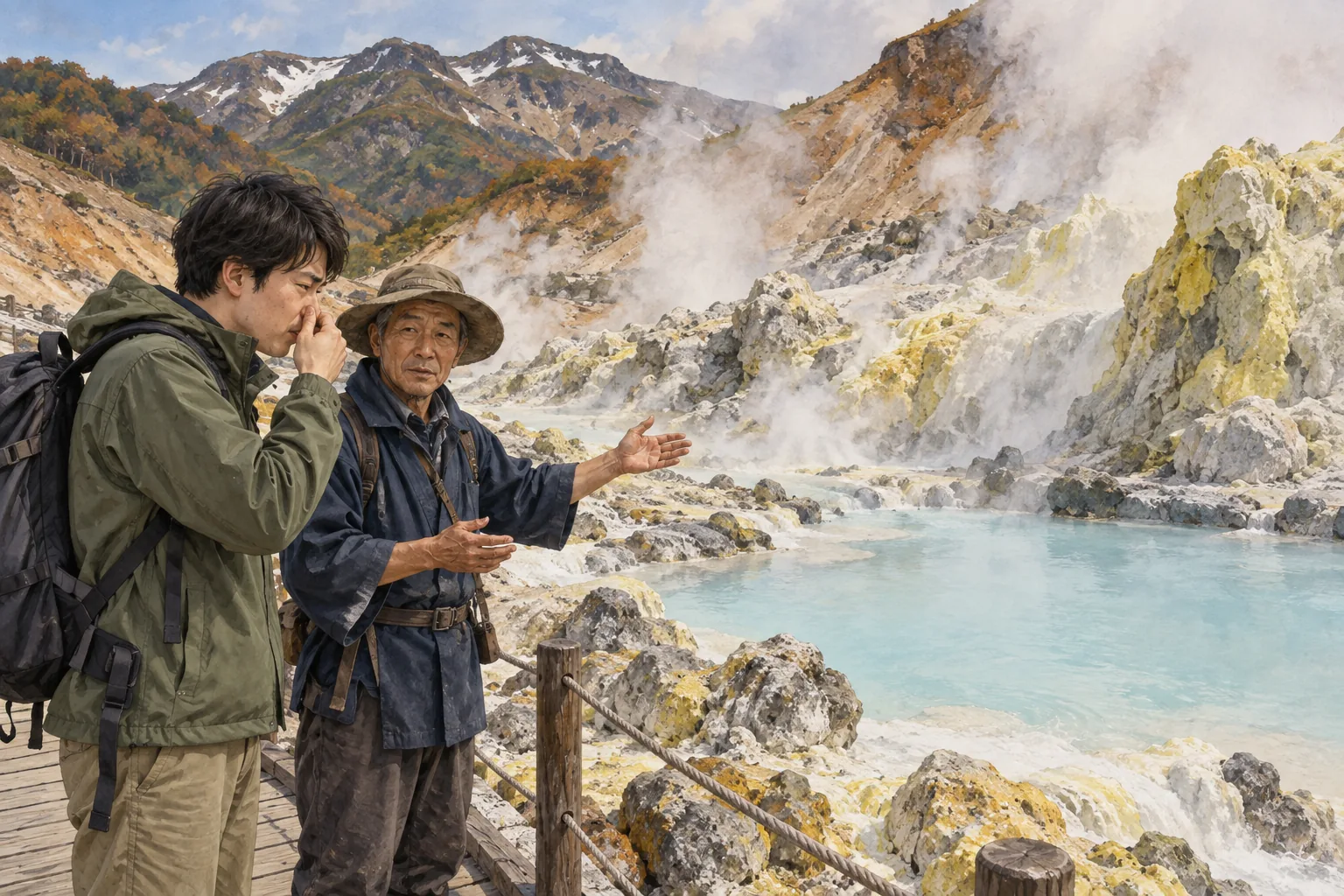
In one line
The shortest answer that works
The rotten-egg smell at some hot springs comes from hydrogen sulfide gas dissolved in sulfur-rich water.
一部の温泉の卵が腐ったような匂いは、硫黄分の多い湯に溶けた硫化水素ガスによるものです。
In 30 seconds
The standard explanation
Many first-time visitors are caught off guard by the smell at a sulfur hot spring, often compared to rotten eggs. It comes from hydrogen sulfide gas that dissolves in the water underground and escapes into the air once the spring reaches the surface. The smell clings lightly to skin and hair for a while after bathing, which some visitors dislike and others consider part of the experience. It is harmless at the concentrations found in a normal bath, though indoor sulfur baths need good ventilation for safety.
多くの初めての訪問者は、硫黄泉のにおいに驚かされます。よく卵が腐ったような匂いに例えられます。これは地下水に溶けた硫化水素ガスが、温泉が地表に出たときに空気中へ抜け出すことで生じます。においは入浴後もしばらく肌や髪に軽く残り、これを嫌う人もいれば、それも含めて温泉らしさだと考える人もいます。通常の入浴で吸う程度なら害はありませんが、室内の硫黄泉では安全のために十分な換気が必要です。
As a short speech
A full paragraph you can read aloud
One thing that surprises a lot of first-time visitors to a Japanese hot spring is the smell. Sulfur springs, in particular, often carry an odor close to rotten eggs, which comes from hydrogen sulfide gas dissolved in the water as it travels up from underground.
Once the water reaches the surface and meets the air, the gas escapes and you notice the smell right away, sometimes from several meters outside the bathhouse door. The smell tends to stay lightly on your skin and hair for a few hours afterward, no matter how well you rinse.
Reactions vary a lot: some travelers find it unpleasant, while many Japanese bathers associate that exact smell with a strong, effective hot spring and actively seek it out. In poorly ventilated spaces the gas can build up to unsafe levels, and after a fatal accident at a hot-spring area in 2005, Japan tightened ventilation standards for bathing facilities.
日本の温泉を初めて訪れる多くの人が驚くことの一つが、においです。特に硫黄泉は卵が腐ったような匂いを放つことが多く、これは地下からの上昇の途中で湯に溶け込んだ硫化水素ガスによるものです。
湯が地表に出て空気に触れると、このガスが抜け出し、浴場の扉の外数メートルからでもすぐに気づくことがあります。においはどれだけ流しても、しばらく肌や髪に軽く残ります。
反応は人それぞれで、不快に感じる旅行者もいれば、多くの日本人はまさにそのにおいを効いている温泉のしるしと捉え、好んで求めます。換気の悪い場所では硫化水素が危険な濃度までたまることがあり、2005年に温泉地で死亡事故が起きたことを受けて、日本は温泉施設の換気の基準を厳しくした経緯があります。
Questions people actually ask
And how to answer them.
Is the sulfur smell a sign the water is dirty?
No. It means the water contains sulfur compounds from underground, which many bathers associate with stronger effects on the skin.
いいえ。地下から来た硫黄分を湯が含んでいるしるしで、肌への効果が高いと考える入浴客も多いです。
Will the smell wash off before I leave?
Not completely. A faint sulfur smell can linger on your skin and hair for several hours, even after a normal shower.
完全には落ちません。普通にシャワーを浴びても、かすかな硫黄のにおいが数時間、肌や髪に残ることがあります。
Phrases you can use
- This spring has a strong sulfur smell, so don't be alarmed.この温泉は硫黄のにおいが強いので驚かないでください。
- The smell might stay on your skin for a while.においがしばらく肌に残るかもしれません。
- Sulfur springs are said to be good for skin conditions.硫黄泉は肌によいとされています。
- Please make sure the ventilation fan stays on inside.室内では換気扇をつけたままにしてください。
Words you need
- hydrogen sulfide硫化水素
- sulfur spring硫黄泉
- ventilation換気
- linger (smell)においが残る
Watch
From YouTubeBackground (Japanese)
硫黄泉特有のにおいは、地下水に溶け込んだ硫化水素が地表で空気に触れて気体として抜け出すことで生じ、においは水質が悪いのではなく、硫黄分を含む泉質であることの表れである。2005年12月、秋田県の泥湯温泉で、旅館の駐車場の雪のくぼみにたまった硫化水素により家族4人が亡くなる事故が起きた。これを受け、環境省は2006年、浴室に換気口を2カ所以上設けることなどを定めた基準を都道府県に通知した。強いにおいがしても、換気さえされていれば通常の入浴で健康に影響はないとされる。