yu no hana
hot-spring mineral flakes
湯の花(ゆのはな)
In one line
The shortest answer that works
Yu no hana are small mineral flakes that form naturally when hot-spring water cools and reacts with air.
湯の花とは、温泉の水が冷めて空気に触れることで自然にできる、小さな鉱物の粒です。
In 30 seconds
The standard explanation
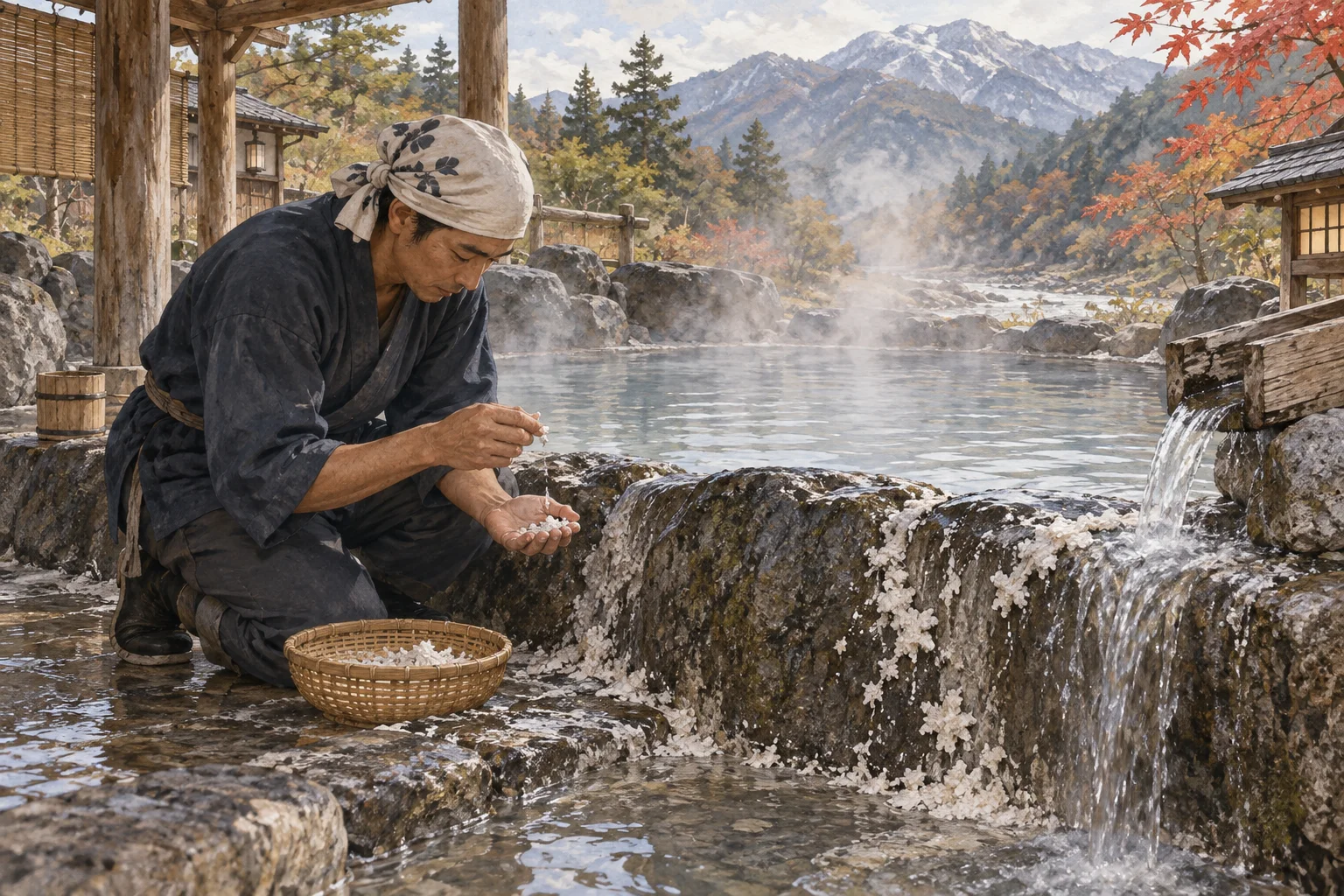
Yu no hana, literally "hot-spring flowers," are flaky mineral deposits that separate out of the water as it cools and meets the air. Their color and texture depend on the spring's chemistry: sulfur springs produce white or pale yellow flakes, while iron-rich water leaves reddish-brown sediment. Onsen towns often collect and sell them so people can drop a packet into their home bathtub for a hint of the same spring. They are completely natural and not a sign the bath is dirty, even though first-time bathers sometimes mistake them for scum.
湯の花とは文字どおり「湯の花」を意味し、温泉水が冷めて空気に触れるときに分離してできる、フレーク状の鉱物の沈殿物です。色や質感は温泉の成分によって違い、硫黄泉なら白や淡い黄色、鉄分の多い湯なら赤茶色の沈殿物になります。温泉地ではこれを集めて袋詰めにして売ることが多く、自宅の風呂に入れれば、その温泉の雰囲気を少し味わえます。まったく自然のもので汚れではありませんが、初めて見た人は汚れだと勘違いすることもあります。
As a short speech
A full paragraph you can read aloud
Yu no hana, or hot-spring flowers, are the small flaky particles you sometimes see floating in an onsen bath or settled at the bottom. They form when minerals dissolved in the hot spring water cool down or react with the air, and separate out as solid flakes. The exact minerals depend on the spring, so sulfur springs tend to leave white or pale yellow flakes with a strong smell, while other springs leave white or reddish deposits instead.
Many resorts collect this sediment, dry it, and sell it in small bags so people can add a spoonful to their bath at home and get a faint version of the same water. First-time visitors sometimes worry the flakes mean the bath is unclean, but they are often a sign of a mineral-rich spring.
湯の花とは、温泉の湯船に浮かんでいたり底に沈んでいたりする、小さなフレーク状の粒のことです。温泉水に溶けていた鉱物が、冷えたり空気に触れて反応したりすることで分離し、固体の粒として現れます。どの鉱物になるかは温泉ごとに違い、硫黄泉なら強いにおいのある白や淡い黄色の粒になりやすく、ほかの温泉では白や赤みがかった沈殿物になります。
多くの温泉地はこの沈殿物を集めて乾燥させ、小袋にして売っており、自宅の風呂に一さじ入れれば、同じ湯をかすかに再現できます。初めて見る人は汚れではないかと心配することがありますが、実際はミネラル分の濃い温泉であることのしるしである場合が多いのです。
Questions people actually ask
And how to answer them.
Is it safe to bathe with these flakes floating around?
Yes. They are just precipitated minerals from the spring itself, not dirt or bacteria, and many people consider a bath with visible yu no hana to be a stronger, more authentic spring.
はい。これは温泉自体から出た鉱物の沈殿物であり、汚れや雑菌ではありません。湯の花が見える湯ほど濃くて本格的だと考える人も多いです。
Can I buy yu no hana to use at home?
Many onsen towns sell packets of dried yu no hana as a souvenir, meant to be dissolved in an ordinary bathtub.
多くの温泉町では、乾燥させた湯の花を袋詰めにしてお土産として売っており、家庭の風呂に溶かして使うためのものです。
Phrases you can use
- Those white flakes are natural mineral deposits, not dirt.その白い粒は自然の温泉成分で、汚れではありません。
- This spring is known for its thick yu no hana.この温泉は湯の花が濃いことで知られています。
- You can buy dried yu no hana as a souvenir.乾燥した湯の花はお土産として買えます。
- Add one packet to a full bathtub at home.自宅では湯船いっぱいに1袋を入れてください。
Words you need
- mineral deposit沈殿物
- sulfur spring硫黄泉
- source-fed源泉かけ流しの
- precipitate析出物
Watch
From YouTubeBackground (Japanese)
湯の花は、源泉が空気に触れて冷めるときに、溶けていた硫黄やカルシウムなどの成分が固体になって出てくる沈殿物で、温泉によって色や形が大きく違う。硫黄泉なら白っぽく硫黄のにおいが強く、鉄分の多い温泉では赤茶けた色になる。乾燥させて袋詰めにした湯の花は、自宅の風呂に入れて温泉気分を味わうお土産として全国で売られている。