soryo
Buddhist priests in Japan, who may marry and inherit a temple
僧侶(そうりょ)
In one line
The shortest answer that works
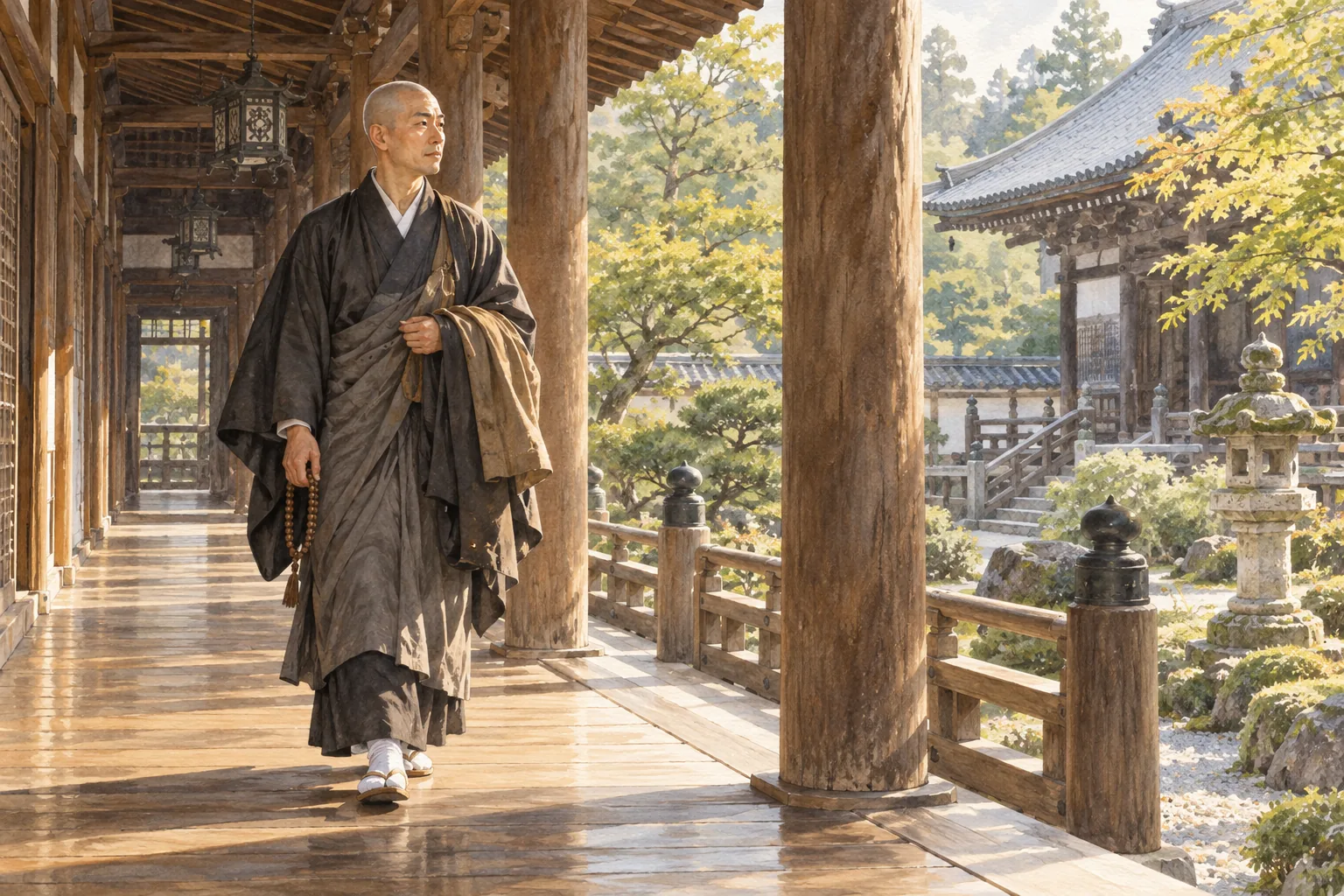
Soryo, or Japanese Buddhist priests, are clergy who mostly marry, eat meat, and pass their temple on to a child.
僧侶とは、日本の仏教の聖職者で、多くは結婚し、肉も食べ、寺を子に継がせる人たちです。
In 30 seconds
The standard explanation
Buddhist priests in Japan are not, as a rule, celibate. Marriage and meat eating were permitted by a government edict in 1872, and one large school had allowed marriage since the thirteenth century. Temples are usually run by a resident head priest whose family lives on the grounds and whose son is expected to succeed him. Many priests hold an ordinary job as well.
日本の僧侶は、原則として妻帯しないわけではありません。1872年の政府の布告で結婚も肉食も認められ、大きな宗派の一つは十三世紀から妻帯を認めていました。寺はふつう住職が預かり、家族は境内に住み、息子が跡を継ぐことが期待されます。別に仕事を持つ僧侶も多くいます。
As a short speech
A full paragraph you can read aloud
Visitors who know Buddhism from Thailand or Tibet are often startled by Japanese priests. Most of them are married, live with their families in the temple, eat what everyone else eats, and drive the children to school. This is not a modern lapse.
Shinran, who founded the largest school in Japan in the thirteenth century, married openly and described himself as neither a monk nor a layman. In 1872 the new government simply declared that priests of any school were free to marry, eat meat and grow their hair, and within a generation clerical marriage was normal in most schools.
The practical result is that temples became family businesses passed from father to son, which keeps them staffed but makes life difficult for a priest with no heir. Many rural temples cannot support a family at all, and their priests work as teachers or office staff during the week.
タイやチベットの仏教を知っている人は、日本の僧侶に驚くことがあります。多くは結婚していて、家族と寺に住み、ほかの人と同じものを食べ、子どもを学校まで送ります。これは近ごろの緩みではありません。
十三世紀に日本で最大の宗派を開いた親鸞は、公然と妻帯し、自らを「僧にあらず俗にあらず」と称しました。1872年、新政府は、どの宗派の僧も結婚も肉食も蓄髪も自由である、と布告します。一世代のうちに、僧侶の結婚はほとんどの宗派でふつうのことになりました。
その結果、寺は父から子へ受け継がれる家業になりました。担い手は確保できますが、後継ぎのいない住職には難しい話です。家族を養えない地方の寺も多く、その住職は平日、教員や会社員として働いています。
Questions people actually ask
And how to answer them.
So are they monks or priests?
Priest is closer in English for most of them, since they serve a congregation, perform funerals and live with families. Monk suggests a celibate community, which applies to training halls and to some Zen practitioners but not to the average temple.
英語では priest のほうが近い人が多いでしょう。檀家に仕え、葬儀を営み、家族と暮らしているからです。「monk」は妻帯しない共同生活を思わせます。修行道場や一部の禅僧には当てはまりますが、一般の寺の住職には当てはまりません。
How does someone become one?
By ordination in a school, then a period of formal training at its head temple, which can run from weeks to years depending on the school. Most entrants are temple children, but universities with Buddhist faculties take students from outside.
宗派で得度を受け、本山などで所定の修行を積みます。期間は宗派によって数週間から数年までさまざまです。入るのは寺の子が多いのですが、仏教系の大学には外から来る学生もいます。
What do they actually do all week?
Memorial services in parishioners' homes, funerals, grave visits, temple maintenance and paperwork. Funerals and memorials are the main income, which is why Japanese Buddhism is sometimes called funeral Buddhism, not always kindly.
檀家の家での法要、葬儀、墓の対応、寺の維持と事務です。収入の柱は葬儀と法要で、日本の仏教が葬式仏教と呼ばれるのはそのためです。好意的な言い方とは限りません。
A common misunderstanding
MYTHBuddhist priests are celibate vegetarians.
FACTIn Japan most marry and eat meat. One major school has permitted marriage since the thirteenth century, and an 1872 edict permitted it for all schools.
Phrases you can use
- The head priest lives here with his family.住職は家族とここに住んでいます。
- His son will take over the temple.息子さんが寺を継ぎます。
- He has another job during the week.平日は別の仕事をしています。
- Priests in Japan are allowed to marry.日本の僧侶は結婚できます。
- The service takes about forty minutes.法要は四十分ほどです。
Words you need
- Buddhist priest僧侶
- resident head priest住職
- ordination得度
- training hall修行道場
- parishioner household檀家
Watch
From YouTubeBackground (Japanese)
日本の僧侶が妻帯できるのは、1872年の太政官布告で、僧の肉食妻帯蓄髪を自由としたことによります。浄土真宗はそれ以前から、親鸞の代より妻帯を認めていました。現在、寺は住職が預かり、その子が継ぐ形が一般的です。宗派によって得度と修行の内容は異なり、数週間で終わるものから数年に及ぶものまであります。檀家の減少で寺の収入は細っており、兼業の住職や、複数の寺を一人で預かる例も増えています。