surippa
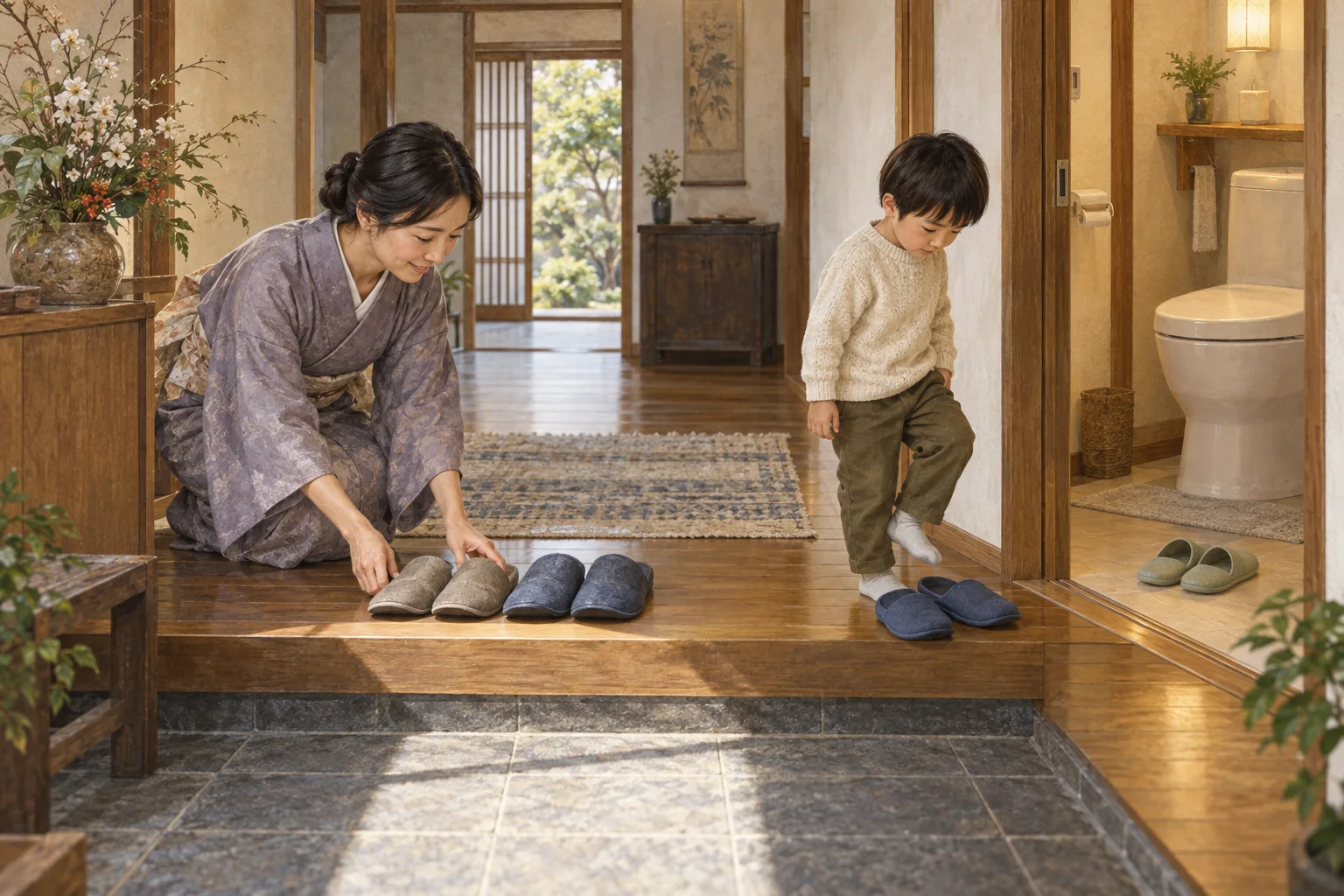
indoor slippers and the toilet pair
スリッパ(スリッパ)
In one line
The shortest answer that works
Indoor slippers are worn in the house, and a separate pair waits inside the toilet.
家の中では室内用のスリッパを履き、トイレの中には別のスリッパが置かれています。
In 30 seconds
The standard explanation
After taking your shoes off at the entrance, you put on slippers laid out for guests. They come off on tatami, which is walked on in socks. A separate pair sits inside the toilet and must stay there, and walking back into the living room in them is the classic visitor's mistake.
玄関で靴を脱いだあと、客用に出されたスリッパを履きます。畳の上では脱ぎ、靴下のまま歩きます。トイレの中には別のスリッパが置かれていて、そこから出してはいけません。それを履いたまま居間に戻ってくるのが、訪問者の定番の失敗です。
As a short speech
A full paragraph you can read aloud
Japanese homes and many public buildings run on a system of layers, and slippers are the middle one. Outdoor shoes come off at the entrance, where the floor level changes, and slippers are laid out with the toes pointing into the house, so you can step straight into them.
You wear them on wooden and vinyl floors. You take them off before stepping onto tatami, because tatami is walked on in socks or bare feet. Then there is the toilet. Inside the toilet door sits another pair, often obviously different, and those are for the toilet only.
Putting them on when you go in and leaving them there when you come out is the whole rule, and forgetting the second half is the single most common mistake foreign guests make; it is also mildly funny to everyone who sees it, so no harm is done. The same system appears in traditional inns, some restaurants, clinics, schools and temples, so it is worth getting used to.
日本の家と多くの建物は、層の仕組みで動いています。スリッパはその中間の層です。外の靴は玄関で脱ぎます。床の高さが変わるところです。スリッパは、そのまま足を入れられるよう、つま先を家の奥に向けて並べられています。板の間やビニールの床ではそれを履きます。
畳に上がる前には脱ぎます。畳は靴下か素足で歩くものだからです。そしてトイレがあります。トイレの扉の内側にはもう一足、たいていは見るからに違うものが置かれていて、それはトイレ専用です。入るときに履き、出るときにそこへ残す。
決まりはそれだけで、後半を忘れることが、外国からの客がいちばんよくする失敗です。見た人には少しおかしくもあるので、実害はありません。同じ仕組みは旅館、一部の飲食店、診療所、学校、寺にもあるので、慣れておく値打ちがあります。
Questions people actually ask
And how to answer them.
What if the slippers are too small for me?
That happens a lot, and it is fine to walk in socks instead. Say your feet are large and the host will understand; many homes keep one larger pair for guests but not always.
よくあることで、靴下のまま歩いてかまいません。足が大きいのでと言えば分かってもらえます。客用に大きめを一足用意している家もありますが、いつもあるとは限りません。
Why is there a separate pair in the toilet?
To keep the toilet floor separate from the rest of the house, the same logic that keeps street shoes out of the entrance. It is about zones rather than about dirt you can see.
トイレの床を家のほかの場所と分けておくためで、外の靴を玄関から先に入れないのと同じ考え方です。目に見える汚れというより、区分けの問題です。
Do I wear slippers on tatami?
No. Take them off at the edge of the tatami and leave them neatly side by side. Tatami is soft and marks easily, and this is a firm rule even in casual homes.
履きません。畳の手前で脱ぎ、そろえて置いておきます。畳はやわらかく跡がつきやすいので、くだけた家でもこれはしっかりした決まりです。
Phrases you can use
- Please use these slippers.こちらのスリッパをお使いください。
- Leave the toilet slippers inside.トイレのスリッパは中に置いてください。
- Socks are fine on the tatami.畳の上は靴下で大丈夫です。
- Sorry, I walked out in the wrong pair.すみません、履き替えずに出てしまいました。
- Do you have a larger pair?大きいサイズはありますか。
Words you need
- indoor slippers室内用のスリッパ
- toilet slippersトイレのスリッパ
- to change footwear履き替える
- entrance hall玄関
- in socks靴下のまま
Watch
From YouTubeBackground (Japanese)
スリッパは明治期に、靴を脱ぐ日本の家で外国人が室内を歩けるように作られたと言われます。今では板の間やビニールの床で使い、畳の上では脱ぎます。トイレ用を分けるのは、水回りと居室を区別する考え方によるもので、旅館、診療所、学校、寺の一部にも同じ仕組みがあります。見学のために靴を脱ぐ施設では、袋を渡されて靴を持ち歩く方式もあります。玄関で靴を脱ぐときは、向きを変えてそろえて置くのが丁寧とされます。