rimoto waku
working from home in Japan
リモートワーク(りもーとわーく)
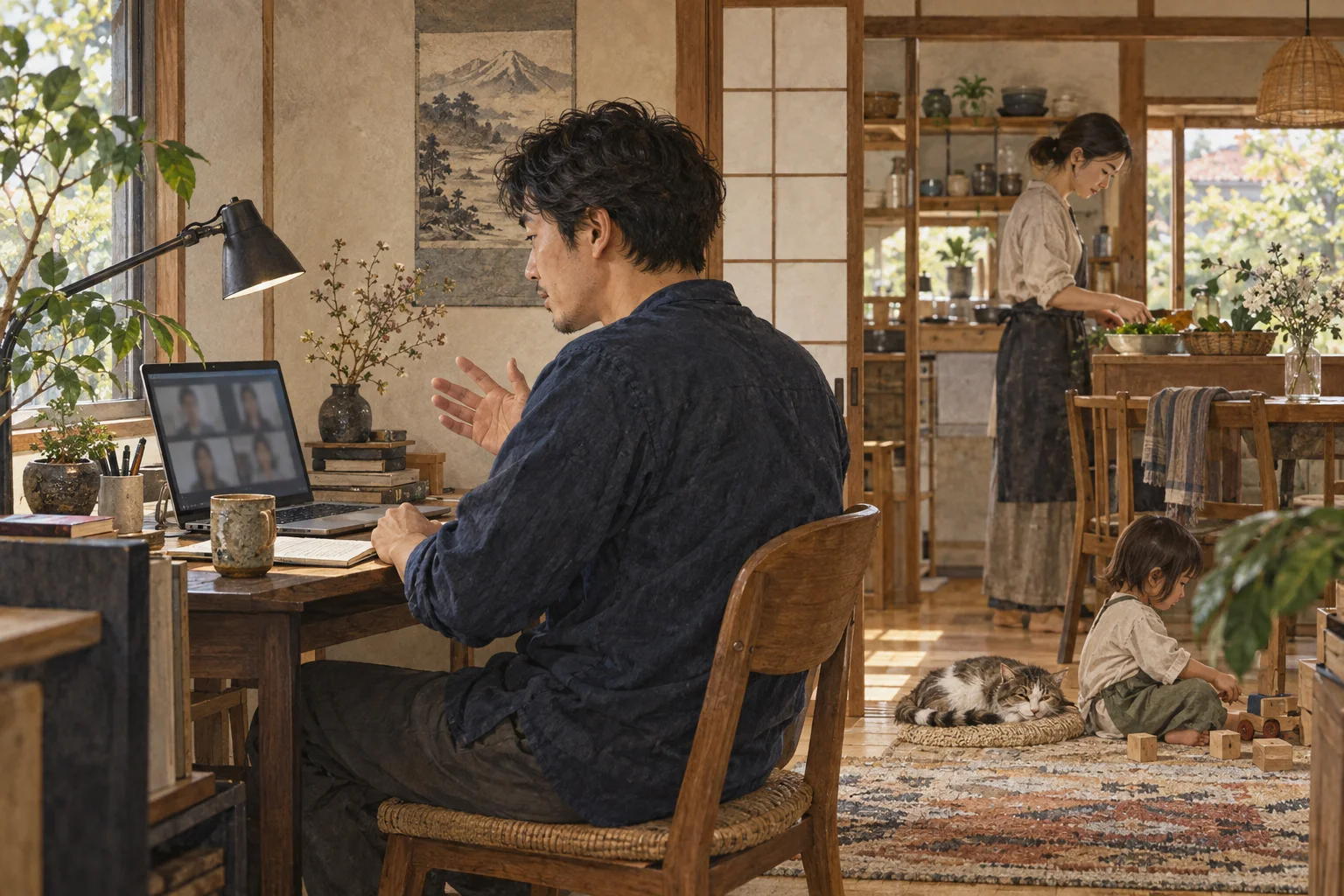
In one line
The shortest answer that works
Rimoto waku, or remote work, is a practice that spread suddenly in Japan in 2020, then partly receded.
リモートワークとは、2020年に日本で急に広まり、その後いくらか戻った働き方です。
In 30 seconds
The standard explanation
Working from home was rare in Japan before 2020, then spread abruptly. Much of it has since been rolled back, with many firms requiring several days a week in the office. What did not roll back is the paperwork: the pandemic exposed how many processes required a physical seal, and both government and companies moved to digital approval.
在宅勤務は2020年より前の日本ではまれでしたが、そこで急に広まりました。その後かなり戻され、週に数日の出社を求める企業も多くあります。戻らなかったのは書類の側です。押印のために出社が必要な手続きがどれだけ多いかが明らかになり、行政も企業も電子の決裁へ動きました。
As a short speech
A full paragraph you can read aloud
Remote work in Japan has an unusual shape. Before 2020 it was rare outside a few sectors, partly because of long-standing assumptions about presence: being seen at your desk was part of how effort was demonstrated, and management was often based on observation rather than output. Then it spread within weeks, and along the way it exposed something absurd.
Many approval processes required a physical seal on paper, so there were widely reported cases of employees commuting into an empty office solely to stamp documents. That embarrassment produced real change: the government pushed to eliminate seal requirements from administrative procedures, and companies moved approvals online.
The remote working itself has partly receded. Many large employers now require two or three days in the office, arguing for training of younger staff and for informal communication. What remains is a genuine shift in expectations, and job advertisements now routinely state how many days on site are required.
日本のリモートワークは、少し変わった形をしています。2020年より前、一部の業種を除けばまれでした。ひとつには、そこにいることをめぐる長年の前提があったからです。机に向かっている姿が見えることが、努力を示す方法の一部であり、管理はしばしば成果ではなく観察に基づいていました。
それが数週間で広まり、その過程で、ばかげたことが露わになりました。多くの決裁が紙への押印を必要としていたため、押印のためだけに誰もいない事務所へ通勤する社員の例が、各所で報じられたのです。この気まずさが本物の変化を生みました。
行政は手続きから押印の要件をなくす方向へ動き、企業は決裁を電子化しました。在宅勤務そのものはいくらか戻りました。若手の育成と、偶然の会話を理由に、週に二日か三日の出社を求める大企業が多くあります。それでも期待の水準は本当に変わり、求人票には出社の日数が当たり前に書かれるようになりました。
Questions people actually ask
And how to answer them.
Why did people go to the office just to use a seal?
Because approval documents required a physical stamp, and the seal was kept at the office. It became a widely reported symbol of process that existed for its own sake, and it accelerated the push to abolish seal requirements.
決裁の書類が紙への押印を必要とし、印鑑が事務所に置かれていたからです。手続きのための手続きの象徴として広く報じられ、押印の要件を廃止する動きを加速させました。
Is remote work common now?
Common but not dominant, and heavily dependent on sector and company size. Technology firms and foreign-affiliated companies offer more of it; manufacturing, retail and small firms much less. Hybrid arrangements are the usual middle ground.
珍しくはありませんが主流ではなく、業種と企業の規模によって大きく違います。技術系や外資系では多く、製造、小売、中小企業ではずっと少なくなります。週の一部を出社する形が、おおむね中間の落としどころです。
Phrases you can use
- It spread suddenly in 2020.2020年に急に広まりました。
- People went in just to stamp documents.押印のためだけに出社した人がいました。
- Many firms now require some office days.週に数日の出社を求める会社が多いです。
- Approvals moved online after that.そのあと決裁は電子化されました。
Words you need
- to work from home在宅勤務する
- hybrid working出社と在宅の併用
- digital approval電子決裁
- commute通勤
Watch
From YouTubeBackground (Japanese)
押印のためだけの出社が問題になったことを受け、政府は行政手続きにおける押印の原則廃止を進め、1万を超える手続きで押印が不要になりました。企業でも稟議の電子化が進みました。テレワークの実施率は2020年に急上昇したのち低下し、業種と規模による差が大きい状態が続いています。通勤手当を実費精算に切り替えたり、地方に住んで出社時のみ交通費を支給する制度を設けたりする企業も現れました。