nemawashi and ringi
how decisions actually get made
根回しと稟議(ねまわしとりんぎ)
In one line
The shortest answer that works
Nemawashi and ringi, or groundwork and formal sign-off, are settling a decision privately, then circulating a document for approval.
根回しと稟議とは、会議の前に個別に話を通しておくことと、それを記した書類を回して承認を得ることです。
In 30 seconds
The standard explanation
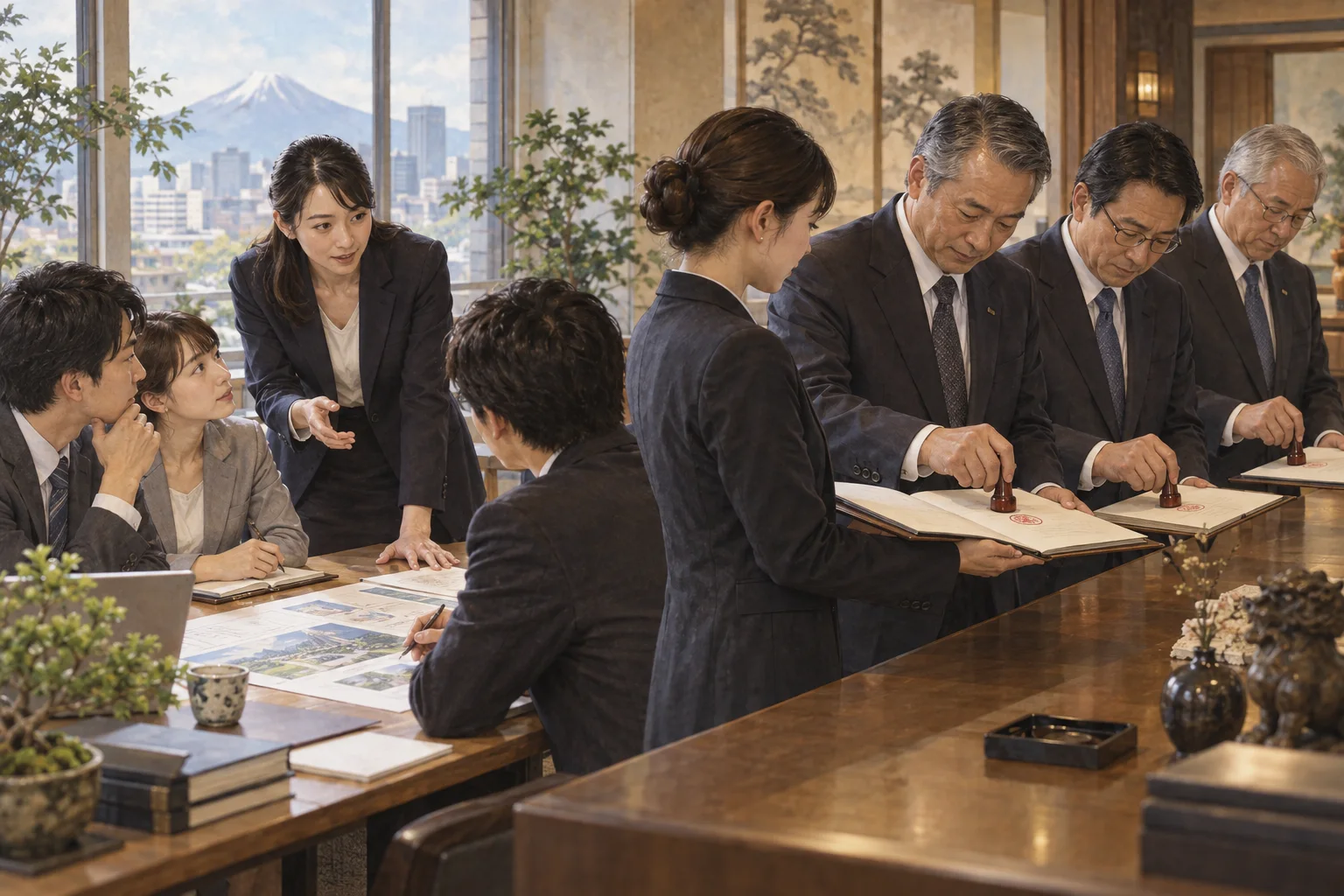
In a Japanese company, the meeting usually confirms a decision rather than making one. Beforehand the proposer visits each person who matters, explains, listens and adjusts, which is nemawashi. The formal approval then travels as a document, the ringisho, collecting seals from each level in turn.
日本の企業では、会議はふつう決める場ではなく、決まったことを確認する場です。その前に、提案する人が関係する人を一人ずつ訪ね、説明し、意見を聞き、案を直します。それが根回しです。正式な承認はそのあと、稟議書という書類が各段階を回って印を集める形で進みます。
As a short speech
A full paragraph you can read aloud
Foreign managers in Japan often complain that meetings are pointless because nothing is decided in them, and they have misread the system. The decision has already been made. Before the meeting, the person proposing something goes around individually to everyone with a stake, explains it, asks what they think, and adjusts the proposal to accommodate objections.
That process is nemawashi, literally digging around the roots, from the gardening practice of preparing a tree before transplanting it. By the time the meeting happens, every objection has been absorbed and the meeting confirms.
The paperwork follows the same logic: a ringisho circulates upward and each responsible person stamps it, so approval accumulates rather than being granted at a single point. The trade-off is well known in Japan too. It is slow to decide and fast to implement, because by the time something is approved everyone has already agreed to it, and nobody is defending a position they lost.
日本にいる外国人の管理職はよく、会議で何も決まらないから無意味だと不満を言いますが、それは仕組みの読み違いです。決定はすでに終わっているのです。会議の前に、提案する人が関係するすべての人のところを一人ずつ回り、説明し、どう思うかを尋ね、反対を吸収できるように案を直します。
これが根回しで、文字どおりには根のまわりを掘ることであり、木を移す前に根を整える庭仕事から来ています。会議が開かれるころには、反対はすべて吸収されていて、会議はそれを確認します。書類も同じ理屈で動きます。
稟議書が上へ回り、責任のある人が順に印を押すので、承認は一点で与えられるのではなく積み上がります。損得は日本でもよく知られています。決めるのは遅く、実行は速い。承認されたときには全員がすでに同意していて、負けた立場を守っている人がいないからです。
Questions people actually ask
And how to answer them.
So should I raise a new idea in a meeting?
Only if you want it to fail. Raising something unannounced forces people to react in front of others, which nobody wants to do. Speak to the key people individually first, then let the meeting confirm it.
潰したいなら、そうしてください。予告なく持ち出すと、人前で反応することを強いることになり、誰もそれを望みません。先に主要な人に個別に話を通し、会議には確認してもらうのが順です。
Who do I need to talk to?
Not only the person who signs. Anyone whose work is affected, and often someone senior in a neighboring department who would be annoyed to hear about it later. Skipping someone is the most common cause of a proposal stalling.
判を押す人だけではありません。仕事に影響が及ぶ人すべてと、多くの場合、後から聞かされたら面白くない隣の部署の年長者です。誰かを飛ばすことが、案が止まる最も多い原因です。
A common misunderstanding
MYTHJapanese meetings are slow because nobody wants to take responsibility.
FACTThe process is slow because the deciding happens before the meeting, one person at a time. The pattern trades speed of decision for speed and unanimity of execution.
Phrases you can use
- The meeting confirms, it doesn't decide.会議は決める場ではなく確認する場です。
- Talk to people individually first.先に個別に話を通してください。
- The document collects a seal at each level.書類は各段階で印を集めます。
- Slow to decide, fast to carry out.決めるのは遅く、実行は速いのです。
Words you need
- to build consensus根回しする
- approval document稟議書
- to give approval決裁する
- stakeholder関係者
Watch
From YouTubeBackground (Japanese)
「根回し」はもともと園芸の言葉で、木を移植する前に根の周りを掘って細い根を出させておく作業を指します。稟議は書類を下から上へ回して印を集める仕組みで、電子決裁に移行した企業も増えましたが、承認の順序という考え方は残っています。決裁に必要な印の数が多いことは長く非効率として批判され、2020年前後には行政の押印廃止が進みました。合意形成を重んじる進め方は、実行段階での手戻りが少ないという評価もあります。