sanpo yoshi
good for the seller, the buyer and society
三方よし(さんぽうよし)
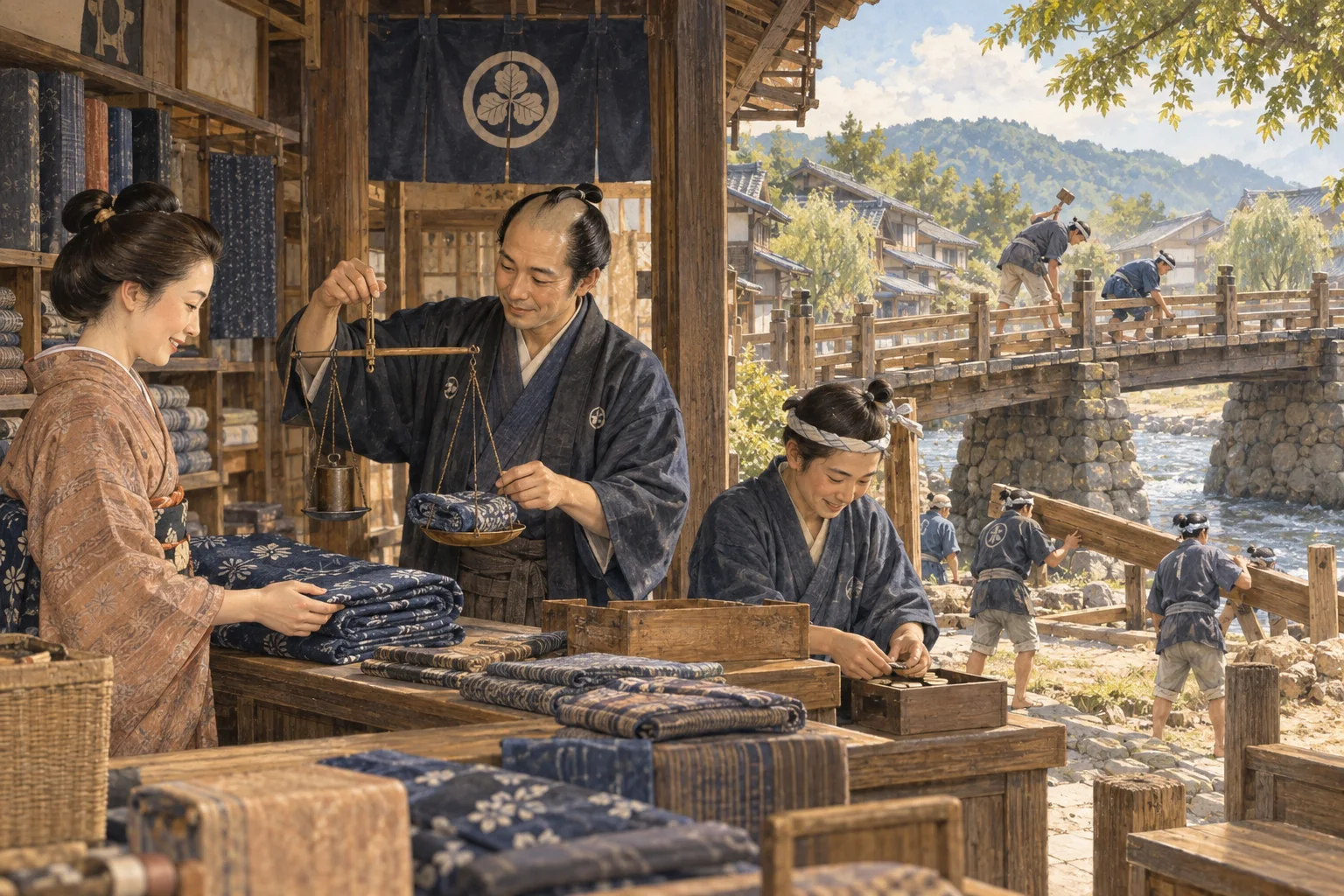
In one line
The shortest answer that works
Sanpo yoshi means a deal should be good for the seller, the buyer and the wider community.
三方よしとは、商いは売り手と買い手と世間の三方にとってよいものであるべきだ、という考えです。
In 30 seconds
The standard explanation
Sanpo yoshi, three-way good, holds that business should benefit the seller, the buyer and society. It is associated with the merchants of Omi, who traded across Japan from a base near Lake Biwa and depended on being welcome in places where they were outsiders. Japanese firms cite it when discussing corporate responsibility.
三方よしとは、商いが売り手、買い手、そして世間の三方にとってよいものであるべきだという考えです。琵琶湖の近くを本拠に各地で商いをし、よそ者として訪れる土地で受け入れられることが欠かせなかった、近江商人と結びつけて語られます。日本の企業は、社会的な責任を語るときにこの言葉を引きます。
As a short speech
A full paragraph you can read aloud
Sanpo yoshi means three-way good: a transaction should be good for the seller, good for the buyer, and good for the society around them. It is associated with the merchants of Omi province, near Lake Biwa, who from the Edo period traveled long distances to trade in regions where they had no family, no standing and no protection. A merchant in that position could not rely on a single profitable deal; he needed to be welcome in the town again next year, which made contributing to local roads, bridges and temples a practical matter as much as an ethical one.
Japanese companies now quote the phrase often in the context of corporate responsibility, and it appears in speeches alongside sustainability language. One honest note: the exact three-part wording is a later formulation used to summarize the ideas found in Omi merchants' family precepts, rather than a slogan they themselves carried, and researchers point that out.
三方よしとは、三つの方向にとってよい、という意味です。取引は、売り手にとってよく、買い手にとってよく、その周りの世間にとってもよいものであるべきだ、という考えです。琵琶湖のほとりの近江の商人と結びつけて語られます。彼らは江戸時代以降、遠く離れた土地へ出かけて商いをしました。
そこには身内も、身分も、後ろ盾もありません。その立場の商人は、一度の儲かる取引に頼ることができませんでした。来年もその町で迎え入れられる必要があり、そのため、地元の道や橋や寺に寄進することは、道徳であると同時に実務でもあったのです。
日本の企業は今、社会的な責任を語る文脈でこの言葉をよく引き、持続可能性の語彙と並べて挨拶に用います。正直に添えておくと、この三つを並べた言い方そのものは、近江商人の家訓に見られる考えをまとめた後世の定式化であり、彼ら自身が掲げた標語ではなかったと研究者は指摘しています。
Questions people actually ask
And how to answer them.
Who were the Omi merchants?
Traders from the province around Lake Biwa who from the Edo period carried goods across Japan, living away from home for long periods. Several major Japanese companies trace their origins to them.
琵琶湖の周辺の国から出た商人で、江戸時代以降、各地へ商品を運びました。長く故郷を離れて暮らす働き方でした。日本の大きな企業のいくつかは、その流れに起源をたどります。
Is it just a slogan?
It is used as one now, which invites skepticism. The historical point behind it is concrete: an outsider merchant's business depended on the goodwill of a community that could simply refuse to deal with him.
今は標語として使われており、そのため冷めた目で見られもします。背後にある歴史の事実は具体的です。よそ者の商人の商いは、取引を断ることもできる地域の好意に支えられていました。
How does it relate to modern corporate responsibility?
Japanese firms present it as a domestic precedent for stakeholder thinking, arguing that the idea predates imported frameworks. Whether that is history or branding is a fair question to ask.
日本の企業は、関係者すべてを考える発想が国内に先例として存在したものとして示し、外から入ってきた枠組みより古いと論じます。それが歴史なのか宣伝なのかは、問うてよい問いです。
Phrases you can use
- It should be good for everyone involved.関わる全員にとってよいものであるべきです。
- We think about the community too.地域のことも考えています。
- A one-time profit is not the point.一度きりの利益が目的ではありません。
- We want to be welcome here next year.来年もここで歓迎されたいのです。
- The phrase comes from Omi merchants.この言葉は近江商人に由来します。
Words you need
- three-way good三方よし
- merchant商人
- family precepts家訓
- the wider public世間
- corporate responsibility企業の社会的責任
Watch
From YouTubeBackground (Japanese)
三方よしは、売り手よし、買い手よし、世間よしと唱えられ、近江商人の商いの心得として広く知られています。近江商人は江戸時代から各地へ出向いて商いを行い、行商の途中で寄進を行った記録も残っています。もっとも、三方よしという三語の形は後世にまとめられた表現であり、当時の家訓に同じ言い回しがあったわけではないとされています。現在は企業の理念や自治体の施策で引用されることが多く、滋賀県では地域の歴史として紹介されています。